Internet advertising has historically depended on centralized platforms, which collect user data to deliver targeted ads and capture the bulk of advertising revenue. Although users contribute their browsing habits, interests, and attention value, they rarely receive direct compensation. Meanwhile, issues like data misuse, ad fraud, and poor ad experiences have become increasingly apparent, leading to an efficiency and trust crisis for the traditional digital advertising model.
With the evolution of blockchain technology, the advertising industry is exploring more transparent value distribution models. Basic Attention Token (BAT) was developed in this context, leveraging blockchain and token incentives to redefine how advertising value circulates. This allows users to profit from their attention and offers advertisers a more efficient and transparent environment for ad placement.
What Is Basic Attention Token (BAT)?
Basic Attention Token (BAT) is a utility token issued on Ethereum, designed to power the Brave browser’s digital advertising ecosystem. BAT rewards users for viewing ads, enables advertisers to pay for ad placements, and allows content creators to earn returns.
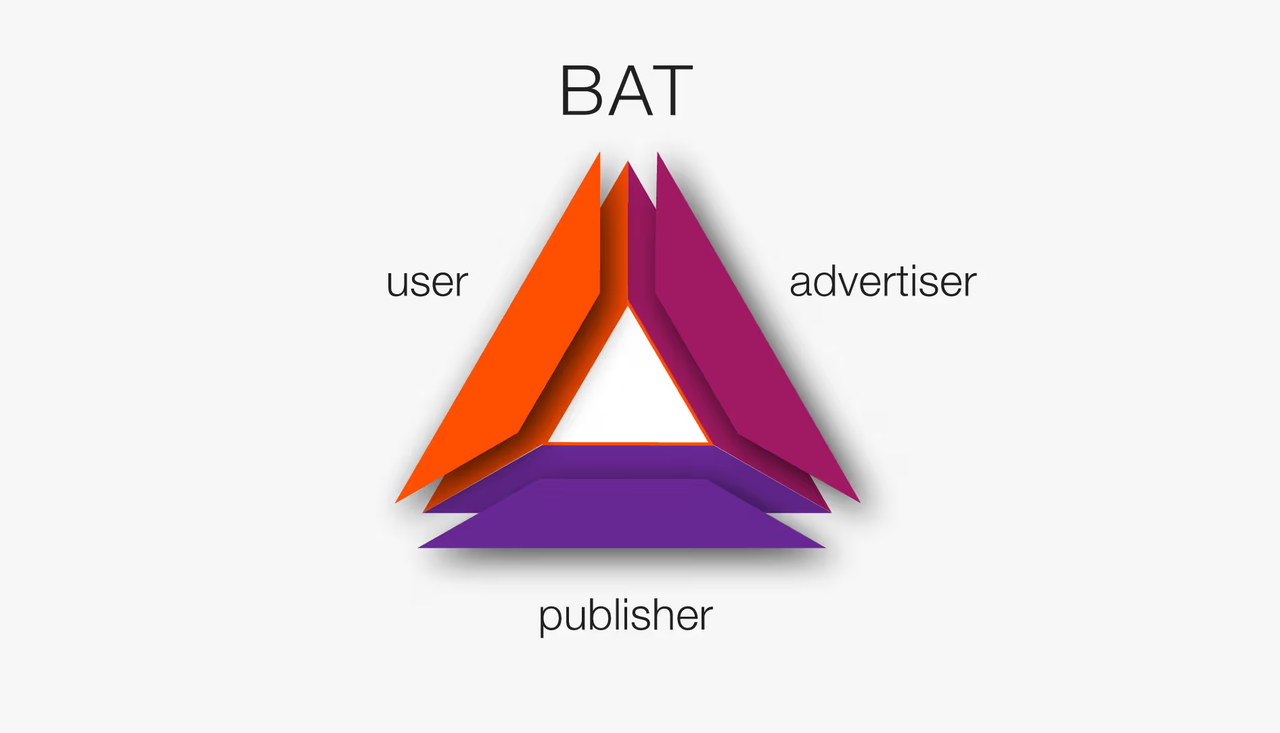
BAT’s core principle is to treat user attention as a measurable asset and establish a transparent mechanism for advertising value exchange using blockchain technology. In this system, advertisers don’t just pay the platform—they use BAT to share value with both users and creators, fostering a fairer advertising ecosystem.
How Does the Brave Browser Advertising Ecosystem Work?
Brave browser has developed a privacy-centric advertising system. Users can turn on Brave Rewards to receive ad notifications in the browser and earn BAT for viewing ads. Ad matching is performed locally on users’ devices, eliminating the need for centralized user data collection and enhancing privacy.

Advertisers purchase ad services through the Brave platform and pay with BAT. The platform then distributes a portion of BAT to users and creators, ensuring the ad budget benefits all ecosystem participants. Compared to traditional platforms, this approach reduces intermediaries and increases the efficiency of ad revenue distribution.
What Is BAT’s Value Circulation Mechanism?
The BAT value circulation occurs primarily among advertisers, users, and content creators. Advertisers pay BAT for ad placements, users earn BAT rewards for viewing ads, and creators receive BAT through tips or ad revenue sharing.
This structure decentralizes ad value, distributing it among participants who generate real value. Users contribute attention, creators provide content, advertisers gain exposure, and BAT facilitates value settlement—forming a complete advertising incentive loop.
What Are the Main Uses of BAT?
BAT’s primary function is ad payment. Advertisers use BAT to purchase ad slots within the Brave ecosystem and pay based on ad performance. BAT thus becomes a key medium for ad budget circulation.
The second function is user rewards. Users can earn BAT by viewing privacy-focused ads delivered by Brave, directly monetizing their attention. BAT also incentivizes content creators, allowing users to tip BAT to website authors, video creators, and other ecosystem participants, supporting content monetization.
How Does BAT Improve Digital Advertising Efficiency?
In the traditional advertising model, much of the budget is absorbed by intermediaries and invalid traffic. BAT reduces these middlemen, improving ad budget utilization. Advertisers’ spending more directly translates into real user engagement and creator earnings.
Additionally, Brave browser’s local ad matching minimizes the risk of user privacy data exposure, enabling precise targeting while safeguarding privacy. This increases user acceptance and enhances ad experiences, boosting overall ad conversion rates.
What Challenges Does BAT Face?
While BAT introduces an innovative approach to ad revenue sharing, its ecosystem growth faces certain challenges. BAT’s primary use is within the Brave browser, and its value is closely tied to the expansion of the Brave user base. Limited user growth can restrict advertiser demand and token circulation.
Moreover, traditional digital ad platforms still dominate in market scale and resources. For BAT to compete in the broader advertising market, it must expand ecosystem coverage and increase advertisers’ acceptance of decentralized ad models.
Summary
Basic Attention Token (BAT) tokenizes user attention, establishing a new value distribution framework for digital advertising. Within the Brave browser ecosystem, advertisers, users, and creators can exchange value more transparently and efficiently through BAT, addressing issues like revenue concentration and privacy violations found in traditional models.
As Web3 prioritizes user data sovereignty and decentralized value distribution, BAT highlights blockchain’s potential in the advertising sector. Although its growth is limited by ecosystem scale, BAT is a pioneering example of attention economy innovation, offering new directions for digital advertising models.
FAQs
Is BAT the native token of Brave browser?
Yes. BAT is the core token of the Brave browser advertising ecosystem, used for ad payments, user rewards, and creator revenue distribution.
How do users earn BAT rewards?
Users can earn BAT rewards by turning on Brave Rewards and viewing privacy-protecting ads within the browser.
Is BAT only usable in Brave browser?
BAT’s main application is within the Brave ecosystem, but as an ERC-20 token, it can also be stored in compatible wallets and traded.
How is BAT different from traditional ad credits?
BAT is blockchain-based, transferable, and tradable, while traditional ad credits are typically restricted to closed platforms.
What is the source of BAT’s value?
BAT’s value is primarily derived from advertiser demand for Brave ad services and its practical use in user rewards and creator incentives.