

Trade
Trading Type
Spot
Trade crypto freely
Alpha
Points
Get promising tokens in streamlined on-chain trading
Pre-Market
Trade new tokens before they are officially listed
Margin
Magnify your profit with leverage
Convert & Block Trading
0 Fees
Trade any size with no fees and no slippage
Leveraged Tokens
Get exposure to leveraged positions simply
Futures
Futures
Hundreds of contracts settled in USDT or BTC
Options
HOT
Trade European-style vanilla options
Unified Account
Maximize your capital efficiency
Demo Trading
Futures Kickoff
Get prepared for your futures trading
Futures Events
Participate in events to win generous rewards
Demo Trading
Use virtual funds to experience risk-free trading
Earn
Launch
CandyDrop
Collect candies to earn airdrops
Launchpool
Quick staking, earn potential new tokens
HODLer Airdrop
Hold GT and get massive airdrops for free
Launchpad
Be early to the next big token project
Alpha Points
NEW
Trade on-chain assets and enjoy airdrop rewards!
Futures Points
NEW
Earn futures points and claim airdrop rewards
Investment
Simple Earn
Earn interests with idle tokens
Auto-Invest
Auto-invest on a regular basis
Dual Investment
Buy low and sell high to take profits from price fluctuations
Soft Staking
Earn rewards with flexible staking
Crypto Loan
0 Fees
Pledge one crypto to borrow another
Lending Center
One-stop lending hub
VIP Wealth Hub
Customized wealth management empowers your assets growth
Private Wealth Management
Customized asset management to grow your digital assets
Quant Fund
Top asset management team helps you profit without hassle
Staking
Stake cryptos to earn in PoS products
BTC Staking
HOT
Stake BTC and earn 10% APR
GUSD Minting
Use USDT/USDC to mint GUSD for treasury-level yields


More


- Trending TopicsView More
265.29K Popularity
61.57K Popularity
8.03K Popularity
9.31K Popularity
9.34K Popularity
- Hot Gate FunView More
- MC:$3.99KHolders:42.64%
- MC:$4.8KHolders:116.22%
- MC:$3.57KHolders:20.06%
- MC:$3.66KHolders:30.22%
- MC:$3.67KHolders:20.18%





- Pin
Bitcoin spot ETF rebounds after 4 weeks... $70 million inflow weekly
Source: DigitalToday Original Title: Bitcoin Spot ETF Rallies After 4 Weeks…$70 Million Inflow Weekly Original Link: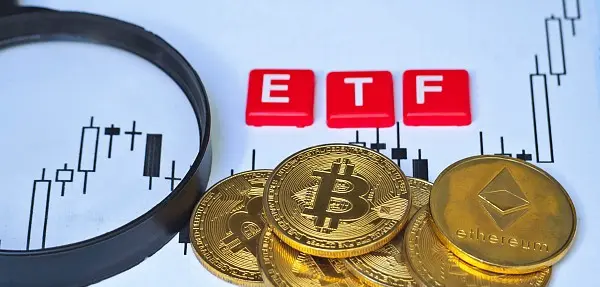
The Bitcoin spot exchange-traded fund ( ETF ) rebounded after a month of large-scale net outflows.
According to Cointelegraph, a blockchain media outlet, on the 29th of last month at ( local time, the Bitcoin spot ETF, which had recorded net outflows for four consecutive weeks, showed signs of market recovery with a net inflow of about $70 million during the past week.
According to SoSoValue) data, Bitcoin spot ETFs recorded the largest outflow in history, with $1.22 billion exiting during the week that included November 7th and 21st. However, a recent net inflow of $71 million in a single day has increased the cumulative inflow to $57.7 billion, with total net assets rising to $119.4 billion.
On the same day, BlackRock's IBIT recorded an outflow of $113.7 million, but funds moved with Fidelity's FBTC(7 $77.5 million) and Ark 21Shares' ARKB(8 $88 million), offsetting the net outflow volume.
The Ethereum spot ETF also stopped three weeks of outflows, recording a net inflow of $312.6 million. Previously, $1.74 billion had exited over three weeks, with particularly severe outflows of $728.6 million during the week of November 14, marking the worst record. However, a recent daily inflow of $76.6 million has increased the cumulative inflow to $12.94 billion, and the total net assets have risen to $19.15 billion.
Meanwhile, Bitcoin is consolidating a short-term low, and the Relative Strength Index ( RSI ) is nearing the oversold territory, with whale investors increasing their buying. As a result, the possibility of a price rebound to the range of $100,000 to $110,000 has been raised. Andre Dragosh of Bitwise Europe stated, “Bitcoin has a significant upside potential in the future,” and evaluated that “the current price does not adequately reflect the improved macroeconomic environment.”