

#CulperResearchOpenlyShortsETH
Culper Research Openly Shorts Ethereum Citing Post-Fusaka Tokenomics Impairment and Potential Death Spiral Risks
On March 5, 2026, activist short-selling firm Culper Research publicly disclosed a bearish position against Ethereum (ETH) and related securities, including BitMine Immersion Technologies (BMNR), the largest corporate ETH treasury holder. In a detailed report titled “Ethereum (ETH USD): What Vitalik Knows, and Tom Lee Doesn’t,” Culper argued that Ethereum's tokenomics have been fundamentally impaired following the December 2025 Fusaka network upgrade, potentially setting the stage for a prolonged downward pressure or even a "death spiral" in network incentives.
The core of Culper's thesis centers on the Fusaka upgrade's impact on Ethereum's economic model. Designed to enhance scalability by increasing the Layer-1 gas limit from 45 million to 60 million units, the upgrade expanded blockspace capacity significantly. While proponents viewed this as a step toward lower fees and broader adoption, Culper claims it backfired dramatically: transaction fees collapsed by roughly 90%, far exceeding the anticipated 10-30% reduction outlined by Vitalik Buterin and the core team. This fee compression slashed validator tip income per unit of gas by an estimated 40-50%, weakening staking yields and overall network security incentives.
Culper's on-chain analysis from January 2025 through February 2026 alleges that much of the reported network growth is illusory. The firm claims 95% of new wallet addresses stem from address-poisoning and dusting attacks, where spam transactions flood the chain to create fake activity. They estimate poisoning/dusting now accounts for 18-22.5% of all transactions (up from under 10% pre-Fusaka) and over half of recent transaction growth. This, they argue, masks genuine organic demand while inflating metrics like active addresses and transaction volumes that bulls like Fundstrat's Tom Lee cite as evidence of strength.
The report further highlights competitive pressures, noting Ethereum's loss of share in development activity and DeFi TVL to faster, cheaper alternatives like Solana. With lower fees reducing validator rewards, Culper warns of a potential vicious cycle: declining staking participation could compromise security, deterring users and developers, which in turn further depresses fees and yields—hence the "death spiral" framing.
Adding fuel to the bear case, Culper points to alleged sales by Ethereum co-founder Vitalik Buterin, claiming on-chain data shows him offloading over 19,000 ETH (valued at around $40 million at the time) in recent months. They interpret this as a signal that even Ethereum's creator recognizes the deteriorating fundamentals, contrasting it with persistent bullish calls from figures like Tom Lee, who they accuse of "throwing good money after bad."
Culper's position extends beyond spot ETH to equities tied to the ecosystem, notably BitMine Immersion Technologies. The firm criticizes BitMine's large ETH treasury (around 4.47 million ETH), claiming much of it is underwater amid the price dip below $2,000, and questions the viability of its staking strategy in a low-fee environment.
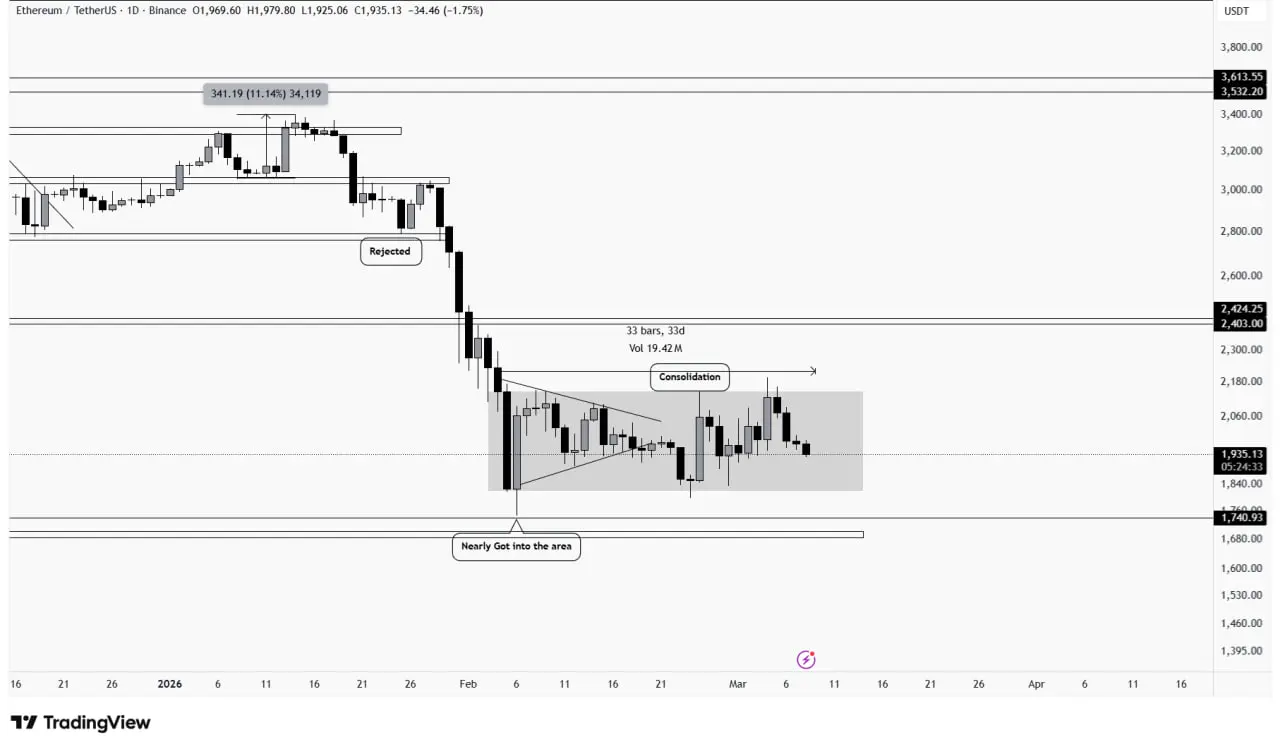
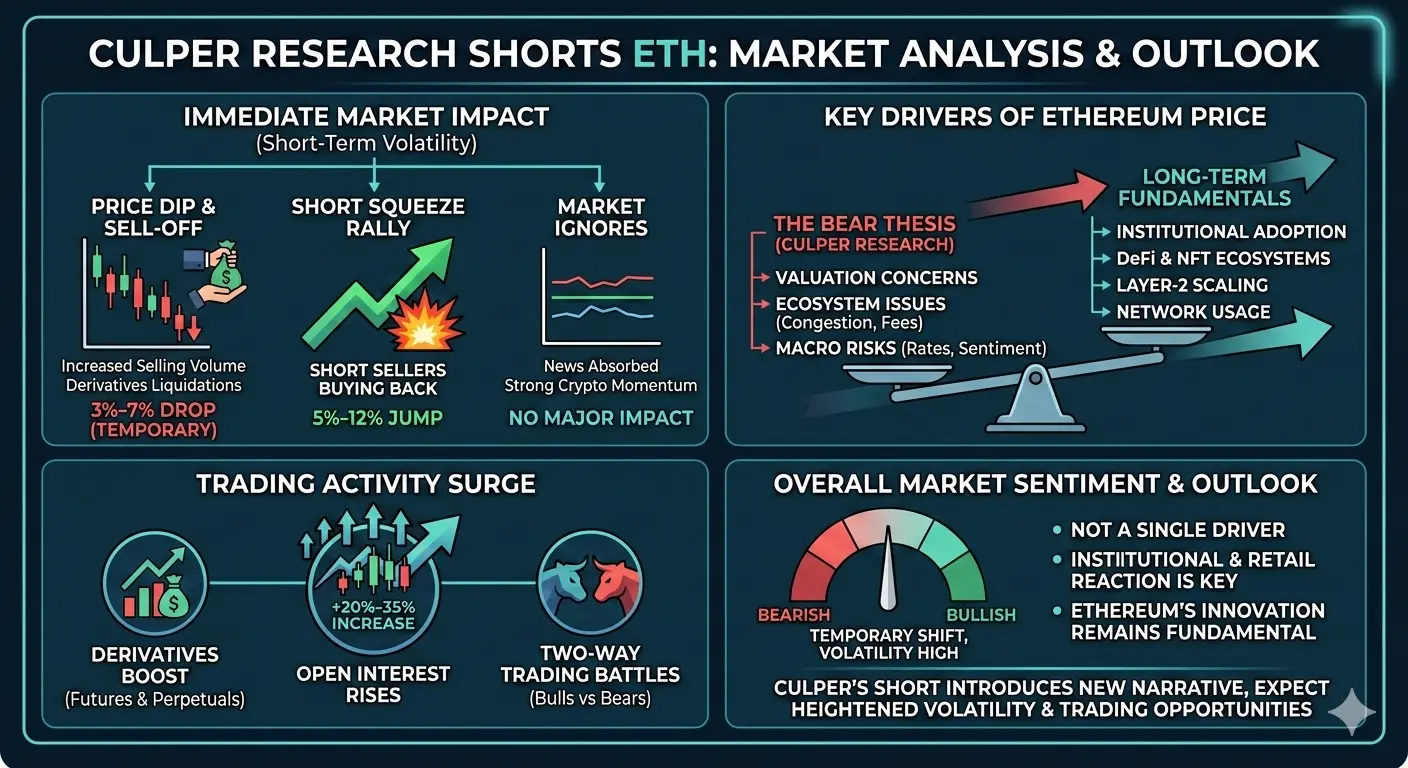
Market reaction was swift but contained. Ethereum dipped around 4-5% in the hours following the disclosure, trading near $1,980-$2,000 as of March 7, though it had briefly recovered above $2,000 earlier in the week amid broader crypto volatility. The announcement amplified existing downward pressure from macro factors like oil surges and geopolitical tensions, but ETH held support levels without cascading lower immediately.
The report drew sharp pushback from the Ethereum community and defenders. Vitalik's father, Dmitry Buterin, dismissed claims of insider selling as "pure nonsense" and attention-seeking. On-chain analysts countered that dusting/poisoning metrics were overstated (e.g., Coin Metrics estimates closer to 11% of transactions), and that fee reductions were intentional scaling success—evidenced by record weekly transactions at low costs. Staking data shows robust participation: entry queues remain backed up with millions of ETH waiting to join, exit queues near zero, and 29% of supply staked—hardly signs of capitulation. Ethereum's daily burn continued outpacing inflation in February 2026, preserving deflationary dynamics.
Critics of Culper note its history: the firm (led by Christian Lamarco) has faced accusations of manipulative tactics, including using fake identities in past campaigns and exaggerated claims that led to legal challenges. Some view this as a classic short-seller playbook—publish alarming research to trigger selling, profit on the downside, then exit.
For ETH holders in Karachi amid 2026's turbulent landscape, the disclosure adds noise to an already volatile asset. While Culper's points on fee compression and spam warrant monitoring, Ethereum's fundamentals—massive staking, ongoing Layer-2 growth, and institutional interest—suggest resilience. The upgrade aimed to make the network more usable; if adoption follows lower costs, it could validate bulls over time. Short-term, headline risks like this can pressure prices, but cycles show recoveries often follow such targeted attacks.
In essence, Culper's open short on ETH spotlights legitimate debates over post-Fusaka tokenomics but relies on contested interpretations of data and motives. Whether it proves prescient or another overhyped bear thesis remains unfolding watch staking metrics, fee trends, and competitive dynamics closely in the weeks ahead.
Culper Research Openly Shorts Ethereum Citing Post-Fusaka Tokenomics Impairment and Potential Death Spiral Risks
On March 5, 2026, activist short-selling firm Culper Research publicly disclosed a bearish position against Ethereum (ETH) and related securities, including BitMine Immersion Technologies (BMNR), the largest corporate ETH treasury holder. In a detailed report titled “Ethereum (ETH USD): What Vitalik Knows, and Tom Lee Doesn’t,” Culper argued that Ethereum's tokenomics have been fundamentally impaired following the December 2025 Fusaka network upgrade, potentially setting the stage for a prolonged downward pressure or even a "death spiral" in network incentives.
The core of Culper's thesis centers on the Fusaka upgrade's impact on Ethereum's economic model. Designed to enhance scalability by increasing the Layer-1 gas limit from 45 million to 60 million units, the upgrade expanded blockspace capacity significantly. While proponents viewed this as a step toward lower fees and broader adoption, Culper claims it backfired dramatically: transaction fees collapsed by roughly 90%, far exceeding the anticipated 10-30% reduction outlined by Vitalik Buterin and the core team. This fee compression slashed validator tip income per unit of gas by an estimated 40-50%, weakening staking yields and overall network security incentives.
Culper's on-chain analysis from January 2025 through February 2026 alleges that much of the reported network growth is illusory. The firm claims 95% of new wallet addresses stem from address-poisoning and dusting attacks, where spam transactions flood the chain to create fake activity. They estimate poisoning/dusting now accounts for 18-22.5% of all transactions (up from under 10% pre-Fusaka) and over half of recent transaction growth. This, they argue, masks genuine organic demand while inflating metrics like active addresses and transaction volumes that bulls like Fundstrat's Tom Lee cite as evidence of strength.
The report further highlights competitive pressures, noting Ethereum's loss of share in development activity and DeFi TVL to faster, cheaper alternatives like Solana. With lower fees reducing validator rewards, Culper warns of a potential vicious cycle: declining staking participation could compromise security, deterring users and developers, which in turn further depresses fees and yields—hence the "death spiral" framing.
Adding fuel to the bear case, Culper points to alleged sales by Ethereum co-founder Vitalik Buterin, claiming on-chain data shows him offloading over 19,000 ETH (valued at around $40 million at the time) in recent months. They interpret this as a signal that even Ethereum's creator recognizes the deteriorating fundamentals, contrasting it with persistent bullish calls from figures like Tom Lee, who they accuse of "throwing good money after bad."
Culper's position extends beyond spot ETH to equities tied to the ecosystem, notably BitMine Immersion Technologies. The firm criticizes BitMine's large ETH treasury (around 4.47 million ETH), claiming much of it is underwater amid the price dip below $2,000, and questions the viability of its staking strategy in a low-fee environment.
Market reaction was swift but contained. Ethereum dipped around 4-5% in the hours following the disclosure, trading near $1,980-$2,000 as of March 7, though it had briefly recovered above $2,000 earlier in the week amid broader crypto volatility. The announcement amplified existing downward pressure from macro factors like oil surges and geopolitical tensions, but ETH held support levels without cascading lower immediately.
The report drew sharp pushback from the Ethereum community and defenders. Vitalik's father, Dmitry Buterin, dismissed claims of insider selling as "pure nonsense" and attention-seeking. On-chain analysts countered that dusting/poisoning metrics were overstated (e.g., Coin Metrics estimates closer to 11% of transactions), and that fee reductions were intentional scaling success—evidenced by record weekly transactions at low costs. Staking data shows robust participation: entry queues remain backed up with millions of ETH waiting to join, exit queues near zero, and 29% of supply staked—hardly signs of capitulation. Ethereum's daily burn continued outpacing inflation in February 2026, preserving deflationary dynamics.
Critics of Culper note its history: the firm (led by Christian Lamarco) has faced accusations of manipulative tactics, including using fake identities in past campaigns and exaggerated claims that led to legal challenges. Some view this as a classic short-seller playbook—publish alarming research to trigger selling, profit on the downside, then exit.
For ETH holders in Karachi amid 2026's turbulent landscape, the disclosure adds noise to an already volatile asset. While Culper's points on fee compression and spam warrant monitoring, Ethereum's fundamentals—massive staking, ongoing Layer-2 growth, and institutional interest—suggest resilience. The upgrade aimed to make the network more usable; if adoption follows lower costs, it could validate bulls over time. Short-term, headline risks like this can pressure prices, but cycles show recoveries often follow such targeted attacks.
In essence, Culper's open short on ETH spotlights legitimate debates over post-Fusaka tokenomics but relies on contested interpretations of data and motives. Whether it proves prescient or another overhyped bear thesis remains unfolding watch staking metrics, fee trends, and competitive dynamics closely in the weeks ahead.