














BlockRider

vip
Age 1.1 Yıl
Peak Tier 0
No content yet
#SECDeFiNoBrokerNeeded
The hashtag #SECDeFiNoBrokerNeeded refers to discussions in the crypto and financial world about decentralized finance (U.S. Securities and Exchange Commission (SEC) and Decentralized Finance (DeFi)). It highlights the idea that DeFi systems allow people to perform financial activities such as trading, lending, borrowing, and investing without relying on traditional brokers, banks, or centralized intermediaries. Supporters of DeFi argue that blockchain technology provides transparency, lower fees, and direct control over assets, making financial systems more open and ac
post-image
post-image
  • Reward
  • 2
  • Repost
  • Share
BlackRiderCryptoLord:
2026 GOGOGO 👊
View More
#Circle拒冻结Drift被盗USDC
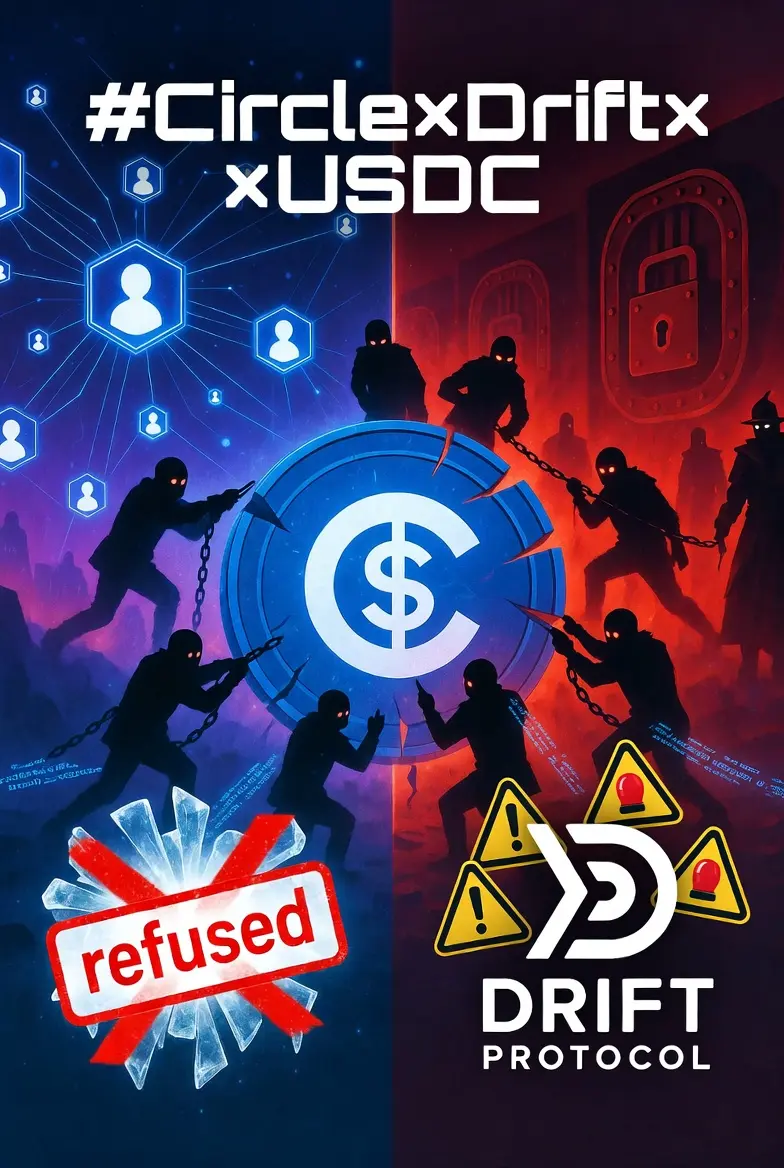
The hashtag #Circle拒冻结Drift被盗USDC refers to a controversial situation in the cryptocurrency world involving Circle Internet Financial, the issuer of USD Coin, and Drift Protocol. In this case, Drift reportedly experienced a hack or security breach in which a certain amount of USDC was stolen by attackers. In many such incidents, users expect centralized entities like Circle to step in and freeze the stolen funds to prevent hackers from using or transferring them. However, this hashtag highlights that Circle either refused or did not take immediate action to freeze the st
DRIFT10,58%
post-image
post-image
  • Reward
  • Comment
  • Repost
  • Share
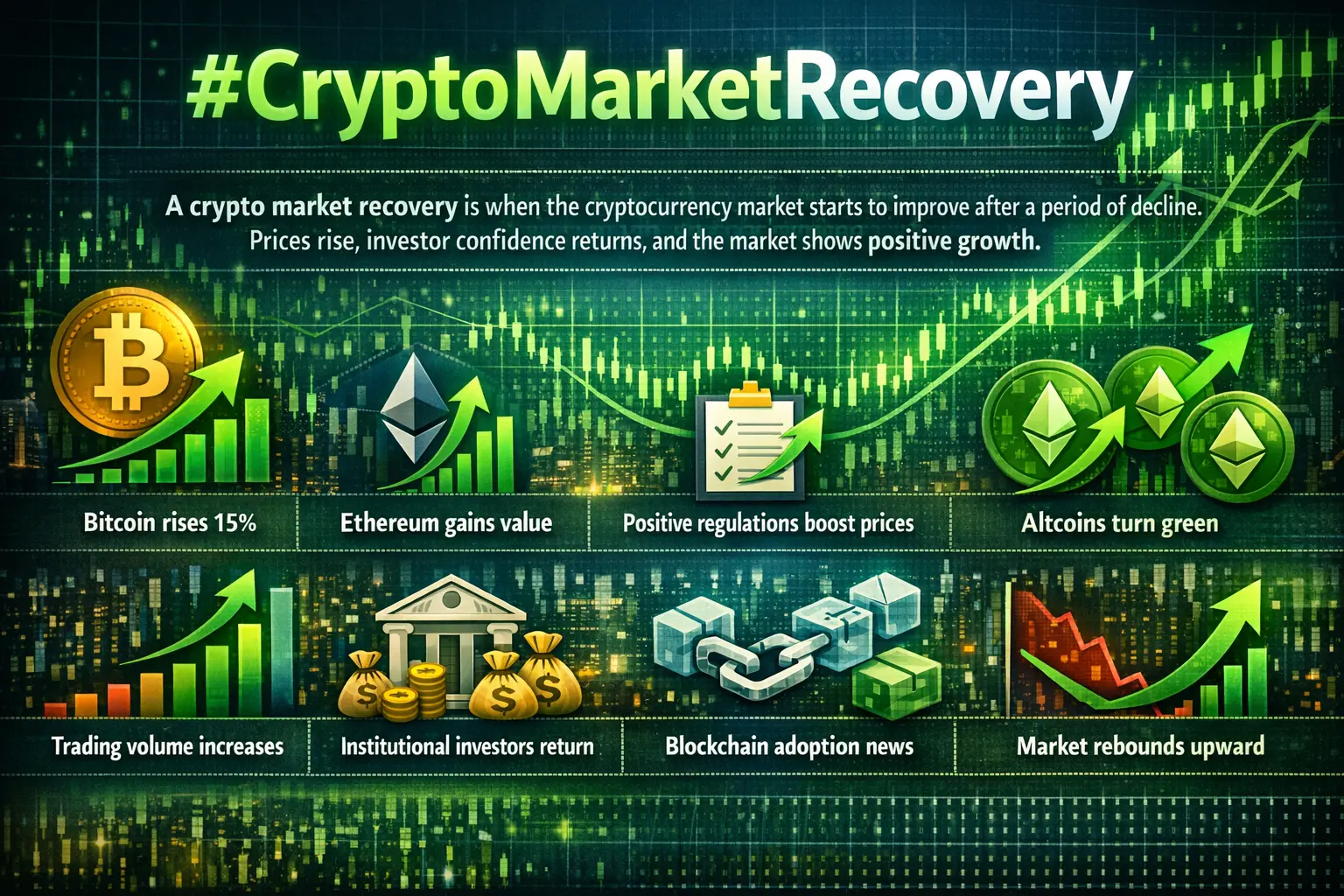
#CryptoMarketRecovery
#CryptoMarketRecovery refers to a phase in which the cryptocurrency market begins to improve after experiencing a downturn or bearish period. During this time, digital assets such as Bitcoin, Ethereum, and other altcoins start to regain their value as investor confidence returns. A recovery often occurs due to positive news, increased adoption, favorable regulations, or improved economic conditions. It reflects a shift from fear and selling pressure to optimism and buying activity. Traders and investors view this period as an opportunity to re-enter the market or expand
BTC1,08%
ETH2,68%
post-image
post-image
  • Reward
  • Comment
  • Repost
  • Share
#Gate13thAnniversaryDr.HanLetter
The hashtag #Gate13thAnniversaryDrHanLetter refers to a special message or letter written by Dr. Han to celebrate the 13th anniversary of the Gate platform, which is commonly associated with a cryptocurrency exchange. This letter is usually shared with the community to highlight the company’s journey, major achievements, and growth over the past 13 years. It often includes appreciation for users, investors, and partners who supported the platform along the way. In addition, the message may discuss challenges faced in the crypto industry and how the platform ov
post-image
post-image
  • Reward
  • Comment
  • Repost
  • Share
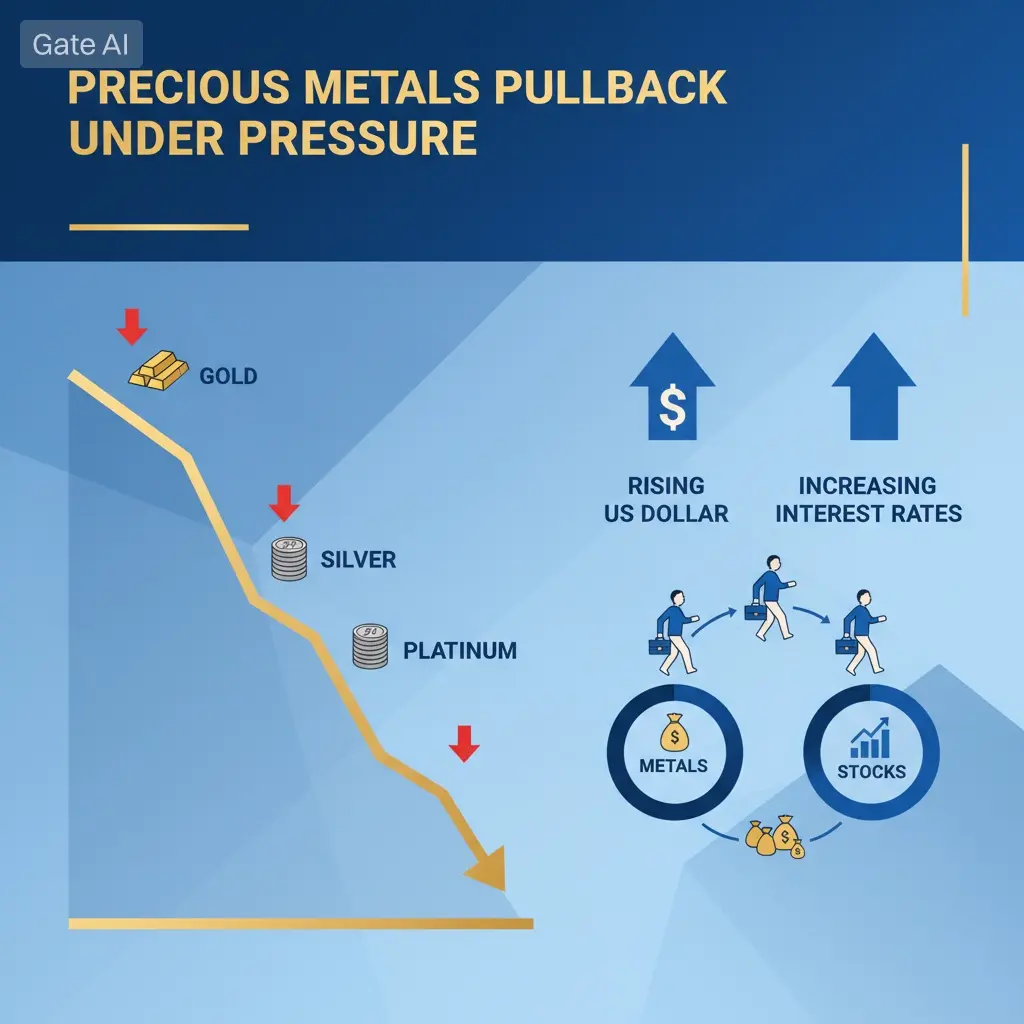
#PreciousMetalsPullBackUnderPressure
This hashtag refers to a situation in the financial market where the prices of precious metals such as gold, silver, and platinum experience a decline because of strong selling pressure or unfavorable economic conditions. In global markets, precious metals are often considered safe-haven assets, meaning investors buy them during uncertainty. However, when market conditions change—such as when the US dollar becomes stronger, interest rates rise, or inflation data reduces demand—investors may start selling these assets. This selling activity creates pressure
post-image
  • Reward
  • Comment
  • Repost
  • Share
#ArthurYiLaunchesOpenXLabs
The hashtag #ArthurYiLaunchesOpenXLabs refers to the announcement or celebration of a new initiative started by a person named Arthur Yi called OpenXLabs. This tag is commonly used on social media platforms to highlight the launch of a new tech-related project, startup, research lab, or innovation hub. It suggests that Arthur Yi has introduced a platform focused on development, experimentation, or advanced technology solutions. OpenXLabs may represent a space where ideas, software, artificial intelligence, or digital tools are created and improved. People use this h
post-image
post-image
post-image
  • Reward
  • Comment
  • Repost
  • Share
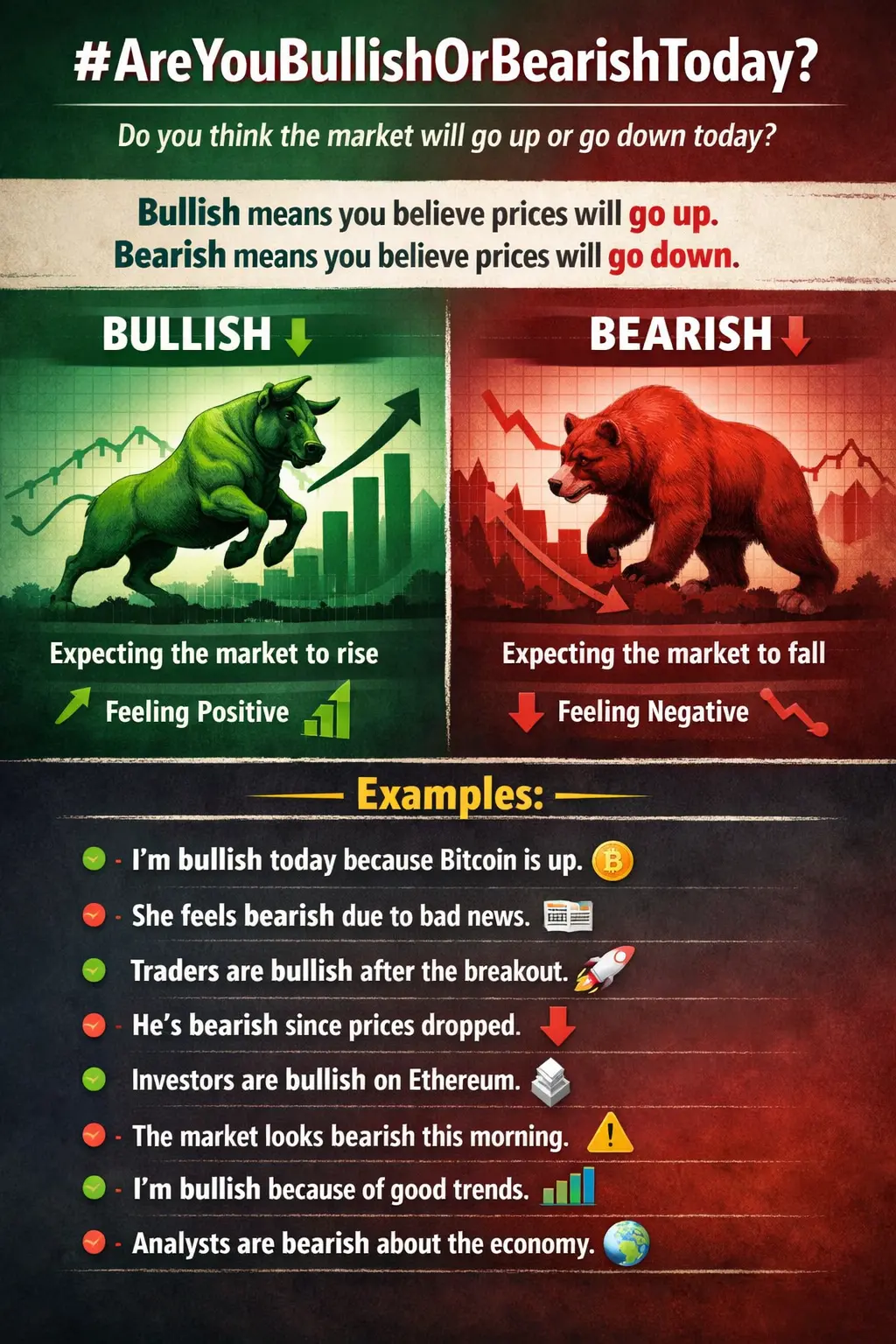
#AreYouBullishOrBearishToday?
#AreYouBullishOrBearishToday? is a popular question used in financial markets like stocks and cryptocurrency. It asks about a person’s opinion on whether prices will rise or fall during the day. The term bullish represents a positive outlook, meaning the person expects the market to go up and prices to increase. On the other hand, bearish represents a negative outlook, where the person believes the market will go down and prices will decrease. Traders, investors, and analysts use these terms to share their market sentiment based on news, trends, charts, or person
BTC1,08%
ETH2,68%
post-image
post-image
  • Reward
  • Comment
  • Repost
  • Share
#GateSquareAprilPostingChallenge
The #GateSquareAprilPostingChallenge is a community engagement event hosted by Gate.io on its social platform GateSquare. The main goal of this challenge is to encourage users to stay active by posting regularly throughout the month of April. Participants are expected to share valuable content such as crypto insights, market trends, trading tips, personal experiences, and educational posts. This challenge helps build a strong and interactive community where users can learn from each other and improve their knowledge. The more creative, informative, and consist
BTC1,08%
  • Reward
  • Comment
  • Repost
  • Share
#GateSpotDerivativesBothTop3
GateSpotDerivativesBothTop3 means that a crypto exchange (like Gate.io) has achieved a Top 3 ranking in both Spot trading and Derivatives trading markets. Spot trading involves buying and selling real cryptocurrencies instantly, while derivatives trading includes futures or contracts where traders speculate on price movements without owning the actual asset. Being in the top 3 in both categories shows that the platform has high trading volume, strong liquidity, and user trust. It highlights the exchange’s overall strength and popularity in the global crypto market
post-image
post-image
  • Reward
  • Comment
  • Repost
  • Share
#GateLaunchesPreIPOS
GateLaunchesPreIPOs refers to a new feature where the crypto exchange Gate.io allows users to invest in companies before they go public through an IPO (Initial Public Offering). A Pre-IPO opportunity means investors can buy shares at an early stage, often at a lower price than the public listing. This can be profitable if the company grows and its stock value increases after launching on the stock market. However, it also carries risk because the company is not yet fully tested in public markets. Gate.io providing this feature bridges traditional finance and crypto by giv
post-image
post-image
  • Reward
  • Comment
  • Repost
  • Share
#GateSquareAprilPostingChallenge
The #GateSquareAprilPostingChallenge is a content creation campaign organized by Gate.io to encourage users to stay active and share valuable ideas during the month of April. In this challenge, participants regularly post content on GateSquare, including market insights, crypto news, educational threads, or personal opinions. The main purpose is to build a strong and engaging community where users can learn from each other and express their creativity. Consistency, originality, and quality play an important role in ranking on the leaderboard. Users who post fr
BTC1,08%
ETH2,68%
post-image
post-image
  • Reward
  • 1
  • Repost
  • Share
HighAmbition:
thnxx for the update information about crypto market
#GateSquareAprilPostingChallenge
The Invisible Competition No One Warned You About
April on Gate Square looks simple on the surface. You join the #GateSquareAprilPostingChallenge, publish your first post, and the system responds. For new users, that first reward creates a dangerous illusion—it feels like success is automatic.
It isn’t.
What you are actually stepping into is a competition that is never announced, never displayed, and never explained. There is no public leaderboard, no visible ranking, and no clear signal of where you stand. Yet every post you publish is immediately compared ag
post-image
post-image
Dubai_Prince
#GateSquareAprilPostingChallenge
The Invisible Competition No One Warned You About
April on Gate Square looks simple on the surface. You join the #GateSquareAprilPostingChallenge, publish your first post, and the system responds. For new users, that first reward creates a dangerous illusion—it feels like success is automatic.
It isn’t.
What you are actually stepping into is a competition that is never announced, never displayed, and never explained. There is no public leaderboard, no visible ranking, and no clear signal of where you stand. Yet every post you publish is immediately compared against thousands of others competing for the same limited resource: attention.
This is where most participants misunderstand the system.
You are not just posting content. You are entering a live environment where every second, users are deciding what deserves to be seen and what deserves to be ignored. That decision is silent, but its impact is absolute. Posts that fail to capture attention don’t decline gradually—they disappear without resistance. No warning, no feedback, no recovery.
In contrast, a post that captures even a small amount of engagement begins to move differently. A single interaction signals relevance. Multiple interactions create momentum. Once momentum forms, the post is no longer static—it becomes part of a distribution cycle that extends beyond your initial reach.
This is the real structure behind visibility.
Consistency alone does not secure position. Repetition without adjustment weakens performance over time, as the system begins to recognize patterns that fail to generate response. Meanwhile, content that consistently earns interaction builds silent credibility within the algorithmic flow.
There are also mechanical factors that influence exposure. Including the event link and relevant hashtags increases the number of entry points into the system. This does not guarantee visibility, but it increases the probability of being evaluated within active attention streams.
However, even if a post succeeds in capturing attention, one condition remains unchanged. Without completing KYC, no rewards can be claimed. Visibility without verification leads to zero outcome. The system does not compensate incomplete participation.
This challenge is not about how often you post.
It is about how often your content is selected over everything else competing beside it.
Because in a system where competition is invisible, only one metric defines progress—attention that converts into measurable action.
#GateSquareAprilPostingChallenge
#Gate广场四月发帖挑战
#CryptoContentStrategy
#AttentionEconomy

repost-content-media
  • Reward
  • Comment
  • Repost
  • Share
#GateLaunchesPreIPOS
Gate’s entry into the Pre-IPO segment is not just a product expansion; it is a calculated move into one of the most asymmetric layers of global finance. For decades, early-stage equity exposure has been tightly controlled by venture capital firms, private equity funds, and deeply networked institutional players. Access was never widely available because access itself was the edge. By the time assets reached public markets, most of the exponential upside had already been captured.
What Gate is attempting is a redistribution of that access layer. It introduces a model where
post-image
Dubai_Prince
#GateLaunchesPreIPOS
Gate’s entry into the Pre-IPO segment is not just a product expansion; it is a calculated move into one of the most asymmetric layers of global finance. For decades, early-stage equity exposure has been tightly controlled by venture capital firms, private equity funds, and deeply networked institutional players. Access was never widely available because access itself was the edge. By the time assets reached public markets, most of the exponential upside had already been captured.
What Gate is attempting is a redistribution of that access layer. It introduces a model where retail participants can engage with pre-public opportunities through a crypto-native infrastructure. On the surface, this appears to flatten the playing field. In reality, it only changes one variable: entry. The deeper asymmetries remain intact.
Information asymmetry continues to dominate this space. Institutional investors operate with structured due diligence pipelines, direct communication with founders, and preferential allocation terms. Retail participants entering through a platform interface are still relying on curated data, delayed insights, and externally constructed narratives. The result is a system where access is democratized, but informational advantage is still concentrated.
Valuation dynamics in this environment are fundamentally different from public markets. There is no continuous price discovery mechanism driven by open liquidity. Instead, valuations are shaped by funding rounds, projected growth assumptions, and negotiated capital inflows. When these assets are introduced into a crypto ecosystem, a new layer of complexity emerges. Price perception can become detached from underlying fundamentals, driven instead by demand cycles, narrative strength, and speculative positioning.
This creates a feedback loop where perceived opportunity drives inflows, and inflows reinforce perceived valuation. Without strong transparency frameworks, this loop can produce temporary mispricing that is difficult to correct due to the absence of real-time market depth. In such conditions, price becomes a reflection of sentiment before it becomes a reflection of value.
Liquidity presents another structural challenge. Traditional Pre-IPO investments are designed with long time horizons and limited exit options. Participants accept lock-up periods as part of the risk-return tradeoff. In contrast, crypto market participants are conditioned for high liquidity, rapid execution, and flexible exit strategies. Introducing illiquid assets into a high-liquidity culture creates a mismatch that must be carefully managed.
If exit pathways, secondary markets, or redemption mechanisms are not clearly defined, user expectations will diverge from product reality. This divergence does not just create volatility in pricing; it creates volatility in trust. In a market where sentiment shifts quickly, that becomes a critical risk factor.
Regulatory exposure remains the most significant long-term variable. Pre-IPO participation intersects directly with securities laws, investor accreditation requirements, and cross-border capital regulations. Any platform operating in this space must navigate a fragmented and evolving compliance landscape. The sustainability of this model will depend on how effectively it aligns with regulatory frameworks as they mature. A tightening environment could impose structural limitations that directly impact scalability.
From a strategic perspective, this move signals a broader ambition. Gate is positioning itself beyond the role of a trading venue and into the domain of capital formation and early-stage investment distribution. This represents a transition toward a multi-layer financial ecosystem where trading, funding, and asset origination coexist within a single platform environment.
If executed with precision, this model could accelerate the convergence between traditional finance and blockchain-based infrastructure. It may also introduce competitive pressure across the industry, pushing other platforms to explore similar integrations around tokenized real-world assets and private market exposure.
However, adoption will not be driven by structure alone. Market psychology will play a defining role. The concept of accessing early-stage opportunities before public listing carries strong narrative appeal. It attracts capital not just through logic, but through the expectation of outsized returns. This can drive short-term participation and inflows, but it does not guarantee long-term sustainability.
Sustained success will depend on actual performance outcomes. If early participants do not realize meaningful returns over time, narrative strength will weaken, and engagement will decline. In this sense, the model is not only a financial experiment but also a test of whether retail-accessible early-stage investing can deliver consistent value in a highly dynamic market environment.
Risk management in this context requires a shift in mindset. These assets cannot be approached as short-term trades. They require capital allocation strategies aligned with longer time horizons, lower liquidity expectations, and higher uncertainty tolerance. Treating them as liquid instruments introduces a structural mismatch that increases downside exposure.
Gate’s Pre-IPO initiative ultimately represents an inflection point in how access, ownership, and capital flow may evolve. It challenges the traditional boundaries between private and public markets, while leveraging the distribution efficiency of crypto platforms. At the same time, it introduces new layers of complexity that must be addressed through transparency, disciplined execution, and regulatory awareness.
This is not a guaranteed evolution; it is an active experiment. Its success will depend on whether it can balance accessibility with clarity, innovation with compliance, and opportunity with realistic expectations. Until those elements are proven in practice, this remains a high-potential but structurally sensitive development at the edge of modern finance.
#Gate广场四月发帖挑战
repost-content-media
  • Reward
  • Comment
  • Repost
  • Share
#EthereumFoundationSells3750ETH
Ethereum Foundation Offloads 3,750 ETH — A Calculated Treasury Move or a Confidence Signal Worth Watching?*
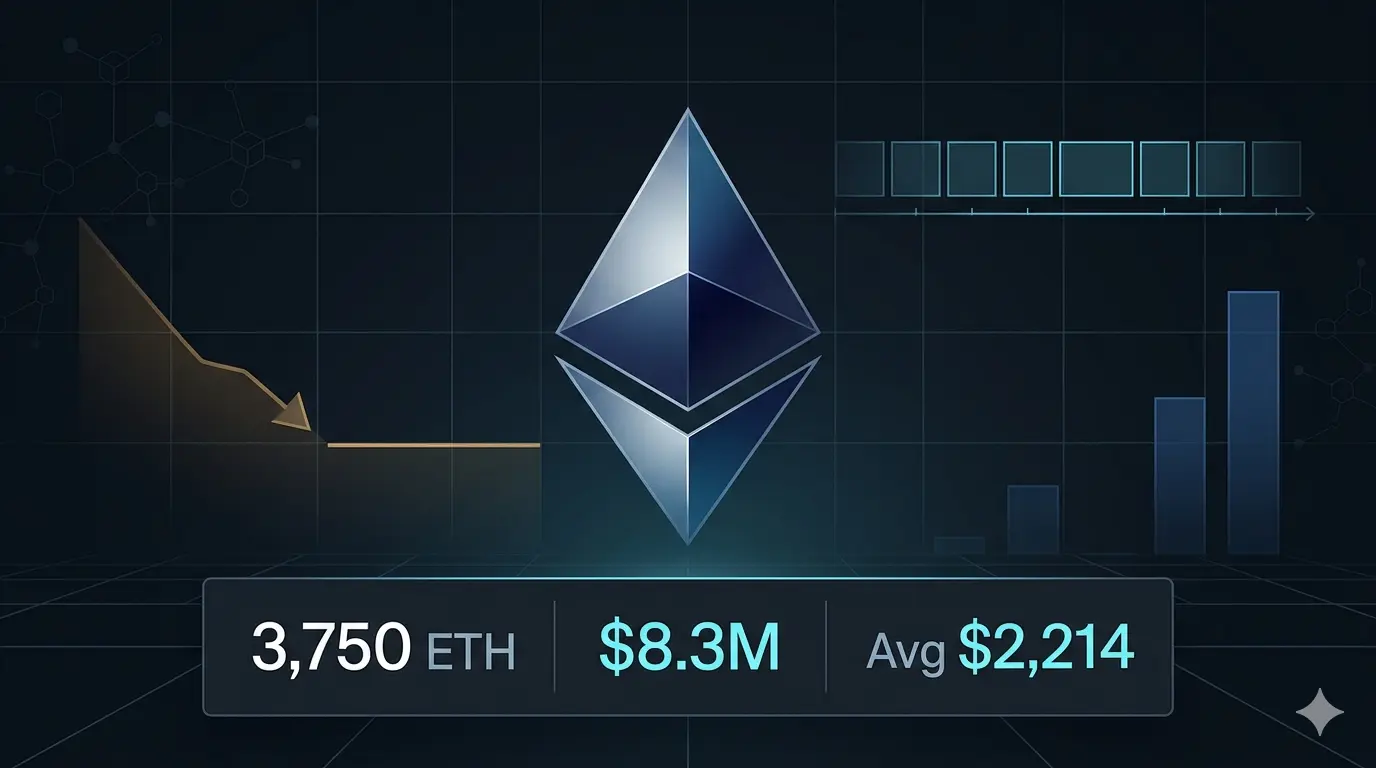
On April 8, 2026, the Ethereum Foundation formally announced its intention to convert 5,000 ETH into stablecoins to fund ongoing research and development, grants, and ecosystem donations. As of the latest on-chain data tracked by analyst EmberCN, 3,750 of those 5,000 ETH have already been sold, with only 1,250 ETH remaining in the disposal queue. The average execution price across the nine completed trades sits at approximately $2,214 per ETH, generating
ETH2,68%
COW1,47%
post-image
Dubai_Prince
#EthereumFoundationSells3750ETH
Ethereum Foundation Offloads 3,750 ETH — A Calculated Treasury Move or a Confidence Signal Worth Watching?*
On April 8, 2026, the Ethereum Foundation formally announced its intention to convert 5,000 ETH into stablecoins to fund ongoing research and development, grants, and ecosystem donations. As of the latest on-chain data tracked by analyst EmberCN, 3,750 of those 5,000 ETH have already been sold, with only 1,250 ETH remaining in the disposal queue. The average execution price across the nine completed trades sits at approximately $2,214 per ETH, generating roughly $8.3 million in proceeds. The sales were not executed in a single block dump — they were distributed in batches of 416.67 ETH each, routed through CoW Protocol's TWAP (Time-Weighted Average Price) mechanism specifically to minimize market impact and avoid slippage-driven price dislocation.
This is not a rogue or panic-driven event. It sits within a well-established pattern of the Ethereum Foundation converting a portion of its native ETH treasury into fiat-equivalent stablecoins on a periodic basis to finance operational expenses. The Foundation has been transparent about this practice, and prior instances in 2022, 2023, and 2025 followed similar mechanics. What distinguishes this particular tranche is the timing — ETH has endured a brutal first quarter in2026, falling over 30% between January and March under the pressure of escalating tariff-war macro headwinds and a broader crypto risk-off environment. Selling into a partial recovery at $2,214 average rather than at cycle lows could be read as disciplined treasury management rather than distress liquidation.
From a market structure standpoint, the impact has been measured. ETH is currently trading around $2,247 at the time of writing, up roughly 0.35% in the last 24 hours, with a 7-day gain of approximately 6.5%. The 30-day performance has stabilized at around +7.4%, suggesting the broader downtrend from Q1 is decelerating. The TWAP batch execution appears to have achieved its design objective — price absorbed the flow without generating a visible negative spike on any major timeframe.
However, the broader context around ETH right now is layered with competing narratives. On the institutional accumulation side, Bitmine Immersion Technologies — the ETH treasury company backed by Tom Lee — disclosed a single-week purchase of 71,252 ETH on April 6, bringing its total holdings to approximately 4.8 million ETH, worth over $10 billion at current prices. That institutional conviction at scale offers a meaningful counterweight to the Foundation's relatively modest $8.3 million exit. On the ETF side, however, flows remain negative. The week ending April 9 saw spot Ethereum ETFs record net outflows in excess of $200 million, with ETHA (BlackRock's product) accounting for the largest portion of redemptions. The divergence between large corporate treasury buyers and ETF retail/institutional flows is a tension worth monitoring.
Technical indicators as of April 11 reflect a market at a crossroads. On the 4-hour chart, moving averages remain in a bullish configuration with MA7 above MA30 above MA120, and ADX sits at 31.6, confirming trend strength. But both CCI and Williams %R have crossed into overbought territory on the 15-minute, 4-hour, and daily timeframes simultaneously — a classic late-trend warning. The 4-hour MACD has flashed a death cross, and the 15-minute chart shows a price/MACD divergence at the recent high, suggesting upside momentum may be exhausting near the $2,250 to $2,260 resistance cluster. The daily chart offers a partial offset — a MACD bullish divergence is forming, implying that any pullback may be shallow rather than a full trend reversal.
For participants trying to contextualise the Foundation's ETH sale within the wider picture: the sale itself is unlikely to be a directional signal about ETH's future price. The Ethereum Foundation does not trade for profit — it converts ETH to fund the operational and research overhead of a non-profit organisation. The use of TWAP over nine batches demonstrates deliberate care not to front-run the market or trigger undue volatility. What the event does reinforce is that the Foundation maintains a live treasury management cadence, and participants should expect further tranches if ETH price continues to recover toward and above the $2,500 level, which may bring the next periodic sale forward.
The remaining 1,250 ETH (approximately $2.7 million at current prices) will likely be sold using the same TWAP structure. The market has shown it can absorb this scale cleanly. The more structurally significant variables for ETH's medium-term trajectory remain the pace of spot ETF flows normalisation, the continued accumulation by corporate treasury buyers like Bitmine, and the outcome of any macro de-escalation tied to global trade policy — factors that dwarf the Foundation's selling programme in raw order-of-magnitude terms.
Sentiment is currently split: 49% positive versus 36% negative in social discussions, with discussion volume holding steady and no abnormal spike in bearish chatter following the sale announcement. The Fear and Greed Index sits at 15, still deep in fear territory, which historically has preceded mean-reversion recoveries more often than sustained capitulation.
The Ethereum Foundation selling ETH is not news that should move markets materially. But it is a data point worth tracking — not for what it says about ETH's value, but for what it says about the Foundation's runway planning and the price levels at which it chooses to execute.
---
#EthereumFoundation #ETH #CryptoMarket #GateSquare
repost-content-media
  • Reward
  • Comment
  • Repost
  • Share
#MetaReleasesMuseSpark
Meta Just Fired the Most Important Shot in the AI Race — and the Feature You Need to Know is Contemplating Mode
On April 8, 2026, Meta Superintelligence Labs introduced Muse Spark — not an update, not a patch, not a minor revision. This represents a ground-up architectural shift in Meta’s AI development trajectory since its Llama series. Following a reported $14.3 billion strategic investment involving Scale AI’s Alexandr Wang, internal restructuring, and mixed reception to earlier models, Meta has now delivered a significantly enhanced system.
Among all features introd
MUSE2,67%
SPK-0,09%
post-image
Dubai_Prince
#MetaReleasesMuseSpark
Meta Just Fired the Most Important Shot in the AI Race — and the Feature You Need to Know is Contemplating Mode
On April 8, 2026, Meta Superintelligence Labs introduced Muse Spark — not an update, not a patch, not a minor revision. This represents a ground-up architectural shift in Meta’s AI development trajectory since its Llama series. Following a reported $14.3 billion strategic investment involving Scale AI’s Alexandr Wang, internal restructuring, and mixed reception to earlier models, Meta has now delivered a significantly enhanced system.
Among all features introduced, one stands out in terms of capability impact: Contemplating Mode.
---
What is Contemplating Mode — and Why Does It Matter?
Most AI systems operate through sequential processing: a query is handled step-by-step to produce an output. While performance improves with model quality, the underlying process remains largely linear.
Muse Spark introduces a different approach.
Contemplating Mode is described as a parallel multi-agent orchestration system integrated into the inference process. When activated, multiple AI agents process the same problem simultaneously from different analytical perspectives, later synthesizing outputs into a unified response. This approach may enhance reasoning depth and output diversity.
Meta states that this mode is designed to compete with advanced reasoning systems such as Gemini Deep Think and GPT Pro. However, comparative performance claims should be considered indicative and subject to independent validation.
For complex tasks — including research, coding, legal interpretation, or financial modeling — such architecture may offer efficiency and analytical advantages, depending on implementation and real-world performance.
---
The Full Architecture: Overview of Capabilities
Muse Spark is presented as a native multimodal model, capable of processing text, images, video, and contextual data within a unified system. This differs from models where multimodality is layered on top of a base architecture.
Meta has reported competitive benchmark results across evaluation frameworks such as Humanity's Last Exam (HLE), ARC AGI 2, and GPQA Diamond. These results are based on internal testing and are subject to third-party verification.
Additional capabilities include:
Health Reasoning. Developed using curated datasets with input from licensed professionals. Outputs are informational in nature and should not be considered medical advice.
Visual Coding. Ability to generate code or product logic from visual prompts, which may assist in rapid prototyping workflows.
Commerce Integration. Utilizes platform data across Meta’s ecosystem (Facebook, Instagram, etc.) to generate personalized recommendations. Actual outcomes may vary based on user data and system limitations.
Agentic Tool Use. Supports interaction with external tools for browsing, retrieval, and computation, depending on system permissions and availability.
---
Market Context and Considerations
Following the announcement, Meta’s stock reportedly experienced a short-term increase. Market reactions may reflect investor sentiment but do not guarantee long-term performance.
The broader implications for AI-related sectors — including infrastructure, semiconductors, and cloud services — are speculative and depend on adoption rates, competitive dynamics, and macroeconomic conditions.
Statements regarding potential impacts on markets or sectors are for informational purposes only and should not be interpreted as financial advice.
---
Availability and Access
Muse Spark is currently available via Meta AI platforms, with further integration across Meta-owned applications expected. Developer access via API has been announced but remains subject to release timelines and access policies.
---
Meta has made a significant investment in advancing its AI capabilities, resulting in a system that introduces new architectural approaches such as Contemplating Mode and expands multimodal integration.
While early indicators suggest competitive positioning, real-world performance, scalability, and adoption will ultimately determine its long-term impact.
#MetaReleasesMuseSpark #MuseSpark #MetaAI
#GateSquareAprilPostingChallenge
Take action now and post your first plaza message in April!
👉️ https://www.gate.com/post
🗓 Deadline: April 15th
Details: https://www.gate.com/announcements/article/50520
repost-content-media
  • Reward
  • Comment
  • Repost
  • Share
#ArthurYiLaunchesOpenXLabs 🚀 | Smart Capital Rotation or Narrative Trap? A Ruthless Market Breakdown
The transformation of Yi Lihua — from one of the largest Ethereum whales to the architect behind OpenX Labs — is not just a personal evolution. It is a signal. A signal that capital, strategy, and conviction are actively rotating toward a new frontier.
But here’s the real question most people are too afraid (or too lazy) to ask:
Is this a visionary shift… or just another cycle-driven narrative play disguised as innovation?
Let’s break it down step by step — no hype, no bias, just raw market lo
ETH2,68%
AAVE1,46%
post-image
Dubai_Prince
#ArthurYiLaunchesOpenXLabs 🚀 | Smart Capital Rotation or Narrative Trap? A Ruthless Market Breakdown
The transformation of Yi Lihua — from one of the largest Ethereum whales to the architect behind OpenX Labs — is not just a personal evolution. It is a signal. A signal that capital, strategy, and conviction are actively rotating toward a new frontier.
But here’s the real question most people are too afraid (or too lazy) to ask:
Is this a visionary shift… or just another cycle-driven narrative play disguised as innovation?
Let’s break it down step by step — no hype, no bias, just raw market logic.
---
🧠 Background & Investment Legacy — Skill or Survivorship Bias?
Yi built his reputation through LD Capital by backing 300+ blockchain projects across multiple cycles.
On paper, that sounds elite.
But let’s challenge that:
In bull markets, everyone looks like a genius
Early-stage investing has high dispersion of outcomes
A few winners can mask dozens of silent failures
So the real edge here is not just access — it’s timing + conviction + risk recycling
And this is where Yi stands out: He doesn’t just invest early — he rotates aggressively across narratives before saturation hits
👉 That’s not luck. That’s cycle awareness.
---
📊 Ethereum Strategy — Conviction or Controlled Gambling?
Yi’s ETH strategy was bold — but let’s call it what it really was:
Leveraged conviction.
Core components:
DCA accumulation during fear phases
DeFi leverage via protocols like Aave
Active exit management (profit-taking + stop-loss discipline)
Now here’s the uncomfortable truth:
👉 Leverage doesn’t amplify intelligence — it amplifies mistakes
And this matters because…
---
💰 The 2025 ETH Accumulation — Smart Money or Overexposure?
Peak exposure:
~600K ETH
~$2B+ leveraged position
Avg entry ~$3,200
This wasn’t just bullish.
This was systemic-level exposure to a single asset
Let’s be brutally honest:
If ETH pumped → he’s a legend
If ETH dumped → forced exit (which happened)
👉 This is not asymmetric risk
👉 This is directional dominance with leverage risk stacked on top
That’s dangerous — even for “smart money”
---
📉 The 2026 Liquidation — Failure or Professional Discipline?
Losses: ~$700M+
Positions: Fully closed
Retail mindset: “OMG he lost, he was wrong”
Professional mindset: “He survived”
Because the real metric isn’t PnL — it’s longevity
Yi avoided:
Cascade liquidation
Market maker exploitation
Total capital destruction
👉 That’s not failure
👉 That’s damage control at institutional scale
But here’s the critical insight:
The market forced him out — not his thesis
And that changes everything.
---
🔄 Post-Liquidation Shift — Adaptation or Narrative Pivot?
After exiting ETH:
On-chain exposure dropped sharply
Short-term positioning likely hedged
Focus shifted → AI sector
Now ask yourself:
Is this:
1. A strategic evolution?
2. Or capital chasing the next hype cycle?
The answer is:
👉 Both
Smart capital doesn’t marry narratives
It uses them
---
🤖 OpenX Labs — Real Innovation or Soft Power Positioning?
The launch of OpenX Labs is where things get interesting.
Positioning:
AI-first investment platform
Hands-on builder collaboration
Early-stage aggressive entry
Sounds strong.
But let’s dissect it deeper:
Strengths:
AI cost barriers are dropping
Small teams can now outperform large orgs
Speed > scale in early innovation
Weaknesses:
AI startup failure rate is brutal
No moat = fast competition
Capital alone ≠ execution
👉 Translation:
This is a high-upside, high-fragility model
---
🔗 AI × Crypto — Inevitable Convergence or Forced Narrative?
This is where most posts go wrong — they assume synergy without questioning it.
Let’s be precise:
Where it makes sense:
Autonomous trading agents
AI-powered DeFi optimization
Data-driven on-chain decision systems
Where it’s overhyped:
“AI tokens” with zero real utility
Fake decentralization narratives
Projects using AI as marketing, not infrastructure
👉 Not all AI + crypto = value
Only: AI that improves efficiency, liquidity, or decision-making survives
Everything else dies.
---
📈 Market Impact — Reality vs Speculation
Let’s stress-test your projections:
Liquidity (5–12% increase)
✔ Possible — IF capital rotates aggressively into AI narratives
Volume (30–100% spikes)
✔ Likely — but temporary
→ driven by hype cycles, not fundamentals
Price (5–20% rallies)
✔ Yes — but fragile
Because:
👉 Narrative pumps ≠ sustainable trends
Sustainability requires:
Users
Revenue
Retention
Without that?
It’s just another rotation bubble.
---
🪙 Token Status — Opportunity or Red Flag?
No token. No airdrop. No sale.
At first glance → bullish (no dilution)
But also means:
👉 No immediate value capture mechanism
Future tokenization?
Possible.
But here’s the brutal truth:
Most late-stage tokens become exit liquidity for early investors
So unless:
Utility is real
Demand is organic
Ecosystem is sticky
👉 Token = liability, not asset
---
⚠️ Risk Reality Check — What Most People Will Ignore
Let’s cut the noise:
AI narrative is already overheating
Early-stage = high mortality rate
Leverage history shows risk appetite remains high
Macro (rates, BTC dominance) still controls everything
👉 Translation:
You are not early — you are early-mid narrative phase
Big difference.
---
🔥 Final Take — Signal or Illusion?
Yi Lihua is not just launching another fund.
He’s doing what smart capital always does:
👉 Exit crowded trades
👉 Enter emerging narratives
👉 Position before retail arrives
But here’s your edge:
Don’t copy him blindly.
Because:
He can absorb $700M losses
You can’t
---
📌 Bottom Line — Ruthless Truth
Proven investor? Yes
Risk-heavy operator? Also yes
AI bet logical? Yes
Guaranteed success? Absolutely not
---
🧩 Conclusion — The Only Thing That Matters
This is not about Yi.
This is not about OpenX Labs.
This is about where capital flows next
And right now?
👉 The battlefield is AI × Crypto
But winners won’t be:
The loudest
The fastest
The most hyped
They will be:
✔ The most efficient
✔ The most useful
✔ The most adaptive
---
Final Reality Check:
If you’re here for hype → you’ll exit late
If you’re here for structure → you might survive
And in this market?
👉 Survival is the real alpha.
repost-content-media
  • Reward
  • Comment
  • Repost
  • Share
#CanaryFilesSpotPEPEETF
Canary Capital Files Spot PEPE ETF — A Turning Point or a Market Illusion?
1. What Actually Happened?
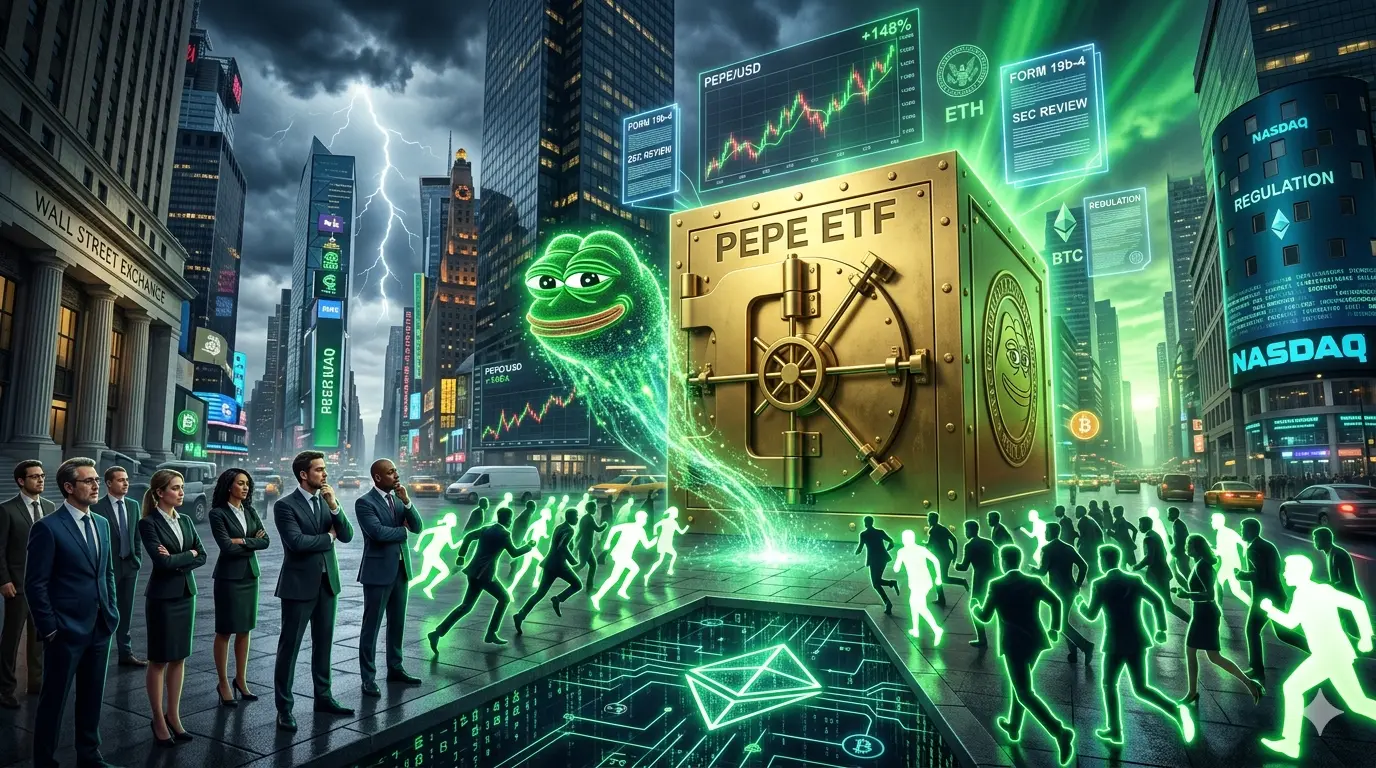
On April 8, 2026, Canary Capital filed a Form S-1 with the U.S. Securities and Exchange Commission (SEC) to launch what could become the first-ever Spot PEPE ETF in U.S. history.
Let’s strip away the hype and look at this for what it really is:
This is not just another filing.
This is the first institutional attempt to package pure meme speculation into a regulated financial product.
And that immediately raises a serious question:
> Are we witnessing financial innovati
PEPE-0,19%
XRP0,51%
SOL-0,26%
HBAR-1,19%
Dubai_Prince
#CanaryFilesSpotPEPEETF
Canary Capital Files Spot PEPE ETF — A Turning Point or a Market Illusion?
1. What Actually Happened?
On April 8, 2026, Canary Capital filed a Form S-1 with the U.S. Securities and Exchange Commission (SEC) to launch what could become the first-ever Spot PEPE ETF in U.S. history.
Let’s strip away the hype and look at this for what it really is:
This is not just another filing.
This is the first institutional attempt to package pure meme speculation into a regulated financial product.
And that immediately raises a serious question:
> Are we witnessing financial innovation — or the formalization of irrational market behavior?
Because once something becomes an ETF, it stops being “just crypto.”
It becomes Wall Street-compatible speculation.
---
2. Who Is Canary Capital — And Why This Filing Matters More Than It Looks?
Canary Capital is not a random player chasing headlines.
They’ve already navigated regulatory pathways for multiple altcoin-linked products, including XRP, Solana, HBAR, and SEI. That track record matters — because:
👉 Most firms talk about innovation
👉 Canary is actually testing the SEC’s limits
This filing is not about PEPE alone.
It’s a strategic probe into how far regulators are willing to go down the risk curve.
And if you understand that, you realize something critical:
> This is less about launching a product — and more about redefining what is legally acceptable as an “asset.”
---
3. What Is a Spot PEPE ETF — And Why It Changes the Game?
A Spot ETF means the fund directly holds PEPE tokens on-chain, tracking real-time price.
Simple explanation — but massive implications:
This removes every traditional barrier:
No wallets
No private keys
No DeFi knowledge
No friction
Now ask yourself:
> What happens when speculation becomes frictionless?
Because that’s exactly what this does — it turns meme coin exposure into a one-click decision inside traditional finance.
This is not convenience.
This is liquidity acceleration at scale.
---
4. The Technical Structure — Where Risk Quietly Hides
The filing confirms:
Direct PEPE holdings on Ethereum
Real-time spot tracking
Explicit acknowledgment of evolving regulations
That last point is not a footnote — it’s a warning.
The document is essentially saying:
> “We are building this while the rules are still being written.”
And that creates a dangerous dynamic:
Investors assume legitimacy because it’s an ETF
But the regulatory foundation is still unstable
This mismatch between perceived safety vs. actual uncertainty is where markets become fragile.
---
5. PEPE’s Current Market Position — Strength or Exhaustion?
Let’s cut through the noise.
Yes, short-term structure looks bullish.
Yes, sentiment is positive.
But zoom out:
Down ~85% from ATH
Weak long-term structure
Rising price with declining volume
That last one matters most.
> Price going up while participation goes down is not strength — it’s thinning conviction.
And thinning conviction doesn’t support sustained moves.
It supports sharp reversals.
So the real question is:
Are we seeing accumulation — or exit liquidity forming?
---
6. Market Sentiment — Organic Growth or Reflexive Hype?
86% positive sentiment sounds impressive.
But look deeper:
No major KOL involvement
Retail-driven conversation spike
4.2x discussion increase in days
This is classic early hype behavior.
And here’s the uncomfortable truth:
> Retail excitement without institutional confirmation is not a signal of strength — it’s a signal of emotional positioning.
Markets don’t reward emotion.
They exploit it.
---
7. Market Impact — Break It Down Without Bias
Impact 1: Short-Term Price Catalyst
ETF filings create anticipation-driven demand, not fundamental value.
That demand is fragile.
And the fact that PEPE didn’t strongly rally post-announcement tells you something important:
> The market is interested — but not convinced.
---
Impact 2: Legitimization of Meme Coins
This is where things get serious.
If a meme coin gets an ETF, the narrative shifts from:
“Speculative joke” → “Recognized financial instrument”
That’s not evolution.
That’s reclassification of risk.
And once that door opens, it doesn’t close.
---
Impact 3: Institutional Access
Yes, this could unlock capital.
But let’s be precise:
Institutions don’t chase memes.
They chase structured opportunities with asymmetric upside.
If they enter, it won’t be emotional.
It will be strategic — and likely short-term.
---
Impact 4: Ethereum Benefits
More PEPE activity = more Ethereum usage.
But don’t overestimate this.
This is secondary impact, not primary value creation.
---
Impact 5: Regulatory Signal
This is the most important layer.
The SEC allowing this filing to exist means:
> The boundary of “acceptable crypto exposure” is expanding.
Not confirmed — but clearly being tested.
---
8. Risks — The Part Most People Ignore
Let’s be brutally honest:
No intrinsic value model
High manipulation potential
No precedent for approval
Regulatory uncertainty explicitly acknowledged
And here’s the biggest one:
> Bitcoin ETFs took over a decade to get approved — and they had institutional backing, infrastructure, and narrative strength.
PEPE has none of that.
So if you think approval is “likely,” you’re not analyzing — you’re hoping.
---
9. The Bigger Picture — This Is Not About PEPE
This is about market evolution under regulatory pressure.
We are moving through phases:
BTC → ETH → Altcoins → High-risk assets → Meme layer
Each step increases accessibility
Each step increases risk
And eventually:
> The system tests how much speculation it can absorb before instability appears.
This filing is part of that test.
---
10. Bottom Line — What Actually Matters Now?
Forget hype. Watch signals:
SEC reaction timeline
Real volume expansion (not just price movement)
Copycat filings from other firms
Sector-wide meme coin movement
Because one thing is clear:
> If this succeeds, it changes the structure of the entire crypto market.
If it fails, it exposes the limits of institutional tolerance for speculation.
Either way — this is not noise.
This is a boundary event.
---
Final Thought — The Question Most People Are Avoiding
Everyone is asking:
“Will the ETF get approved?”
Wrong question.
The real question is:
> Should a meme coin even reach the level where an ETF is considered in the first place?
Because the answer to that doesn’t just define PEPE.
It defines the future credibility of the entire crypto market.
---
#CanaryFilesSpotPEPEETF #GateSquareAprilPostingChallenge Full rules, terms, and exact reward structure:
https://www.gate.com/announcements/article/50520#GateSquare,
repost-content-media
  • Reward
  • Comment
  • Repost
  • Share
#CryptoMarketRecovery
How Altcoin Seasons Start and End: The Hidden Mechanics of Crypto Market Cycles
There is a dangerous illusion in crypto markets that altcoin seasons are chaotic bursts of opportunity — random explosions where everything goes up and everyone wins. That belief is not just naive, it is financially destructive.
Altcoin seasons are not chaos. They are structured capital migrations disguised as euphoria. And if you don’t understand the mechanics underneath, you are not investing — you are volunteering to be exit liquidity.
---
How an altcoin season begins
An altcoin season doe
BTC1,08%
ETH2,68%
Dubai_Prince
#CryptoMarketRecovery
How Altcoin Seasons Start and End: The Hidden Mechanics of Crypto Market Cycles
There is a dangerous illusion in crypto markets that altcoin seasons are chaotic bursts of opportunity — random explosions where everything goes up and everyone wins. That belief is not just naive, it is financially destructive.
Altcoin seasons are not chaos. They are structured capital migrations disguised as euphoria. And if you don’t understand the mechanics underneath, you are not investing — you are volunteering to be exit liquidity.
---
How an altcoin season begins
An altcoin season does not begin with altcoins. That’s your first mistake if you think it does.
It begins with Bitcoin exhausting momentum.
After a strong upward move, Bitcoin enters a phase where upside becomes inefficient — not because it cannot go higher, but because the risk-to-reward compresses. Smart capital sees this first. Not retail. Not influencers. Capital that actually moves markets.
This is where the rotation starts — quietly, almost invisibly.
Liquidity doesn’t immediately flood into random altcoins. That’s amateur thinking. It flows into high-liquidity, high-conviction assets first, primarily Ethereum. Why? Because institutions and large players need depth. They need exits. They don’t gamble — they position.
Only after Ethereum and other large caps establish relative strength does the second wave begin. And this is where most people misread the market.
They think “altseason is here.”
Wrong.
This is still early-stage distribution by smart money, not the real explosion. The real move begins when narratives detach from fundamentals. When price starts moving faster than logic can justify — that’s when speculation takes control.
Mid-caps start running. Then low-caps. Then absolute garbage starts pumping.
That’s not strength. That’s a warning.
---
The peak of the altcoin season
This is where the market becomes psychologically unstable.
The peak is not defined by price — it is defined by behavior.
When everyone believes they are early, you are late.
This phase is driven almost entirely by FOMO (Fear of Missing Out), and it is amplified by social proof. Gains become stories. Stories become narratives. Narratives become perceived reality.
At this stage, fundamentals are irrelevant. Valuations are meaningless. Liquidity becomes reflexive — price increases attract more buyers, which pushes prices even higher.
You’ll see:
Low-quality projects outperforming strong ones
Influencers replacing analysts
Short-term gains being mistaken for skill
Risk completely mispriced
And here’s the brutal truth most won’t tell you:
This is not where you build wealth. This is where wealth transfers.
From late, emotional participants → to early, disciplined ones.
If you’re buying aggressively here, you are not “catching opportunity” — you are absorbing someone else’s profits.
---
How an altcoin season ends
The end never announces itself. That’s why most people miss it.
There is no headline. No warning signal. No clear reversal candle that saves you.
Instead, it begins at the point of maximum confidence.
While retail is fully deployed and emotionally committed, smart capital is already exiting. Quietly. Systematically. Without noise.
And then the shift happens:
Bitcoin regains relative strength.
This is critical. Because Bitcoin is not just another asset — it is the liquidity anchor of the entire market. When capital flows back into Bitcoin, it doesn’t just leave altcoins — it drains them.
What follows is not a gentle correction. It is a liquidity vacuum.
Prices don’t fall because fundamentals changed. They fall because buyers disappear.
And here’s where the harshest reality hits:
The majority of participants enter during the final phase. They buy based on recent performance, not positioning. They are not early — they are perfectly timed to lose.
This is where narratives collapse.
This is where confidence evaporates.
This is where “long-term believers” are created — not by conviction, but by being trapped.
---
The core cycle
Strip away the charts, the indicators, the noise — and what remains is simple:
Altcoin seasons are cycles of human behavior mapped onto liquidity flows.
They move through three phases:
Silent accumulation (ignored, boring, rational)
Explosive expansion (loud, fast, emotional)
Violent contraction (painful, regret-driven, disillusioning)
Most people only participate in one phase — the worst one.
Because they are not studying the cycle. They are reacting to it.
---
The uncomfortable conclusion
If you want honesty — here it is:
Most market participants do not lose because the market is unpredictable.
They lose because they enter at the exact point where risk is highest and upside is lowest.
They confuse visibility with opportunity.
They confuse momentum with safety.
They confuse noise with confirmation.
And the market punishes that confusion every single cycle.
---
Final reality check
If you cannot identify:
Where liquidity is coming from
Where it is going next
And who you are trading against
Then you are not part of the cycle.
You are the fuel for it.
#CryptoMarketRecovery #GateSquareAprilPostingChallenge
repost-content-media
  • Reward
  • Comment
  • Repost
  • Share
#OilEdgesHigher | Geopolitical Pressure, Energy Shock, and the Silent Repricing of Global Capital
A structural shift is unfolding across global markets, but most participants are still reading it through an outdated lens. What is happening now is not a simple oil rally, not a temporary geopolitical fear spike, and not a standard risk-off rotation. It is a deeper repricing of global energy dependency, monetary trust, and capital allocation under conditions of persistent geopolitical friction.
The Strait of Hormuz is once again at the center of market attention. Not because it has been closed, b
Dubai_Prince
#OilEdgesHigher | Geopolitical Pressure, Energy Shock, and the Silent Repricing of Global Capital
A structural shift is unfolding across global markets, but most participants are still reading it through an outdated lens. What is happening now is not a simple oil rally, not a temporary geopolitical fear spike, and not a standard risk-off rotation. It is a deeper repricing of global energy dependency, monetary trust, and capital allocation under conditions of persistent geopolitical friction.
The Strait of Hormuz is once again at the center of market attention. Not because it has been closed, but because it does not need to be closed for the system to feel pressure. Modern markets are hypersensitive to probability, not just events. The mere rise in tension has already inflated shipping insurance premiums, rerouted risk models, and introduced a silent tax on global energy flow. This is the part most observers miss: the disruption is not only physical, it is financial and anticipatory.
Energy markets are not reacting to scarcity yet. They are reacting to fragility.
When insurance costs rise, when routing uncertainty increases, and when supply chains begin to price in “what if scenarios,” crude oil does not need an actual supply shock to climb. The market begins to pre-price disruption. This is why oil edges higher even in the absence of confirmed supply cuts. It is a forward-looking system absorbing geopolitical entropy.
Historically, this kind of oil-driven inflation pressure would trigger a clean macro response: tightening liquidity conditions, equity de-risking, and a rotation into cash or sovereign bonds. But the current cycle is not behaving according to that script.
The response structure has changed.
Instead of fleeing risk entirely, capital is rotating into asymmetric hedges and non-sovereign stores of value. That is where the real transformation begins.
Bitcoin is the clearest expression of this shift.
The price stability of Bitcoin in the $72,000–$73,000 range is not just technical consolidation. It is behavioral confirmation. In previous macro stress environments, rising oil and geopolitical uncertainty would compress liquidity and trigger forced crypto drawdowns. That reflex is weakening.
What is emerging instead is selective absorption of supply.
Large holders are not reacting to volatility as exit liquidity. They are treating it as accumulation opportunity. The market structure around Bitcoin now reflects a slow but deliberate institutionalization of demand. This is not retail-driven momentum; it is balance-sheet driven positioning.
The $72K–$73K range has become a psychological equilibrium zone. Above it, speculation accelerates. Below it, institutional demand becomes visible. The importance of this range is not numerical; it is structural. It represents a battleground between short-term macro fear and long-term monetary conviction.
The critical distinction in this cycle is that Bitcoin is no longer behaving purely as a risk asset. It is increasingly being priced as a macro hedge against sovereign instability, fiscal expansion, and energy-linked inflation volatility. This is the early phase of a reclassification event in global asset hierarchy.
But Bitcoin alone does not explain the full picture.
The regulatory environment is undergoing a parallel transformation that is equally important. The emergence of structured legislative frameworks such as the CLARITY Act signals a shift from ambiguity to institutional integration. For years, crypto operated under overlapping jurisdictional uncertainty, where regulatory risk suppressed institutional allocation.
That phase is ending.
Once regulatory boundaries become defined, capital does not enter slowly; it enters structurally. Pension funds, sovereign wealth vehicles, and large asset managers do not allocate meaningfully into uncertain categories. They require classification, custody clarity, and legal predictability. When those conditions are met, allocation is not speculative—it becomes policy-driven.
This is the hidden acceleration mechanism in the current cycle. The price action is visible, but the capital authorization layer is what determines long-term trajectory.
At the same time, a deeper convergence is taking place between traditional finance and decentralized systems. The separation between TradFi and DeFi is no longer conceptual. It is operationally dissolving.
Institutions are no longer experimenting with blockchain infrastructure as a parallel system. They are integrating it into settlement layers, treasury management, and asset tokenization frameworks. The introduction of real-world asset mechanisms, including commodity-linked digital instruments, is turning energy and metals into programmable financial primitives.
This is where oil becomes directly relevant to crypto in a structural sense.
As energy markets become more volatile, tokenized representations of commodities and synthetic stable settlement layers gain importance. The system begins to require faster hedging mechanisms than traditional markets can provide. Blockchain-based settlement and collateral mobility become functional advantages, not ideological alternatives.
This creates a feedback loop:
Energy volatility increases hedging demand
Hedging demand increases demand for programmable liquidity
Programmable liquidity strengthens decentralized settlement systems
Stronger decentralized systems attract institutional capital
Institutional capital stabilizes the entire structure
This is not a narrative cycle. It is a systems-level reinforcement loop.
Meanwhile, traditional markets remain exposed to the same geopolitical constraints they have always been vulnerable to. Oil remains a physical commodity tied to geography, chokepoints, and military risk. Crypto, by contrast, is not bound by physical routing constraints. It reacts to macro conditions, but it does not depend on physical supply chains.
This divergence is the foundation of a gradual decoupling process.
It does not mean crypto is independent of macro forces. It means crypto is increasingly responding to macro forces differently than traditional assets. The correlation structure is evolving, not disappearing.
In practical terms, oil volatility creates inflation pressure. Inflation pressure reshapes monetary expectations. Monetary expectations influence liquidity conditions. And liquidity conditions determine how capital flows into risk and alternative assets.
Bitcoin is now positioned at the intersection of all four forces.
If Bitcoin continues to hold its current structural range under sustained energy-driven macro stress, it reinforces a critical conclusion: the market is no longer pricing BTC as a secondary speculative instrument. It is pricing it as a core macro reserve alternative within an unstable global energy and liquidity regime.
The implication is significant.
We are moving toward a financial environment where energy shocks, geopolitical friction, and monetary expansion do not simply cause liquidation events. They cause capital migration events.
Capital is learning to move differently.
Not away from risk entirely, but away from systems that cannot price risk efficiently in real time.
Oil rising under geopolitical pressure is the visible layer.
Bitcoin stability under that same pressure is the structural signal.
And the convergence of regulation, institutional adoption, and decentralized infrastructure is the hidden engine driving the next phase of global capital reallocation.
The market is no longer reacting to individual catalysts in isolation. It is transitioning into a regime where energy, liquidity, and decentralization are co-dependent variables in the same system.
That is the real story behind #OilEdgesHigher.
Not a commodity spike.
A regime shift in how the world prices uncertainty.
If this structure holds, the next expansion phase will not be driven by sentiment alone. It will be driven by forced recognition that the old separation between energy markets, monetary systems, and digital assets no longer exists in practice.
They are converging into one interconnected pricing architecture.
And Bitcoin is sitting directly at the center of that convergence.
#OilEdgesHigher #Gate13周年
#GateSquareAprilPostingChallenge
Take action now and post your first plaza message in April!
👉️ https://www.gate.com/post
🗓 Deadline: April 15th
Details: https://www.gate.com/announcements/article/50520
repost-content-media
  • Reward
  • Comment
  • Repost
  • Share
#MyWeekendTradingPlan
Weekend conditions in crypto are not about direction — they are about liquidity behavior under compression. In mid-April 2026, the market is not trending freely; it is being shaped by reduced participation, forced positioning, and reaction-based volatility rather than conviction-driven moves.
Total market capitalization sits near $2.46T, while Bitcoin dominance at 59.1% continues to confirm one dominant truth: capital is still clustered at the top, and rotation remains selective rather than expansive.
Bitcoin holding above $73K is not a bullish signal by itself — it is a
BTC1,08%
ETH2,68%
SOL-0,26%
SUI0,24%
Dubai_Prince
#MyWeekendTradingPlan
Weekend conditions in crypto are not about direction — they are about liquidity behavior under compression. In mid-April 2026, the market is not trending freely; it is being shaped by reduced participation, forced positioning, and reaction-based volatility rather than conviction-driven moves.
Total market capitalization sits near $2.46T, while Bitcoin dominance at 59.1% continues to confirm one dominant truth: capital is still clustered at the top, and rotation remains selective rather than expansive.
Bitcoin holding above $73K is not a bullish signal by itself — it is a liquidity anchor. The market is not rewarding breakout behavior; it is rewarding stability under pressure. Ethereum’s relative strength is supportive, but still secondary in structural influence.
The real mistake retail participants make in environments like this is assuming “small green moves” equal trend continuation. They don’t. They usually represent market-making within range-bound liquidity traps.
The key factor this weekend is not price — it is participation depth. Thin books amplify reaction speed, not direction clarity. That means both upside and downside moves are structurally exaggerated but statistically unreliable.
Where opportunity exists is not in chasing majors, but in tracking relative strength under low-liquidity expansion behavior. Assets showing resilience during compression phases tend to lead early when volatility returns. Solana remains one of the cleanest beta expressions of this behavior, while newer ecosystems like Sui reflect speculative efficiency — fast movement, but fragile confirmation structure.
The critical external risk is not “black swan headlines” in abstract terms — it is liquidity disruption during structurally weak hours, where order books cannot absorb sudden macro triggers. In that scenario, price discovery becomes emotional, not analytical.
Conclusion:
This is not a “bull or bear weekend.”
It is a liquidity integrity test across fragmented participation.
Survival here is not about prediction — it is about refusing low-quality entries, respecting compression, and only engaging when structure confirms continuation rather than reaction.
Most traders will try to be early.
Professionals will wait for the market to prove it is stable enough to deserve risk.
#GateSquareAprilPostingChallenge
repost-content-media
  • Reward
  • Comment
  • Repost
  • Share
  • Pin