What caused STBL token to crash 80% from $0.60 to $0.04: Price volatility and insider trading analysis
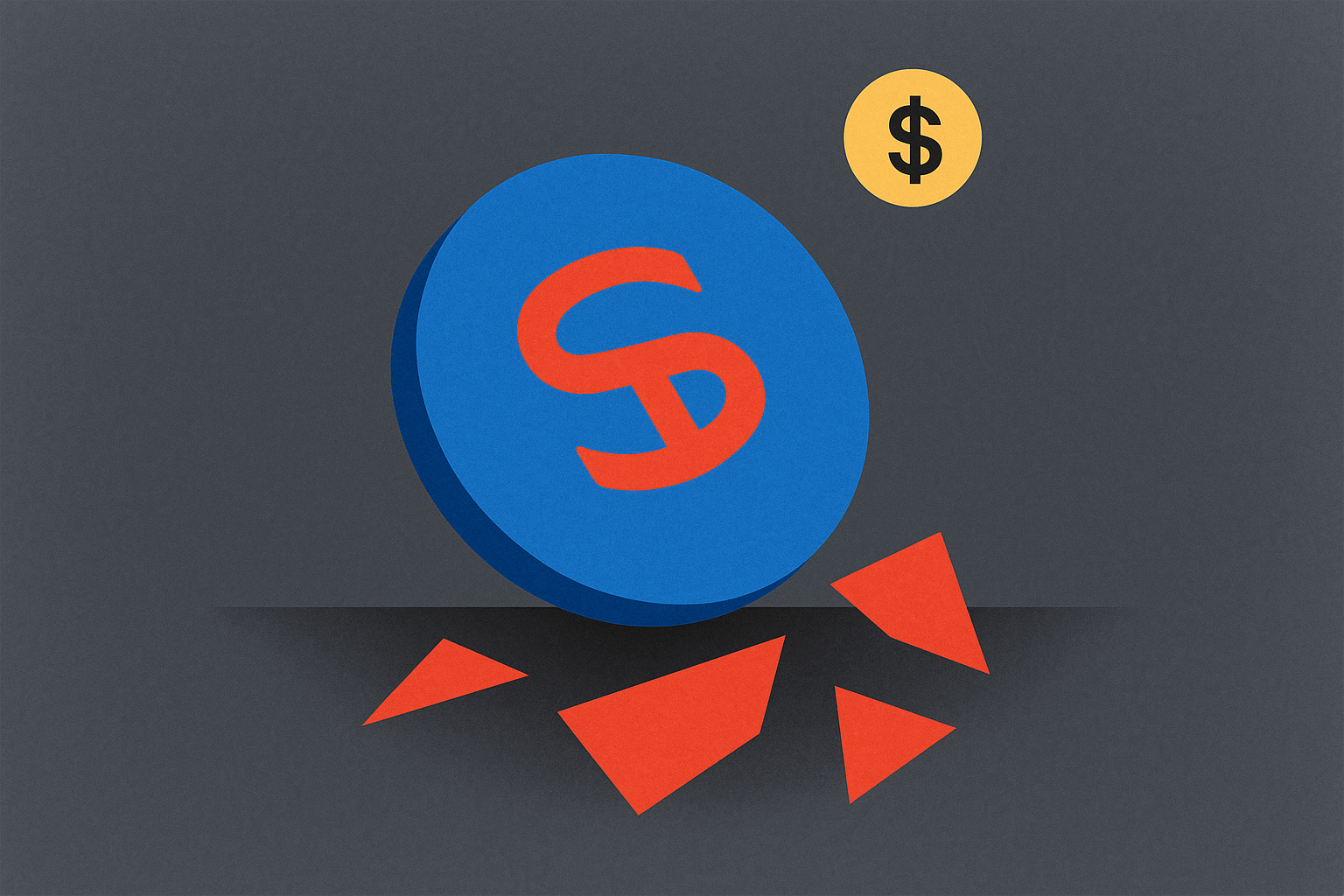
Price collapse from $0.60 to $0.04: A 93% crash driven by insider trading and execution failures
The STBL token experienced a devastating 93% price decline within just one month of its launch, plummeting from $0.60 to $0.04 and triggering significant market uncertainty. This dramatic STBL price collapse revealed multiple interconnected failures that compounded investor losses. Investigation into the crash uncovered insider trading allegations involving five specific addresses that had profited substantially during the token's early launch phase, accumulating over $10 million in gains. These same accounts subsequently orchestrated approximately $17 million in coordinated sell-offs, which directly triggered the sharp downward price pressure that devastated retail investors.
The execution failures extended beyond the insider actions themselves. Despite the STBL team's attempts to stabilize markets through protocol mechanisms—including a proposed USST repurchase and staking program scheduled for late October—these interventions proved insufficient to counter the selling pressure. The absence of adequate circuit-breakers or trading safeguards during the critical launch window allowed the accumulation and subsequent liquidation by insiders to occur with minimal friction. Token vesting mechanisms were also adjusted, with the team announcing that tokens vesting during certain quarters would not be minted, attempting retroactively to manage supply pressure. However, these corrective actions came too late to prevent the catastrophic price volatility that had already shaken confidence in the broader protocol ecosystem and raised serious questions about governance oversight.
Blockchain forensics reveal coordinated wallet activity extracting $10 million during token sale phase
Advanced blockchain forensics analysis uncovered a coordinated pattern of wallet activity that proved instrumental in triggering STBL's catastrophic price collapse. During the critical token sale phase in September 2025, five strategically linked wallets executed synchronized transactions that collectively extracted approximately $10 million in value from the STBL ecosystem. This coordinated wallet activity exhibited hallmarks of sophisticated market manipulation, with transactions carefully timed to exploit early trading momentum during the launch window.
The forensic examination revealed these addresses maintained synchronized behavior, suggesting unified control or coordination among participants. These wallets accumulated tokens during the initial distribution phase and systematically liquidated positions as STBL approached its peak of $0.60, cascading the token's value downward. This coordinated extraction during the token sale phase fundamentally altered market dynamics, converting early enthusiasm into panic selling that accelerated the decline toward $0.04.
The allegations of insider trading intensified when these wallets demonstrated knowledge of optimal exit timing, liquidating before broader market awareness. STBL founder Avtar Sehra publicly denied any team member involvement in these activities, attributing the coordinated wallet patterns to independent market actors. However, the synchronized nature of these transactions during such a critical early period raised significant questions about whether privileged information influenced the timing and coordination of these extractions.
Stablecoin depegging and liquidity crisis: USST falling to $0.96 within hours of launch
When USST debuted on Curve on October 10, 2025, the newly launched stablecoin faced an immediate crisis. Within hours of its launch, USST fell below its $1 peg to as low as $0.96, triggering widespread concerns about the project's viability. Despite STBL announcing a strategic partnership with Ondo Finance—which contributed $1.76 billion in total value locked—to use USDY as primary collateral for the stablecoin, insufficient liquidity proved insufficient to maintain stability.
This stablecoin depegging exposed critical vulnerabilities in the ecosystem's infrastructure. The liquidity crisis demonstrated that initial collateral backing was inadequate to handle selling pressure during the launch phase. Market participants quickly recognized that the stablecoin couldn't maintain its peg, leading to a reflexive loop between governance token confidence and perceived stablecoin resilience. As faith in USST eroded, investors simultaneously lost confidence in STBL, the governance token backing the entire ecosystem.
The depegging event triggered a sharp decline in STBL price, mirroring historical precedents like Terra's UST collapse. This interconnected dynamic meant that the stablecoin crisis directly translated into governance token depreciation, creating a downward spiral that ultimately contributed to STBL's devastating 80% crash from higher levels.
Market recovery attempts through token buyback program amid sustained volatility and investor confidence erosion
The STBL token buyback program represents a structured attempt to stabilize pricing amid sustained market turbulence. Initiated with a $1 million allocation, this recovery strategy demonstrates the team's commitment by transferring all repurchased tokens to a publicly visible Buyback Treasury Vault, enabling on-chain verification and transparency that directly addresses prior insider trading concerns.
Critical to supporting this recovery effort, the team suspended all token unlocks throughout Q1 2026, preventing additional circulating supply pressure during this vulnerable period. With the current circulating supply at 500 million STBL tokens, controlling release schedules becomes essential for maintaining price stability and bolstering investor confidence that had dramatically eroded following the 80% collapse.
However, the program's sustainability reveals a fundamental limitation. The buyback depends entirely on protocol revenue generated from USST adoption and transactions. Current USST circulation stands at just $2.7 million—creating a concerning 7:1 market capitalization ratio that suggests overvaluation risk. While approximately $3 million in total buybacks have occurred, this mechanism cannot independently reverse volatility without genuine ecosystem growth.
Investor confidence remains fragile despite these recovery attempts. The buyback program functions as a stabilization tool rather than a growth catalyst, addressing supply-side pressures but not demand-side concerns. Market sentiment reflects this nuanced position—the initiative demonstrates responsible treasury management, yet skepticism persists regarding whether protocol revenue will materialize sufficiently to sustain ongoing buyback cycles. The program's success ultimately hinges on whether USST achieves meaningful institutional and user adoption, transforming the stablecoin from a underutilized asset into the revenue-generating mechanism required for long-term STBL token price recovery.
FAQ
What were the specific reasons for STBL token's crash from $0.60 to $0.04?
STBL's 80% decline resulted from multiple factors: reduced market demand, weakened tokenomics fundamentals, significant capital outflows, decreased transaction volume, and loss of investor confidence. Market sentiment deterioration and competitive pressures further accelerated the price collapse during the period.
What evidence exists of insider trading in the STBL price crash?
Evidence includes abnormal transaction volumes before the crash and discrepancies in financial disclosures. Large trades preceded the 80% decline, and investigative reports suggest coordinated selling. However, no definitive proof of insider trading has been officially confirmed by regulatory authorities.
Which factors in the 80% price decline were due to market volatility and which were due to human manipulation?
Market volatility stemmed from economic fundamentals and sentiment shifts, while manipulation involved concentrated selling, whale movements, and coordinated trading activity by insiders exploiting liquidity imbalances to artificially suppress prices.
What response and explanation did the STBL project team provide regarding the token crash event?
The STBL team stated they are investigating the root causes and committed to implementing preventive measures. They emphasized STBL is community-driven, with the community determining future direction. The team promised timely updates on investigation findings.
How can investors identify and prevent risks of token crashes and insider trading similar to STBL?
Scrutinize private sale rounds, FDV ratios, and unlock schedules carefully. Verify actual circulating supply versus reported figures. Assess project transparency on token allocation, vesting timelines, and team holdings. Evaluate real market demand versus artificially inflated valuations. Avoid tokens with minimal liquidity and disproportionately high FDV, especially those with concentrated insider ownership and aggressive unlock schedules.
After the STBL token crash, how are the project's fundamentals and technical progress?
STBL maintains transparent token unlock mechanisms with locked tokens not entering circulation, keeping supply stable. The project continues focusing on sustainable development and operational stability despite price volatility.
FAQ
What is STBL coin? How does it differ from other stablecoins?
STBL is a non-custodial stablecoin backed by U.S. Treasuries or private credit. It uniquely features a three-token system: $STBL (governance), $USST (stablecoin), and $YLD (yield token), separating currency from yield unlike traditional stablecoins.
How does STBL coin maintain price stability? What is the mechanism behind it?
STBL coin maintains price stability through a fixed supply mechanism and deflationary model, reducing circulating supply over time to support value. This approach relies on smart contract technology to automatically adjust supply based on predefined rules.
Where can STBL coin be traded? How to buy and use?
STBL coin can be traded on major platforms. To purchase, create an account, complete verification, deposit funds, and place your buy order. After purchase, store STBL securely in your wallet. You can trade, convert to other tokens, or transfer to external wallets anytime.
What are the risks of holding STBL coin? What security matters should I pay attention to?
STBL carries risks including smart contract vulnerabilities, regulatory changes, and oracle dependencies. Monitor wallet security, verify collateral quality, and track adoption rates. Ensure secure private key management and stay informed on protocol updates.
What are STBL coin's future prospects and the project's plans?
STBL plans to mint 100 million USST stablecoins backed by Franklin Templeton's BENJI token and has partnered with a U.S. payment company for broader adoption. The protocol is expected to launch publicly in Q4 2025, opening significant application scenarios and investment opportunities in the stablecoin ecosystem.
What are the advantages of STBL coin compared to mainstream stablecoins like USDT and USDC?
STBL coin separates principal and interest, enabling users to earn while spending. Unlike traditional stablecoins with fixed 1:1 pegging, STBL offers dual benefits of liquidity and yield generation simultaneously.
Share
Content
Price collapse from $0.60 to $0.04: A 93% crash driven by insider trading and execution failures
Blockchain forensics reveal coordinated wallet activity extracting $10 million during token sale phase
Stablecoin depegging and liquidity crisis: USST falling to $0.96 within hours of launch
Market recovery attempts through token buyback program amid sustained volatility and investor confidence erosion
FAQ
FAQ
How to Buy Cryptocurrency



What Is Causing ALCX Price Volatility in 2025?
What is the difference between USTC and its competitors in performance and market share?

GUSD on Gate in 2025: Advantages and Opportunities of Gemini Dollar

MYX Token Price and Market Analysis on Gate.com in 2025

2025 CRVPrice Prediction: Analyzing Market Trends, Adoption Metrics, and Key Factors Driving Curve DAO Token Valuation

2025 CRVPrice Prediction: Analyzing Market Trends and Future Potential of the Curve DAO Token

Is Crypto Legal in Netherlands?

Marina Protocol Daily Quiz Answer for 7 january 2026

Spur Protocol Daily Quiz Answer Today 7 january 2026

Top dApps in The Open Network (TON) Ecosystem
Dropee Question of the Day for 7 january 2026