In sports and entertainment, users often want more direct ways to engage with clubs and decisions rather than passively consuming content. Fan tokens emerged to meet this demand, giving users participation rights through token ownership.
This process typically involves several stages, including user onboarding, token issuance, acquisition and usage, and transaction execution. Together, these components form the complete operational flow of the Chiliz ecosystem.
How Users Enter the Chiliz Fan Token Ecosystem
User entry into the Chiliz ecosystem usually begins with platform registration and asset preparation. Through apps like Socios, users can create accounts and complete basic setup to access the fan token system.
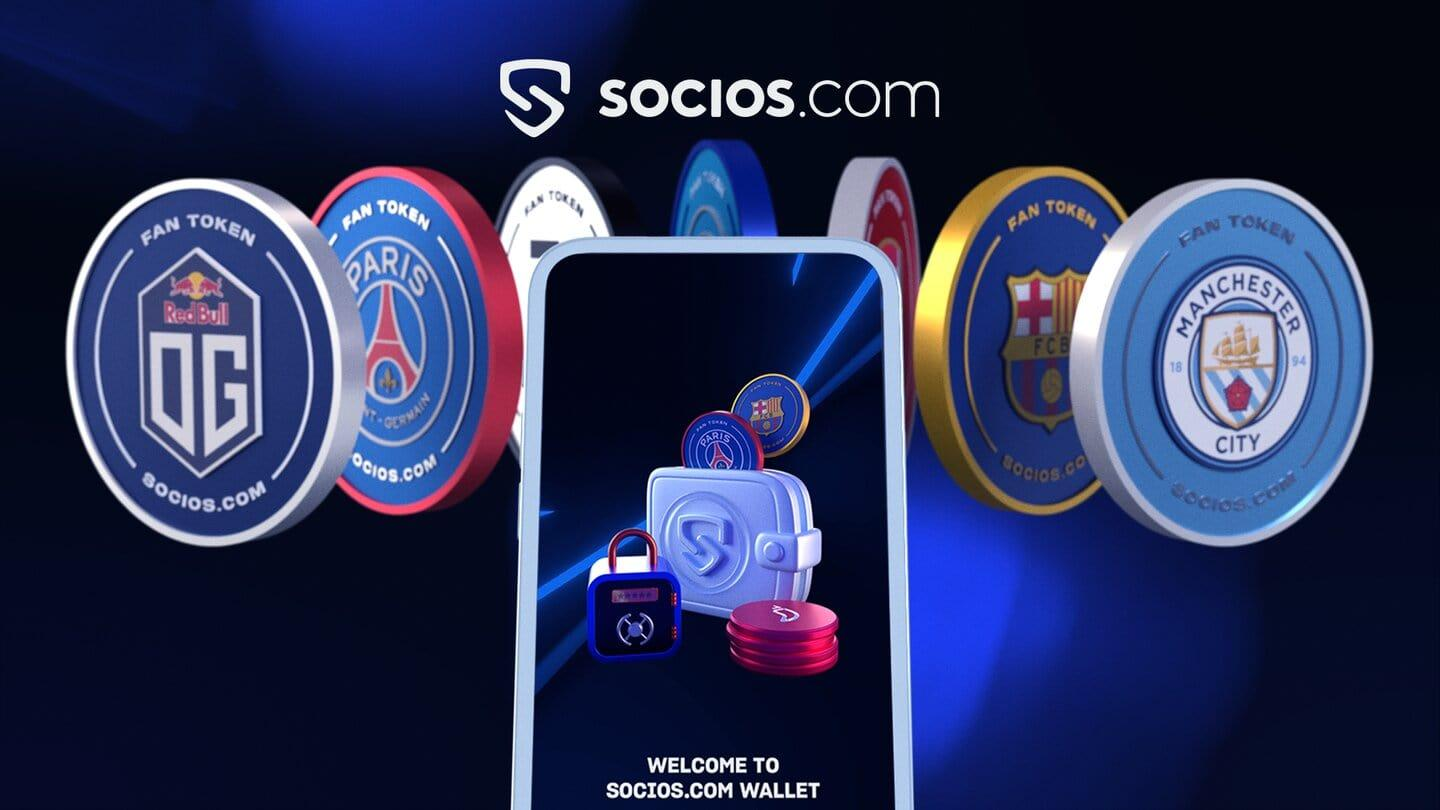
From a functional perspective, users must hold CHZ to participate in subsequent actions. As the base asset, CHZ acts as the entry currency into the ecosystem. Users typically acquire CHZ through exchanges or wallets and then transfer it into their platform accounts.
Structurally, the entry layer consists of an account system and an asset system. The account system manages identity and permissions, while the asset system tracks balances and transaction records. This separation improves system stability by decoupling user operations from asset management.
The purpose of this onboarding mechanism is to provide a unified access point, allowing users from different backgrounds to participate in fan token activities.
Fan tokens are issued by sports organizations and created through Chiliz’s token issuance framework. Each token corresponds to a specific club or brand.
Mechanically, token issuance follows predefined procedures, including total supply configuration, initial allocation, and distribution methods. The platform designs issuance rules to balance scarcity with liquidity.
From a structural standpoint, the process involves three parties: the club, the platform, and the users. Clubs contribute branding and associated rights, the platform provides the technical infrastructure and issuance tools, and users participate by acquiring tokens.
This model transforms traditional membership privileges into tradable digital assets, enhancing user engagement.
How Users Acquire and Use Fan Tokens
Users primarily obtain fan tokens by purchasing them with CHZ. Tokens can be acquired during initial offerings or through secondary market trading.
In terms of functionality, holding fan tokens allows users to participate in voting, interactions, and platform activities. These actions are enabled through platform features and are often proportional to the number of tokens held.
Structurally, the acquisition and usage process is divided into a trading module and an application module. The trading module handles buying and selling, while the application module supports interaction features. This layered design increases flexibility.
This approach ensures that tokens serve not only as tradable assets but also as tools for participation, enhancing their overall utility.
How Voting and Interaction Are Executed in Chiliz
Within the Chiliz ecosystem, fan voting and interaction go far beyond simple clicks. They are structured processes driven by token weight, platform rules, and data recording mechanisms.

Each user action is converted into quantifiable data based on the number of fan tokens held, then processed and executed by the system. Understanding this flow helps clarify how token ownership translates into participation rights and how those actions ultimately influence outcomes.
Transaction processing relies on coordination between platform systems and blockchain infrastructure. User actions are converted into transaction requests and enter a structured processing pipeline.
Mechanically, each transaction first undergoes validation, including checks on account balance and permissions. The system then executes the required logic, such as asset transfers or order matching.
Structurally, the transaction lifecycle includes three stages: validation, execution, and recording. Validation ensures the action is legitimate, execution completes the logic, and recording preserves the data for future reference.
This framework ensures that all transactions follow consistent rules, improving overall system reliability.
How the Chiliz Network Ensures Stability and Reliability
System stability depends on coordination between infrastructure and platform design.
From a functional perspective, the network maintains data consistency through distributed nodes and validation mechanisms, while platform-level controls help reduce abnormal behavior.
Structurally, stability is maintained through the interaction of the network layer, application layer, and risk control systems. The network layer ensures data synchronization, the application layer supports user interaction, and the risk control module monitors anomalies.
The table below summarizes the key components:
| Module |
Function |
Role |
| Network Layer |
Data recording |
Ensures consistency |
| Platform Layer |
User interaction |
Provides access |
| Risk Control System |
Anomaly detection |
Reduces risk |
| Transaction Module |
Execution logic |
Completes operations |
| Data Layer |
State storage |
Enables traceability |
These components work together to maintain stable performance even under high-frequency interaction scenarios.
Summary
Chiliz creates a complete operational flow through user onboarding, fan token issuance, interaction mechanisms, and transaction systems, allowing fan participation to be recorded and executed on-chain.
FAQ
What is the core workflow of Chiliz?
It includes user onboarding, token acquisition, interaction participation, and transaction execution.
How are fan tokens obtained?
By purchasing with CHZ or acquiring them through market trading.
How does the voting mechanism work?
Votes are weighted based on the number of tokens held.
What is the role of CHZ?
It is used to purchase fan tokens and participate in the ecosystem.
How is system stability ensured?
Through platform architecture and risk control mechanisms.