What is Cross Protocol (CROSS)?

Beginner
Quick Reads
Last Updated 2026-04-03 18:59:22
Reading Time: 1m
Cross is a universal decentralized protocol engineered to facilitate seamless, native asset transfer and exchange across multiple blockchains. By enabling secure and efficient interactions and asset migrations within multi-chain ecosystems—without relying on centralized bridges or third-party custodians—Cross empowers users with greater freedom and trust in decentralized environments.

What is Cross Protocol?


(Source: cross_protocol)

Cross Protocol (Cross) is a universal decentralized protocol focused on enabling seamless, secure native asset transfers and swaps across blockchains. With Cross, users can interact with assets between multiple chains safely and efficiently. They can migrate assets without the need for centralized bridges or third-party custodians.

Core Design of Cross

Cross is built on a trustless architecture with robust technical foundations. Its key features include:

  • Native Asset Swapping: Cross eliminates the need for wrapped tokens by leveraging protocol-level technology, allowing direct, seamless swaps between native assets on different blockchains.

  • Cross-Chain Liquidity Aggregation: By pooling assets from multiple chains into a unified protocol, Cross optimizes trading efficiency. It delivers deep, competitive cross-chain liquidity for users.

  • Fully On-Chain Verification: Every transaction and validation process is performed on-chain and automatically executed by smart contracts, removing centralized risks.

This design ensures user asset security. It significantly lowers technical barriers and operational risks.

Cross Protocol Architecture

Cross employs a modular architecture. Each functional layer is independently upgradeable and extensible. Key components include:

  • Relay Mechanism: Acts as a cross-chain bridge, ensuring accurate, synchronized transaction data between blockchains.

  • Validator Mechanism: Utilizes multi-signature and consensus algorithms to guarantee the validity and security of cross-chain transactions.

  • Liquidity Pools: These serve as sources of cross-chain liquidity, supporting automated native asset swaps.

Through the coordinated operation of these modules, Cross delivers a highly efficient, scalable, and trustless cross-chain protocol layer.

Cross Tokenomics

$CROSS is the foundational token that powers the Cross Protocol ecosystem, with a fixed total supply of 1 billion. Uniquely, Cross adopts a milestone-based unlocking strategy, meaning tokens are released according to actual protocol development progress and community goals achieved—not simply by time. This mechanism ensures flexible and responsible token release and is fully managed by smart contracts, enhancing transparency and credibility.

Token Distribution Model

Cross Protocol carefully structures its token allocation for long-term sustainability and community-driven development. The specific distribution is as follows:

  • Growth Unlock Pool (65%): The core allocation, gradually released to fund community initiatives, developer grants, participation rewards, and foster overall ecosystem growth.

  • Private Sale (10.4%): Completed in March 2025 at a fixed price of $0.10 per token, serving as early-stage funding.

  • Public/Community Sale (9.6%): Scheduled for mid-May 2025 at the same price as the private round, available broadly to the community.

  • Ecosystem Operations (15%): Reserved for community incentives, partner engagement, and daily operational needs, further enhancing protocol activity and user engagement.
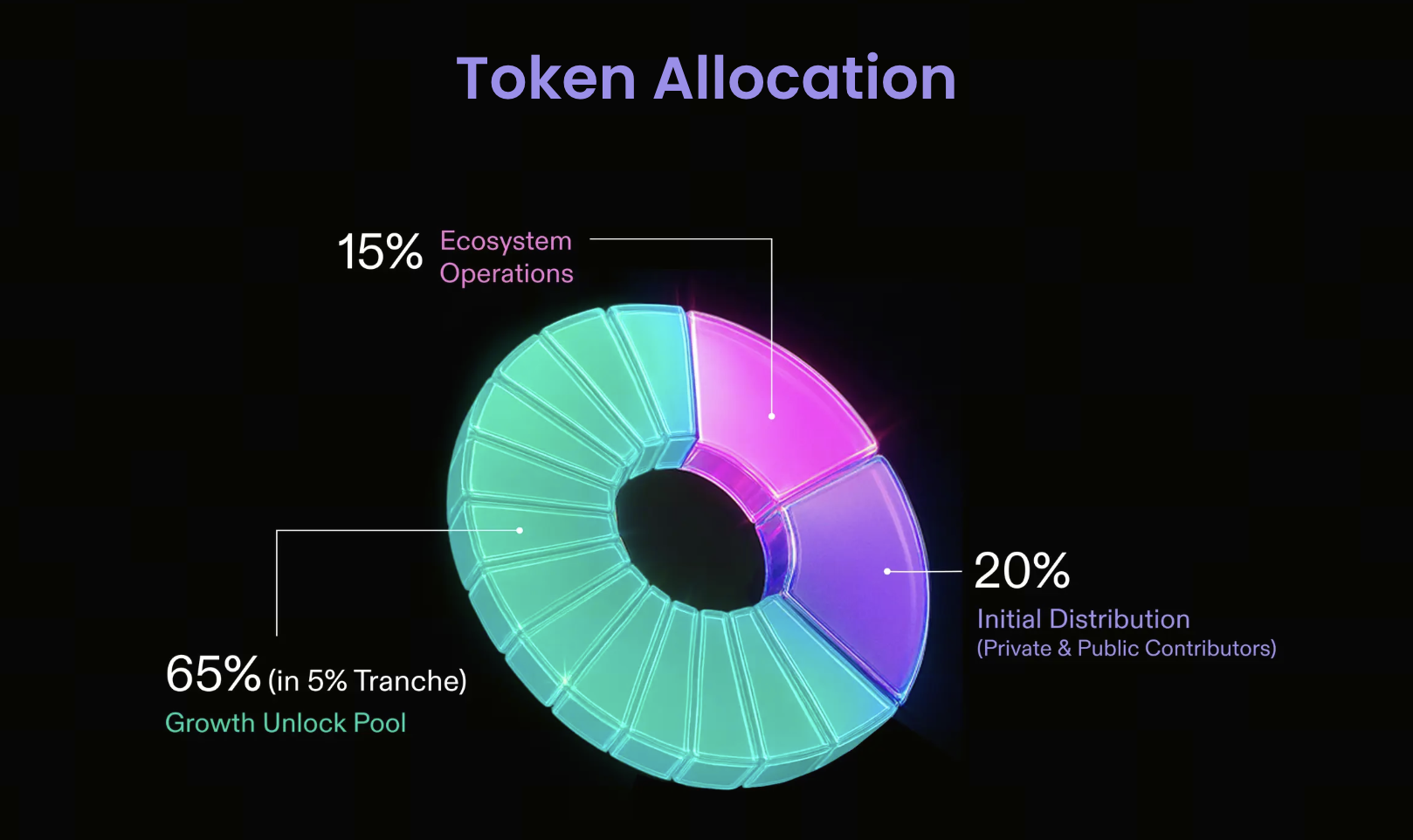

(Source: crosstoken)

This token structure demonstrates Cross’s user-centric values and establishes a strong, stable foundation for the protocol’s long-term operation.

Future Outlook and Application Potential

As the multi-chain ecosystem rapidly expands, there is a growing need for a secure, decentralized protocol to transfer assets across chains. Cross Protocol is well positioned as a pivotal infrastructure for cross-chain interoperability, with a wide range of practical applications, such as:

  • DeFi Aggregation and Arbitrage: Enables automated native asset swaps for cross-chain arbitrage strategies.

  • NFT Transfers and Trading: Allows native NFT transfers without wrapping, preserving their inherent value and unique attributes.

  • GameFi/Metaverse Asset Interactions: Enables players to transfer tokens or virtual items between games and platforms.

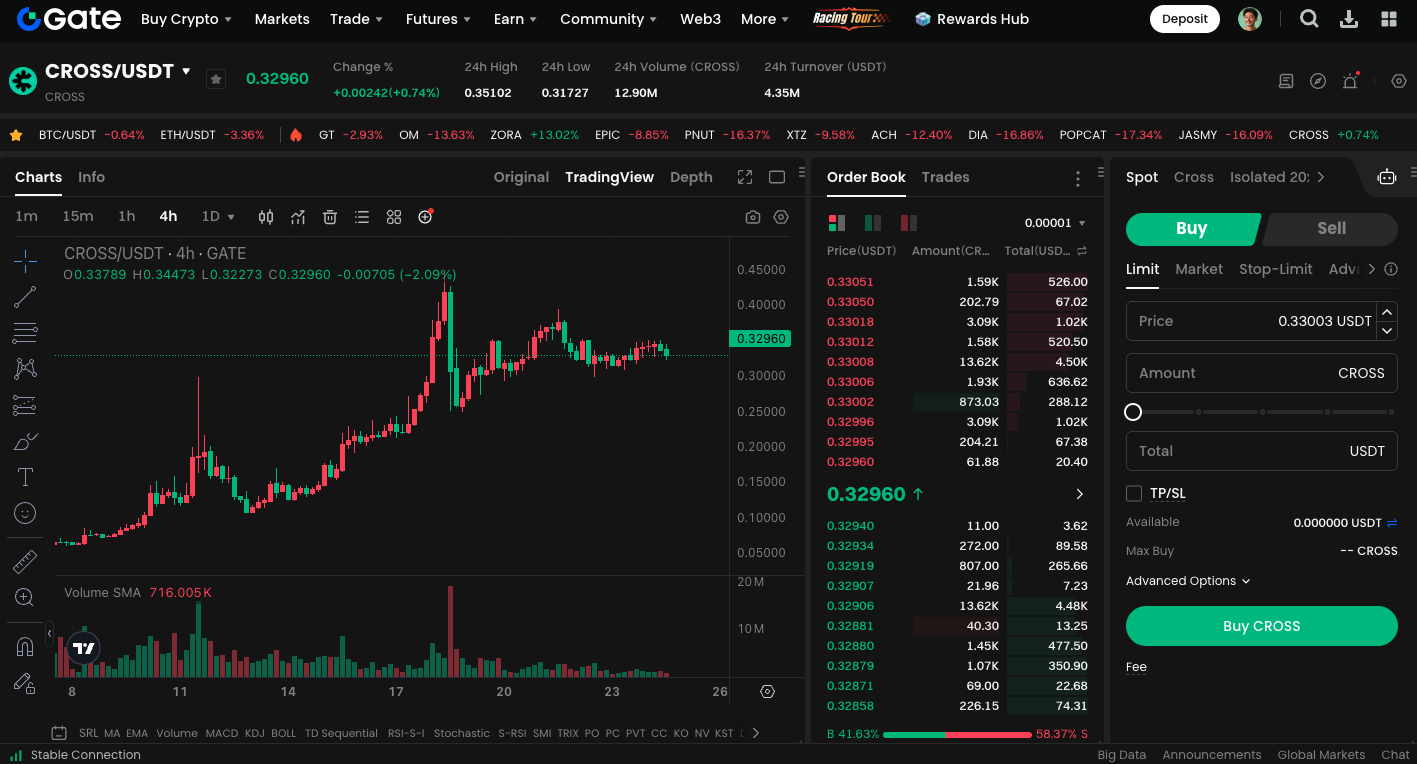
You can trade CROSS spot at: https://www.gate.com/trade/CROSS_USDT
Conclusion

Cross Protocol is more than just technology; it’s a philosophy centered on decentralization, community empowerment, and security. As the multi-chain era accelerates, Cross is dedicated to building a truly functional, scalable, and trustless cross-chain protocol—bringing together the Web3 ecosystem instead of leaving it fragmented.

Disclaimer
* The information is not intended to be and does not constitute financial advice or any other recommendation of any sort offered or endorsed by Gate.
* This article may not be reproduced, transmitted or copied without referencing Gate. Contravention is an infringement of Copyright Act and may be subject to legal action.

Related Articles

What is Fartcoin? All You Need to Know About FARTCOIN
Intermediate

What is Fartcoin? All You Need to Know About FARTCOIN

Fartcoin (FARTCOIN) is a representative meme coin within the Solana ecosystem based on an AI-driven narrative. Its core concept originated from an experiment aimed at exploring the "boundaries between AI Agents and humor." More than just a digital asset with social attributes, the project deeply couples absurd humor culture with on-chain financial logic by integrating autonomous AI interaction models.
2026-04-04 22:01:19
Gold Price Forecast for the Next Five Years: 2026–2030 Trend Outlook and Investment Implications, Could It Reach $6,000?
Beginner

Gold Price Forecast for the Next Five Years: 2026–2030 Trend Outlook and Investment Implications, Could It Reach $6,000?

Analyze current gold price trends alongside authoritative five-year forecasts, integrating an evaluation of market risks and opportunities. This gives investors insight into the potential trajectory of gold prices and the main drivers expected to shape the market over the next five years.
2026-03-25 18:13:30
Aster vs Hyperliquid: Which Perp DEX Will Prevail?
Beginner

Aster vs Hyperliquid: Which Perp DEX Will Prevail?

Aster and Hyperliquid are the two representative protocols of the "purpose-built L1 path" within the current decentralized perpetual exchange (Perp DEX) sector. As a pioneer in the field, Hyperliquid has built a deep liquidity moat through its highly mature order book architecture and strong community consensus. Conversely, Aster, as a rising challenger, seeks to leapfrog the competition in high-performance trading through more aggressive multi-chain aggregation logic, private transaction modules, and an underlying execution environment optimized for 2026 market demands.
2026-03-24 11:58:33
AI-Native Settlement Layers: How United Stables Is Building the Next Financial Rail
Beginner

AI-Native Settlement Layers: How United Stables Is Building the Next Financial Rail

Stablecoins were originally designed as dollar substitutes within exchanges, primarily used for asset pricing and trade settlement. As on-chain financial ecosystems have matured, their role has expanded beyond simple payments to include collateral assets, cross-chain liquidity mediums, and unified settlement units. In particular, as AI systems and automated agents begin to participate directly in economic activity, demand has risen sharply for programmable value units capable of instant settlement. This shift is pushing stablecoins toward the role of foundational financial infrastructure.
2026-03-25 03:16:17
Aerodrome Tokenomics: How ve(3,3) Powers Base's Most Profitable DEX
Beginner

Aerodrome Tokenomics: How ve(3,3) Powers Base's Most Profitable DEX

AERO is the native token of Aerodrome Finance, a core decentralized exchange and liquidity protocol in the Base ecosystem. It is primarily used for liquidity incentives and ecosystem operations. veAERO is a governance NFT that users receive by locking AERO, representing both voting power and the right to share protocol revenue. Through a dual track structure of AERO as a utility token and veAERO as a governance credential, Aerodrome separates liquidity usage value from long term governance power, allowing participants to act as liquidity providers, governance decision makers, and revenue sharers within the same system.
2026-03-25 06:40:31
The ve(3,3) Flywheel Explained: How AERO Tokenomics Powers Aerodrome’s DeFi Economy
Beginner

The ve(3,3) Flywheel Explained: How AERO Tokenomics Powers Aerodrome’s DeFi Economy

In the competition for DeFi liquidity, high-inflation mining alone is no longer enough to build lasting advantages. Aerodrome applies the ve(3,3) economic model to redesign token emissions, voting mechanisms, and revenue distribution, creating a liquidity flywheel centered on governance and cash flow. This article examines AERO tokenomics, the veAERO locking mechanism, and protocol revenue models to explain how Aerodrome builds a sustainable DeFi economic system.
2026-03-25 06:41:58





