Key Points:* Trump proposes raising tax for wealthiest Americans, reversing 2017 cuts.
- Challenge expected as Republican lawmakers oppose tax rate increases.
- Proposal includes eliminating carried interest tax break, affecting funds.
Former President Trump aims to increase the tax rate for the wealthiest Americans, introducing a new bracket of 39.6% for high earners.
If passed, the proposal will undo part of Trump’s 2017 tax cuts. However, Republican opposition poses a significant barrier.
Trump Targets Multi-Millionaires with 39.6% Tax Bracket
President Trump has proposed raising the highest tax rate for the wealthiest Americans. This proposal marks an attempt to revert to pre-2017 tax levels, introducing a new 39.6% tax bracket. Notably, this move targets those with individual incomes over $2.5 million or couples making over $5 million annually.
If implemented, this tax change would reverse the 2017 tax cuts for the very wealthy. Impact of Trump’s tax cuts expiration on the economy. The carried interest tax break is also under scrutiny, a move likely affecting venture capital and private equity fund managers.
The proposal faces stiff opposition from a majority of Republican lawmakers. Commerce Secretary Lutnick stated he “favors” the proposal, while others perceive it as challenging longstanding party positions against tax increases. Tax Foundation’s insights and updates on tax policy
GOP Resistance and Potential Market Outcomes
Did you know? For over three decades, the Republican Party has upheld a firm stance against tax rate increases as a core policy position, often branding such measures publicly unfavorable.
According to CoinMarketCap, Bitcoin (BTC) is currently priced at $102,823.70, holding a market cap of 2.04 trillion. The 24-hour trading volume decreased by 13.28%, despite a 5.11% price increase over the same period.
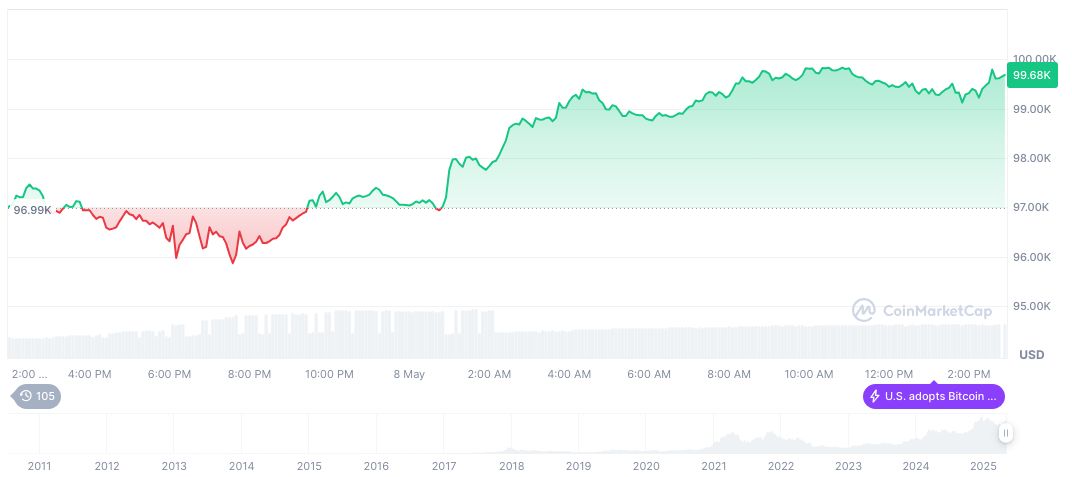 Bitcoin(BTC), daily chart, screenshot on CoinMarketCap at 01:20 UTC on May 9, 2025. Source: CoinMarketCap
Coincu’s analysis suggests potential impacts on financial norms if Trump’s tax changes proceed. Historical patterns reveal possible regulatory shifts and market adjustments, following major legislative tax reforms. Legislative text for HR 353 from the 119th Congress The resistance from Republican lawmakers parallels concerns about economic impacts.
Bitcoin(BTC), daily chart, screenshot on CoinMarketCap at 01:20 UTC on May 9, 2025. Source: CoinMarketCap
Coincu’s analysis suggests potential impacts on financial norms if Trump’s tax changes proceed. Historical patterns reveal possible regulatory shifts and market adjustments, following major legislative tax reforms. Legislative text for HR 353 from the 119th Congress The resistance from Republican lawmakers parallels concerns about economic impacts.
Disclaimer: The information on this page may come from third parties and does not represent the views or opinions of Gate. The content displayed on this page is for reference only and does not constitute any financial, investment, or legal advice. Gate does not guarantee the accuracy or completeness of the information and shall not be liable for any losses arising from the use of this information. Virtual asset investments carry high risks and are subject to significant price volatility. You may lose all of your invested principal. Please fully understand the relevant risks and make prudent decisions based on your own financial situation and risk tolerance. For details, please refer to
Disclaimer.


