Key Points:* BlackRock’s Strategic Income Opportunities increased its Bitcoin ETF holdings by 25%.
- Institutional acceptance of crypto is growing.
- This expansion highlights Bitcoin’s rising role in diverse portfolios.
BlackRock, Inc. significantly increased its Bitcoin ETF holdings within its Strategic Income Opportunities Portfolio, reaching 2.12 million shares worth $99.4 million as of March 2025.
BlackRock’s decision reflects a growing institutional trust in digital assets as more financial entities consider them for portfolio diversification.
BlackRock’s Bitcoin ETF Holdings Soar by 25%
BlackRock’s recent allocation to its Bitcoin ETF reflects broader institutional trust in digital assets. As of March 31, 2025, the Strategic Income Opportunities Portfolio added 25% more shares, worth nearly $100 million. This allocation underscores the transitioning stance of large finance entities towards crypto, raising questions about future portfolio diversification. Despite growing Bitcoin interests, no official statements have been made by BlackRock’s executives about this recent increase, although positive market sentiment is evident.
According to CoinMarketCap, Bitcoin (BTC) stands at a current price of $108,885.65 with a market cap of 2.16 trillion and a 24-hour trading volume of 52.68 billion USD, reflecting notable 60-day gain trends at 32.48%.
Larry Fink, CEO, BlackRock, Inc., – “The decision by a diversified bond fund to increase its Bitcoin ETF exposure reflects a rising level of institutional trust in crypto as a viable alternative asset for portfolio diversification.”
Bitcoin Price and Institutional Interest Surge
Did you know? In 2024, similar Bitcoin ETF allocations by firms like BlackRock resulted in temporary Bitcoin price surges, marking a pattern of crypto acceptance in traditional finance.
Coincu’s research points out that ongoing institutional allocations could lead to technological advancements alongside regulatory shifts. Market experts expect ongoing institutional interest to bolster demand for secure crypto ETF products. This will likely lead to regulatory adaptations to align with the market’s evolving landscape, as noted in the Securities and Exchange Commission Document Overview.
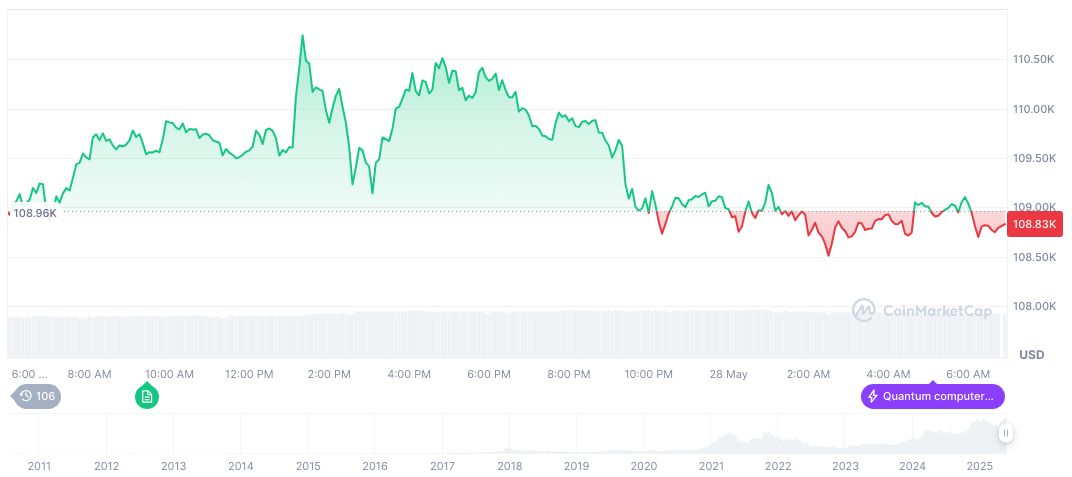 Bitcoin(BTC), daily chart, screenshot on CoinMarketCap at 11:53 UTC on May 28, 2025. Source: CoinMarketCap
Market experts expect ongoing institutional interest to bolster demand for secure crypto ETF products. This will likely lead to regulatory adaptations to align with the market’s evolving landscape.
Bitcoin(BTC), daily chart, screenshot on CoinMarketCap at 11:53 UTC on May 28, 2025. Source: CoinMarketCap
Market experts expect ongoing institutional interest to bolster demand for secure crypto ETF products. This will likely lead to regulatory adaptations to align with the market’s evolving landscape.
Disclaimer: The information on this page may come from third parties and does not represent the views or opinions of Gate. The content displayed on this page is for reference only and does not constitute any financial, investment, or legal advice. Gate does not guarantee the accuracy or completeness of the information and shall not be liable for any losses arising from the use of this information. Virtual asset investments carry high risks and are subject to significant price volatility. You may lose all of your invested principal. Please fully understand the relevant risks and make prudent decisions based on your own financial situation and risk tolerance. For details, please refer to
Disclaimer.


