


Futures
Access hundreds of perpetual contracts
TradFi
Gold
One platform for global traditional assets
Options
Hot
Trade European-style vanilla options
Unified Account
Maximize your capital efficiency
Demo Trading
Introduction to Futures Trading
Learn the basics of futures trading
Futures Events
Join events to earn rewards
Demo Trading
Use virtual funds to practice risk-free trading
Launch
CandyDrop
Collect candies to earn airdrops
Launchpool
Quick staking, earn potential new tokens
HODLer Airdrop
Hold GT and get massive airdrops for free
Launchpad
Be early to the next big token project
Alpha Points
Trade on-chain assets and earn airdrops
Futures Points
Earn futures points and claim airdrop rewards


More


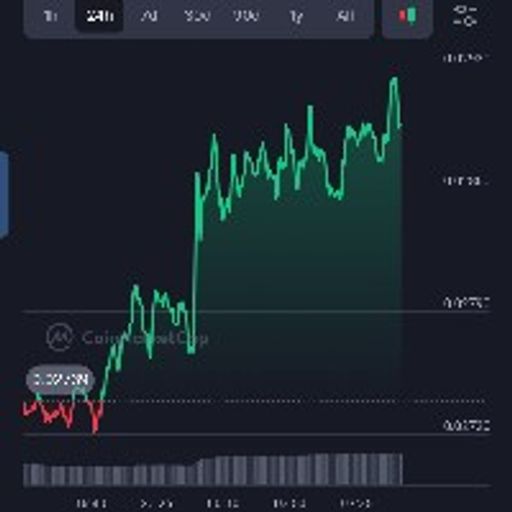



The most bizarre phenomenon in the crypto space in recent months is undoubtedly SOL. On one hand, network metrics are flashing red across the board, with user numbers plummeting to a level unrecognizable from a few years ago; on the other hand, institutions are疯狂ly buying in, quietly absorbing the retail investors' chips that have been scared out. Who has the wrong view of the situation? Today, let's break down and analyze this matter thoroughly.
First, look at the data. The number of active users on the SOL network has been halved from the 30 million level in previous years to less than 1 million now. Such a decline is beyond a cliff-like drop. The token price is even more outrageous, having fallen nearly 40% since Q4, with the market in a state of despair. Retail investors are afraid that another drop will wipe out their capital, and they are rushing to cut losses and exit.
But then, a奇迹 happened. Just as panic was spreading through the market, data showed that institutional funds were operating in the opposite direction—recently, nearly $70 million quietly flowed into SOL. Meanwhile, other mainstream tokens were being quietly reduced by these institutions. This stark contrast is baffling.
In fact, this is the eternal game of the market: retail investors focus on short-term fluctuations to make decisions, while institutions care about long-term value. One is driven by emotion, the other by fundamentals. When market sentiment is at its most悲观, it is often the moment when the smartest money places its bets. The future trajectory of SOL depends on subsequent technical performance and whether on-chain activity can bottom out and rebound.
Retail investors cry, institutions laugh—it's an eternal story.
This wave of SOL is really strange; the data is a mess, yet someone is lurking at the bottom?
Honestly, we're just here to take the big players' leftovers.
1 million active users—how tragic is that?
Institutions have flowed in $70 million; I ask, is this the last harvest before a dump?
Waiting for a rebound? I think I won't live to see that day.
Who was wrong doesn't matter; retail investors are always wrong anyway.
Long-term value? Let's survive this bear market first, brother.
Institutions care about long-term value; retail investors care about next month's rent—who's to blame?
If SOL really hits bottom and rebounds, I'll go live eating my phone.
---
One million active users? That data is really heartbreaking. It feels like it's going to fade away.
---
Spending 70 million, do institutions really dare to bet that SOL can rebound? I wouldn't have that courage.
---
It's the same old story: the smartest money bets at the bottom, but often even the smartest money ends up holding the bag.
---
When retail investors cut losses, institutions scoop up the chips. The cycle continues, and this game must go on.
---
Watching the user count plummet, how can anyone believe this is the bottom? I’m really starting to lose confidence.
---
If SOL really can rise, then this move by the institutions is genius. If it can't, it's just another round of cutting losses.
---
Why does it seem like every coin lately has institutions buying at the bottom? Do they really have good insight, or are they just passing the bag around?
---
A 40% drop and still dare to keep pouring in? Are these institutions really sharp, or are they just brainless?
---
Reverse operation, reverse operation. Sounds good, but in reality, it's just gambling on probabilities.
SOL this time is truly incredible; it’s fallen so much but people still dare to buy in.
Institutions are playing a big game, while we’re just being weeded out; that’s the difference.
$70 million inflow? I just want to see how it will reverse later.
No wonder retail investors are losing money; they don’t pay attention to these short-term crappy data.
It’s that same old story of "the most pessimistic and smartest money coming in at the worst time," I'm tired of hearing it...
Can SOL rebound? Honestly, I’m starting to believe a little.
Institutions' bets this time are really aggressive, with 70 million USD quietly flowing in.
Is SOL's current situation due to a mechanism issue or just being hammered down? Honestly, it's hard to tell.
When it dropped 40%, I was wondering if I should buy the dip. But in the end, I didn't dare to move.
History always repeats itself. Retail investors will regret only when the rebound happens, while institutions have already been laughing.
It feels like the story of SOL hasn't fully unfolded yet. Let's keep observing.
With such poor data, there are still people willing to take over. That shows a lot of confidence in what's coming next.