


Futures
Access hundreds of perpetual contracts
TradFi
Gold
One platform for global traditional assets
Options
Hot
Trade European-style vanilla options
Unified Account
Maximize your capital efficiency
Demo Trading
Introduction to Futures Trading
Learn the basics of futures trading
Futures Events
Join events to earn rewards
Demo Trading
Use virtual funds to practice risk-free trading
Launch
CandyDrop
Collect candies to earn airdrops
Launchpool
Quick staking, earn potential new tokens
HODLer Airdrop
Hold GT and get massive airdrops for free
Launchpad
Be early to the next big token project
Alpha Points
Trade on-chain assets and earn airdrops
Futures Points
Earn futures points and claim airdrop rewards


More





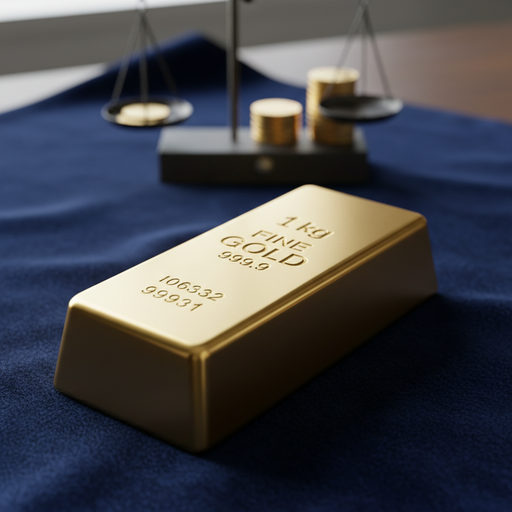
What does interest rate hike really mean? An article explaining what the central bank is up to and how you should handle your investments
Recently, the news has been talking about interest rate hikes all day long, especially how the Federal Reserve’s every move affects global stock markets. But not many people truly understand what a rate hike means. Simply put, a rate hike is when the central bank raises the borrowing interest rate. Conversely, a rate cut means lowering the interest rate. This is not just financial news; it has real impacts on your life—from mortgage and car loans, salary changes, commodity prices, to investment returns—all are involved.
Why do central banks raise or cut interest rates? The underlying economic logic
Interest rate hikes and cuts are tools used by central banks to regulate the economy’s temperature. When the economy overheats and prices soar, the central bank raises rates to cool things down; when the economy is in recession and unemployment rises, it lowers rates to stimulate consumption and investment.
How exactly do they do this? Taking the US Federal Reserve as an example, when it decides to raise rates, the lending rates between banks increase, which causes banks to raise their borrowing interest rates externally. What’s the result? Borrowing becomes more expensive, so people are less willing to take out loans for homes, cars, or expanding businesses. Demand decreases, companies will lower prices to attract customers, and ultimately, the price level is pushed down, controlling inflation.
On the flip side, when the economy is sluggish, the central bank will lower rates. Near-zero interest rates mean borrowing costs are almost zero, and keeping money in banks yields little interest, so businesses and individuals are more willing to borrow and spend. Demand rises, companies hire more people, and the economy comes back to life.
But there’s a trap: while raising rates can control inflation, it may also lead to higher unemployment and economic recession. That’s why central banks must carefully balance the magnitude of rate hikes and cuts.
How much is a 1 basis point? Understanding the language of interest rates
In finance, when talking about rate hikes, professional terms are used, which can be confusing if you don’t understand them.
So when you hear “the Fed raised rates by 3 basis points,” it means an increase of 0.75%. Based on this conversion, 2 basis points = 0.5%, 3 basis points = 0.75%, and so on.
What are the three comprehensive impacts of interest rate hikes on the economy?
Daily economic activities are hit
The most direct result of a rate hike is suppressed consumption. Higher loan interest rates make people less willing to borrow for homes and cars. Companies also tighten spending, reduce investments in equipment and factories, and may even start layoffs. Economic growth slows down, and companies are forced to lower prices to attract consumers. So, rate hikes are usually used to combat high inflation, but the cost is potential economic stagnation.
Chain reactions in the investment market
Interest rate hikes are a blow to the stock market. The cost for companies to borrow increases, profitability declines, and stock prices fall. Especially high-growth tech stocks, which rely heavily on financing to expand their business, are hit hardest. Conversely, bonds become more attractive—fixed income becomes more appealing, bond prices fall but yields rise, prompting many investors to shift toward bonds seeking stable returns.
Exchange rates follow interest rate hikes
Raising rates attracts foreign capital inflows. Investors move money out of stocks and into bonds and deposits to earn higher interest. This increases demand for currencies of rate-hiking countries like the US dollar, causing the dollar to appreciate and other currencies to depreciate. In 2022, the US sharply increased interest rates, and the USD/TWD exchange rate strengthened significantly—that’s the reason.
How important is raising interest rates when prices go out of control: the fight between inflation and the central bank
Inflation is simply rising prices leading to decreased purchasing power. Last year, an apple cost $1, now it’s $2, but wages haven’t increased, so your buying capacity decreases. Severe inflation can cause economic disaster.
How does a rate hike fight inflation? As mentioned earlier, raising rates makes borrowing more expensive, so people spend less. Demand drops, and prices of goods are pulled down. Of course, excessive rate hikes can lead to recession and soaring unemployment, so the central bank must carefully time it.
During the COVID-19 pandemic in 2020, the US unemployment rate surged, and the Federal Reserve cut interest rates sharply to 0-0.25% to encourage spending. Two months later, the recession ended, and the economy rebounded. By 2022, US inflation hit a 40-year high, and the Fed began aggressive rate hikes, raising rates by nearly 5 percentage points in about a year.
A global overview of central bank rate hikes: how Taiwan, the US, and Japan are doing
Taiwan’s cautious stance
Taiwan’s central bank adjusts the discount rate, which has a milder impact on banks compared to the US federal funds rate, but it reflects the central bank’s monetary policy stance. In 2022, Taiwan raised rates cumulatively by 2.5 basis points (0.625%), and continued small hikes this year. Why? Because inflation remains high, with the CPI exceeding 2% for over 19 months, forcing the central bank to act to curb inflation.
The US’s aggressive rate hikes
Starting June 2022, the Fed began raising rates when US CPI had already reached a 40-year high. Over the following year, the Fed repeatedly increased rates, with a cumulative hike of nearly 5%. It may continue to raise rates slightly in the near future. This is a necessary measure to combat runaway inflation, despite the high costs.
Japan’s “de facto rate hikes”
Interestingly, Japan has taken a different approach. The Bank of Japan has maintained ultra-low interest rates to stimulate the economy. But by the end of 2022, the situation changed. The BOJ announced an expansion of the yield curve control (YCC) band, from ±0.25% to ±0.5%. This is effectively a de facto rate hike, signaling a shift from easing to a slightly tighter monetary policy. The news caused the yen to immediately appreciate sharply against the dollar.
How should investors allocate wisely during the era of rate hikes?
Don’t completely flee the stock market; instead, choose your timing carefully
Many people hide in bonds during rate hikes, but this misses opportunities. Warren Buffett believes that buying stocks during high interest rates can be the right move. The reason is that although rate hikes temporarily suppress stock prices, when rate cuts come, those stocks bought at high rates will surge in value. Data from the past 20 years shows that every cycle of rate hikes followed by rate cuts has led to significant stock market rallies—that’s a pattern.
Shift toward high-dividend stocks
In a rate hike environment, high-dividend stocks become investors’ new favorites. These companies have stable and lasting profits and can regularly pay dividends. Compared to the volatility of stock prices during rate hikes, dividends are more stable and reliable, making them a safer choice.
Invest in strong currencies in line with the trend
Currencies of rate-hiking countries will appreciate. The US has raised rates much more than other countries, so the dollar naturally appreciates. When interest rate differentials widen, investing in USD or USD assets can yield dual benefits—both interest income and exchange rate gains.
Final thoughts: think like this and you’ll be right
A rate hike simply means the central bank raising interest rates to manage the economy. In the short term, rate hikes can hurt stocks and consumption, but in the long run, they are good investment opportunities. Each country chooses different rate hike strategies based on its economic situation, but the goal is the same—to keep the economy growing at a healthy and stable pace. As an investor, don’t panic at rate hikes; instead, understand the logic behind the cycle and find hidden opportunities.