

Trade
Basic
Futures
Futures
Hundreds of contracts settled in USDT or BTC
TradFi
Gold
Trade global traditional assets with USDT in one place
Options
Hot
Trade European-style vanilla options
Unified Account
Maximize your capital efficiency
Demo Trading
Futures Kickoff
Get prepared for your futures trading
Futures Events
Participate in events to win generous rewards
Demo Trading
Use virtual funds to experience risk-free trading
Earn
Launch
CandyDrop
Collect candies to earn airdrops
Launchpool
Quick staking, earn potential new tokens
HODLer Airdrop
Hold GT and get massive airdrops for free
Launchpad
Be early to the next big token project
Alpha Points
Trade on-chain assets and enjoy airdrop rewards!
Futures Points
Earn futures points and claim airdrop rewards
Investment
Simple Earn
Earn interests with idle tokens
Auto-Invest
Auto-invest on a regular basis
Dual Investment
Buy low and sell high to take profits from price fluctuations
Soft Staking
Earn rewards with flexible staking
Crypto Loan
0 Fees
Pledge one crypto to borrow another
Lending Center
One-stop lending hub
VIP Wealth Hub
Customized wealth management empowers your assets growth
Private Wealth Management
Customized asset management to grow your digital assets
Quant Fund
Top asset management team helps you profit without hassle
Staking
Stake cryptos to earn in PoS products
Smart Leverage
New
No forced liquidation before maturity, worry-free leveraged gains
GUSD Minting
Use USDT/USDC to mint GUSD for treasury-level yields

More


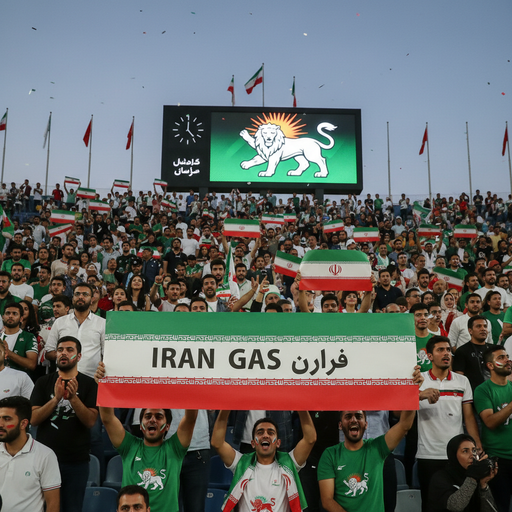



#美伊局势影响
The Iran-U.S. conflict has entered its fifth day, and the intensity of the situation has exceeded most people's expectations. I have noticed several new developments that could shake the market, so I’d like to share my observations and bullish/bearish ideas.
🔥 My focus on the “decisive factors” on the battlefield
Currently, it’s not just small-scale friction but a systematic offensive and defensive situation. I have two points of concern:
1. De facto blockade of the Strait of Hormuz: Reports from Iran’s Fars News Agency confirm that 26 oil tankers are loitering in the strait, 27 have suspended navigation, and the capacity of 12 million barrels of crude oil is frozen. This is not just a slogan of “not allowing a drop of oil to flow out,” but a real disruption of flow.
2. Spillover of the conflict and “indiscriminate” escalation: The U.S. consulate in Dubai was attacked by drones, the U.S. Udeid Air Base in Qatar was hit by missiles, and even France deployed “Rafale” fighters for defense. This indicates that the flames of war have already reached the UAE and Qatar, which were originally considered “safe zones,” and the risk of strikes on energy facilities is rapidly increasing.
📈 The ice and fire of energy, shipping, and safe-haven assets
The market’s response has been very direct in recent days, but divergence is also increasing:
· Energy (oil/natural gas): Short-term violent surge followed by a big shake. Although oil stocks pulled back today, this is not the end of the logic but profit-taking and the game of news factors (such as the U.S. considering escorting). The key point is that Qatar LNG shutdown and Iraq’s Rumaila oil field closure are real supply reductions. Until the blockade is lifted, the “risk premium” on oil and gas will not disappear.
· Shipping and supply chain: The Strait of Hormuz is a vital route for 1/5 of global oil and a large amount of LNG. Now, war risk premiums are soaring, and some insurers are even canceling war coverage, which will inevitably drive freight rates higher. Although companies like Shenghang Co., Ltd. are not directly involved in Middle Eastern operations, the chaos in global logistics chains has already begun to propagate.
· Defense and military industry: One of the most solid logical directions. Iran claims to have destroyed U.S. “THAAD” systems, which means that the demand for modern air defense, anti-missile systems, and precision-guided weapons is unlimited. The military industry sector is not only a theme for speculation but also a real expectation of inventory depletion.
· Safe-haven assets (gold/BTC): Interesting divergence has appeared here.
· Gold: remains stable, spot rebounded above $5150, which is the true “stabilizer.”
· BTC: broke above $71,000 today. Although BTC has often shown “risk asset” characteristics, in the context of this Middle Eastern powder keg exploding and potential shocks to the dollar credit system, I am increasingly inclined to view BTC as a “digital gold” + “liquidity escape route from traditional financial systems” dual vehicle. The market seems to be voting with its rise, believing it is the best solution amid geopolitical conflicts and inflation expectations.
🎯 Current bullish and bearish opportunities to watch
As a trader, don’t blindly chase highs, but look for structural opportunities:
1. Long volatility (especially in assets highly correlated with oil and gas): Although oil prices have pulled back intraday, the deadlock in the Strait of Hormuz is not something that can be resolved in a day or two. If the U.S. statement about “escort” causes a sharp drop in oil prices, as long as the strait remains open, it’s a short-term trading point. Focus on oil services and energy stocks directly linked to Middle Eastern production.
2. The “new domain and new quality” of the military industry: As indicated by Galaxy Securities, don’t just focus on traditional shipbuilding; pay attention to segments like drones (e.g., Aerospace Rainbow), anti-missile systems, and military communications that have performed well in this conflict.
3. Beware of “stagflation” trades: Analyses from Nikkei and Oxford Research Institute point to stagflation risks. If oil prices stay high for a long time, inflation will be very stubborn. In this scenario, going long gold/BTC is an optimal hedge against sovereign currency devaluation.
4. Potential short opportunities: If subsequent developments, as Trump suggested, involve the U.S. Navy starting large-scale escort operations, or Saudi Arabia and the UAE quickly launching pipelines bypassing the Strait of Hormuz (despite limited capacity), then the short-term oil bubble could be burst.