


Futures
Access hundreds of perpetual contracts
TradFi
Gold
One platform for global traditional assets
Options
Hot
Trade European-style vanilla options
Unified Account
Maximize your capital efficiency
Demo Trading
Introduction to Futures Trading
Learn the basics of futures trading
Futures Events
Join events to earn rewards
Demo Trading
Use virtual funds to practice risk-free trading
Launch
CandyDrop
Collect candies to earn airdrops
Launchpool
Quick staking, earn potential new tokens
HODLer Airdrop
Hold GT and get massive airdrops for free
Launchpad
Be early to the next big token project
Alpha Points
Trade on-chain assets and earn airdrops
Futures Points
Earn futures points and claim airdrop rewards


More



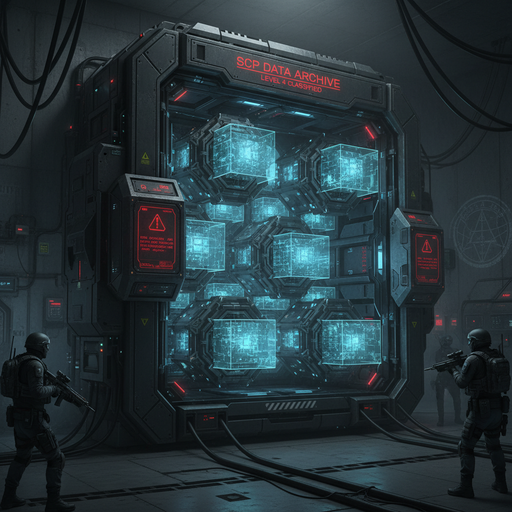

#AITradingEra 🤖📊
When AI Becomes the Trader — Will Crypto Become a Battlefield for Machines?
For years, the crypto market has been called a digital wild west — a place where speed, information, and risk appetite determine survival. But a new question is emerging across the industry:
What happens when most trading decisions are no longer made by humans, but by AI?
This isn't a distant future scenario. It is already starting.
Across exchanges, hedge funds, and on-chain protocols, AI-driven trading systems are quietly becoming the new market participants. The difference is profound: these systems do not sleep, do not panic, and can process thousands of data signals in milliseconds.
But if everyone begins using AI, does the market become smarter — or simply more dangerous?
The Illusion of “Smart Bots”
Most traders believe they are already using AI when they run automated bots or grid trading strategies. In reality, these tools are closer to calculators than intelligence.
Traditional bots follow simple rules:
• If RSI is overbought → Sell
• If price crosses moving average → Buy
• If loss exceeds threshold → Stop
These strategies are reactive. They look at historical patterns and respond after something happens.
True AI trading systems operate differently.
They scan social media sentiment, on-chain wallet movements, liquidity shifts, and macroeconomic signals simultaneously. In many cases, they detect risk before price even moves.
Imagine a scenario where a major developer hints at selling tokens on social media. A human trader might see the price drop minutes later. A basic bot waits for indicators.
An advanced AI model might react within seconds.
By the time the chart reflects the event, the trade is already done.
The Risk of an Over-Efficient Market
If AI tools become accessible to everyone — retail traders, funds, and market makers — the crypto market could transform dramatically.
One possible outcome is extreme efficiency.
Small arbitrage opportunities would disappear instantly. Price discrepancies between exchanges might last only microseconds. Many of the technical patterns traders rely on today could become meaningless because algorithms would exploit them instantly.
Ironically, this could lead to a strange environment where markets feel too quiet.
Prices would move with mathematical precision, and volatility might compress for long periods.
But calm surfaces often hide deeper instability.
The Flash Crash Problem
AI systems learn from similar datasets. They watch the same order books, blockchain activity, and market news.
This creates a dangerous possibility: synchronized reactions.
If thousands of AI models detect the same signal simultaneously, they may all reach the same conclusion — sell.
In human markets, hesitation and disagreement create friction that slows movements. Machines have no hesitation.
A sudden cascade of automated sell orders could drain liquidity instantly, creating massive price drops within seconds.
Markets might crash and recover before most traders even realize what happened.
Events like these have already occurred in traditional finance. In a 24/7 crypto market without circuit breakers, the impact could be even more dramatic.
The Rise of Algorithmic Manipulation
Another unexpected consequence could be the emergence of AI-to-AI manipulation.
In today's market, whales manipulate sentiment to influence human traders.
In an AI-dominated market, institutions might design strategies that specifically mislead other AI models.
For example, algorithms could simulate fake accumulation patterns, unusual wallet activity, or artificial social sentiment to trigger automated buy signals in competing systems.
In this environment, trading becomes less about predicting markets and more about outsmarting rival algorithms.
The battlefield shifts from traders to machines.
The Hidden Crisis: Artificial Communities
Perhaps the most unsettling possibility lies beyond trading itself.
Crypto relies heavily on community participation — forums, governance votes, social media discussions, and DAO proposals.
But imagine a scenario where most online accounts are no longer human.
AI agents could manage thousands of wallets, run social media accounts, participate in discussions, and vote in governance proposals. Each identity could appear unique, with different behaviors and opinions.
A project’s community might appear vibrant and active, while in reality most of the participants are automated agents controlled by a single entity.
If this becomes common, the concept of decentralized consensus could become difficult to trust.
Where Humans Still Win
Despite AI's advantages, machines still have limitations.
AI models excel at analyzing existing data. They struggle with unpredictable cultural movements — the strange, emotional forces that often drive crypto markets.
Many of the biggest crypto phenomena started as irrational ideas:
• Internet memes
• Community jokes
• Viral narratives
These movements are difficult for algorithms to understand because they don't follow traditional financial logic.
The early phases of meme culture, narrative shifts, and grassroots communities remain unpredictable.
This is where human intuition still matters.
A Two-Layer Market
If AI adoption accelerates, the crypto market may split into two distinct environments.
1️⃣ Algorithmic Markets
Major assets could become arenas for advanced AI systems competing for microscopic advantages. These markets would be efficient, fast, and extremely competitive.
2️⃣ Narrative-Driven Markets
Early-stage projects, experimental tokens, and meme ecosystems could remain largely driven by human culture and social momentum.
In these spaces, creativity, storytelling, and community energy might still shape outcomes more than algorithms.
The Real Future of Trading
The coming decade may redefine what it means to be a trader.
Success might require either:
• Deep technical understanding of AI and algorithmic systems
or
• A strong ability to understand human psychology and social narratives
In other words, the future trader could be either a machine engineer or a cultural observer.
Those relying only on traditional chart patterns may struggle the most.
In the end, the crypto market has always evolved alongside technology.
But one question remains open:
When machines dominate trading, will humans still shape the story — or simply watch from the sidelines?