


Ризики великих ринкових ордерів
У ф’ючерсній торгівлі ринкові ордери широко використовуються для відкриття або закриття позицій завдяки швидкості їхнього виконання та простоті використання. Однак, коли обсяг ордера є великим або ліквідність ринку обмежена, ринковий ордер може спричинити значне прослизання, що впливає на фактичну ціну виконання та загальний результат торгівлі.
У цій статті пояснюються потенційні ризики великих ринкових ордерів та те, як інструменти платформи можуть допомогти зменшити прослизання.
1. Що таке прослизання
Прослизання стосується різниці між ціною ордера та фактичною ціною виконання.
За нормальних умов ринковий ордер виконується за найкращою доступною ціною. Однак, якщо ордер поглинає ліквідність на кількох рівнях книги ордерів, ціна виконання може змінитись у несприятливий бік, що призведе до прослизання.
Поширені причини включають:
- Недостатня ліквідність ринку
- Великий розмір ордера
- Швидкі коливання ринкових цін
Зазвичай, чим більший розмір ордера, тим більший його вплив на книгу ордерів і тим вищий ризик прослизання.
2. Потенційний вплив великих ринкових ордерів
Під час виконання великих угод ринкові ордери можуть призвести до таких наслідків:
2.1 Відхилення ціни виконання
Великі ордери можуть бути виконані за менш вигідними ціновими рівнями, що призведе до вищих витрат на купівлю, нижчих цін продажу або до того, що фактичні прибутки та збитки відрізнятимуться від очікуваних.
2.2 Збільшення прихованих торгових витрат
Прослизання, по суті, є прихованою торговою витратою. У високочастотній або великооб'ємній торгівлі його сукупний вплив може стати значним.
2.3 Вплив на ціну в екстремальних ринкових умовах
На ринках з обмеженою ліквідністю послідовні великі ринкові ордери можуть спричинити помітні короткострокові коливання цін, збільшуючи загальний торговий ризик.
3. Як зменшити прослизання
Щоб допомогти користувачам досягти стабільнішого виконання під час розміщення великих ордерів, Gate пропонує кілька розширених типів ордерів, розроблених для зменшення впливу на ринок.
3.1 Ордер TWAP
Ордер TWAP (середньозважена ціна за часом) - це просунутий тип ордерів, який дозволяє користувачеві розбивати великий ордер на кілька менших ордерів протягом певного періоду часу і розміщувати їх через певні проміжки часу. Такий підхід допомагає зменшити вплив кожного виконання на ринок. Дізнатися більше
3.2 Лімітний ордер переслідування
Лімітний ордер переслідування — це тип лімітного ордера, який розміщується за найкращою ціною бід або аск. Він динамічно коригує ціну ордера відповідно до ринкових коливань, доки ордер не буде виконано, скасовано або доки він не досягне максимальної дистанції переслідування. Дізнатися більше
Iceberg Pro
Iceberg Pro — це вдосконалена стратегія обробки великих ордерів шляхом їх розділення на кілька менших ордерів, що виконуються послідовно, що допомагає зменшити вплив на ринок та покращити стабільність виконання. Дізнатися більше
3.4 Масштабований ордер
Масштабований ордер дозволяє користувачам визначити ціновий діапазон і подавати кілька лімітних ордерів у цьому діапазоні відповідно до попередньо визначеного розподілу розмірів ордерів, що забезпечує точніший контроль над цінами виконання. Дізнатися більше
4. Попередження про ризики
Коли система виявляє, що розмір вашого ринкового ордера може призвести до значного прослизання, може відобразитися попередження про ризик.
Це попередження про ризик надається лише з інформаційною метою та не обмежує вашу можливість розмістити ордер.
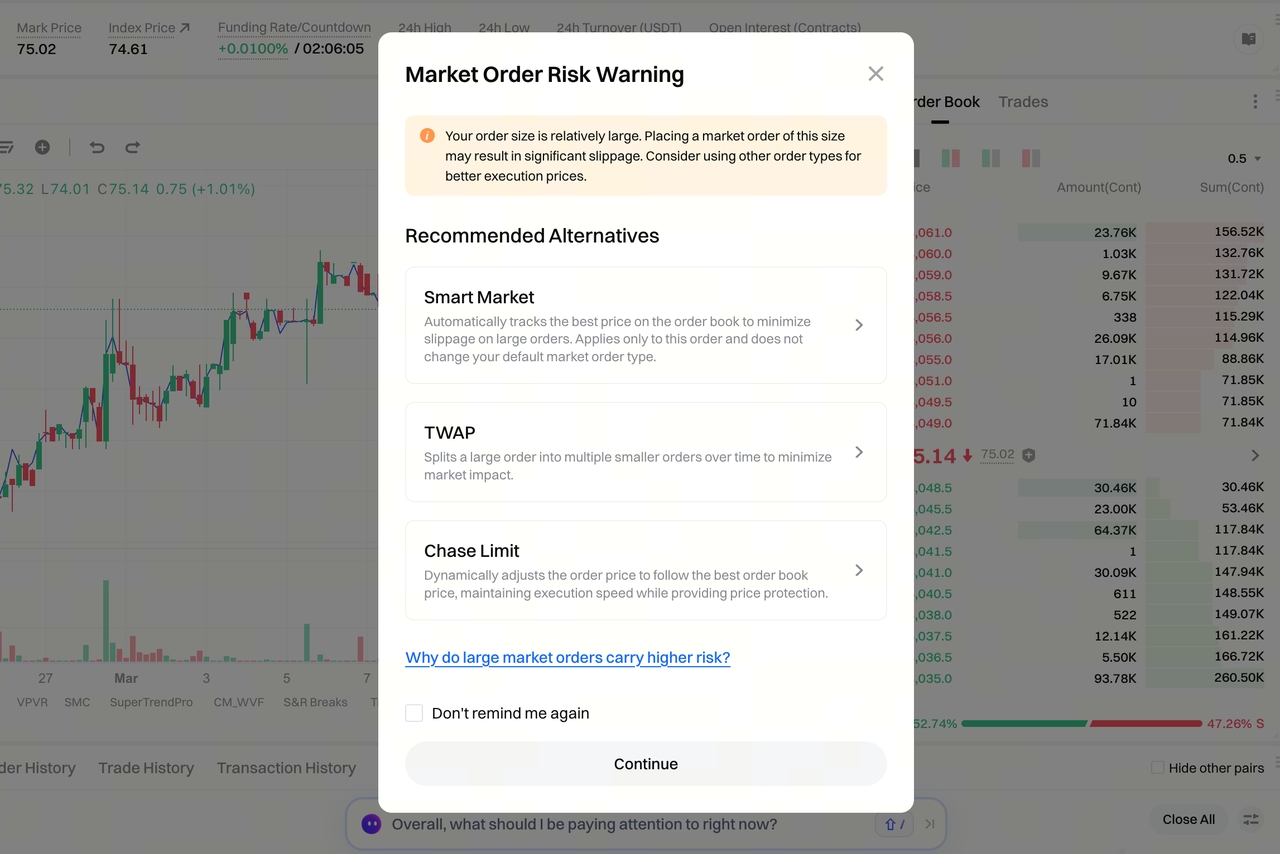
5. Підсумок
Ринкові ордери забезпечують швидке виконання, проте у сценаріях із великими обсягами торгівлі вони також можуть створювати вищий ризик прослизання. Вибір відповідного типу ордера допомагає контролювати торгові витрати, зменшити вплив на ринок і підвищити стабільність виконання угод.
Якщо ви виконуєте великі угоди, подумайте про вибір більш підходящого типу ордера на основі ваших торгових потреб, щоб досягти стабільніших результатів виконання.
Відмова від відповідальності
Наданий тут зміст призначений лише для ознайомлення та освітніх цілей і не є фінансовою, інвестиційною, торговою чи юридичною порадою, а також не є пропозицією або закликом купувати чи продавати будь-які цифрові активи. Gate не надає жодних прямих чи непрямих заяв або гарантій щодо точності, повноти чи актуальності інформації, що міститься тут. Функціонал продукту, інтерфейси, правила та структура комісій можуть оновлюватися або змінюватися у будь-який час. Для отримання найактуальнішої інформації звертайтеся до останніх оголошень і фактичних даних, що відображаються на платформі Gate.
Інвестиції в цифрові активи пов'язані зі значними ризиками, а ціни можуть суттєво коливатися. Ви можете втратити всю суму своїх інвестицій. Приймайте рішення обережно, враховуючи власний фінансовий стан і рівень толерантності до ризику після повного розуміння супутніх ризиків. За потреби рекомендується звернутися до незалежного професійного фінансового чи юридичного радника.
Щоб отримати додаткову інформацію про потенційні ризики, зверніться до Розкриття інформації про ризики та Угоди користувача Gate.
