
Futures
Access hundreds of perpetual contracts
TradFi
Gold
One platform for global traditional assets
Options
Hot
Trade European-style vanilla options
Unified Account
Maximize your capital efficiency
Demo Trading
Introduction to Futures Trading
Learn the basics of futures trading
Futures Events
Join events to earn rewards
Demo Trading
Use virtual funds to practice risk-free trading
Launch
CandyDrop
Collect candies to earn airdrops
Launchpool
Quick staking, earn potential new tokens
HODLer Airdrop
Hold GT and get massive airdrops for free
Launchpad
Be early to the next big token project
Alpha Points
Trade on-chain assets and earn airdrops
Futures Points
Earn futures points and claim airdrop rewards


More




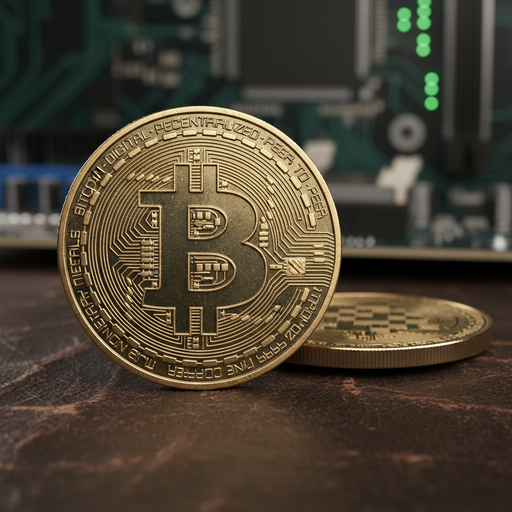

What is the biggest distraction for new investors in the crypto world? The issuance of digital currencies in all its forms. Honestly, the ICO topic is not as simple as it seems, especially when you see how many projects succeeded and how many failed miserably.
First, you need to understand: issuing digital currencies is basically a way for tech startups to raise money. The company creates a new digital token or coin and sells it to investors in exchange for Bitcoin or Ethereum. Simple as that.
The process itself is straightforward on paper: the company announces the project online, explains the idea and plan, and investors buy the tokens. If the process succeeds, the raised funds go toward developing the project. If it fails, well... that’s another story.
But there are historical examples worth noting. For instance, Ethereum, when it launched its ICO in 2014 (from July to September), raised $18.4 million in Bitcoin. Today, Bitcoin is worth around $67.30K, and Ethereum is at $2.06K. Cardano also succeeded, raising $62.2 million in January 2017. But Tezos raised $232 million in July 2017 and faced legal issues, having to settle $25 million to resolve disputes.
On the other hand, the Dragon coin ICO in March 2018 raised $320 million but collapsed quickly. This makes you think: not every successful ICO = a successful coin.
If you’re considering launching your own ICO, you need to focus on a few points:
First, a clear idea and a real project. Second, verify local laws — in some countries, it’s prohibited. Third, prepare a whitepaper with all the details. Fourth, have a professional website. Fifth, strong marketing. And finally, launch the process and start accepting investors.
When choosing a digital currency ICO to invest in, focus on the management team, business plan, transparency, and legal compliance. These factors reduce risks.
The market is now more complex than before. There are over two million cryptocurrencies in existence. Bitcoin experienced a dip in 2022 but recovered in 2023, and the entire market is highly volatile. Prices can change by thousands of dollars within hours.
To find promising new coins, use tools like PooCoin and Token Sniffer. PooCoin shows transaction details, contracts, and prices. Token Sniffer provides a comprehensive audit report — scam warnings, contract analysis, owner analysis, liquidity, everything.
DeFi and NFTs are another topic. Platforms like Uniswap and Aave offer swapping, lending, and borrowing services. Ethereum itself is a full DeFi platform. NFTs are unique digital assets on the blockchain — OpenSea and Rarible are the most popular marketplaces. Even luxury brands like Tiffany and Gucci are starting to sell NFTs.
The ICO bubble burst in 2018 when scams increased. The SEC started to act, treating ICOs like securities offerings. Now, there are fewer ICOs, but they are more regulated.
A safer alternative: ETFs. In 2021, the first Bitcoin ETF was launched, and by January 2024, official Bitcoin ETFs were approved — you buy shares of the fund instead of directly buying Bitcoin.
Ultimately, every digital currency has a purpose. Bitcoin for payments, Ethereum for building DeFi applications. When evaluating a new coin, look at use cases, liquidity, added value, future supply and demand, current price and volume.
New cryptocurrencies emerge daily from trading platforms, DeFi platforms, NFT markets, and ICOs. CoinMarketCap records new coins every day. X and Telegram are key sources for news. But beware of scams — every day new projects and new scams appear.
Investing in this field requires careful evaluation, patience, and deep research. If you lack experience, consider consulting a financial expert. Opportunities exist, but risks are also significant.