# LayerZeroCEOAdmitsProtocolFlaws

30.51K
#LayerZeroCEOAdmitsProtocolFlaws
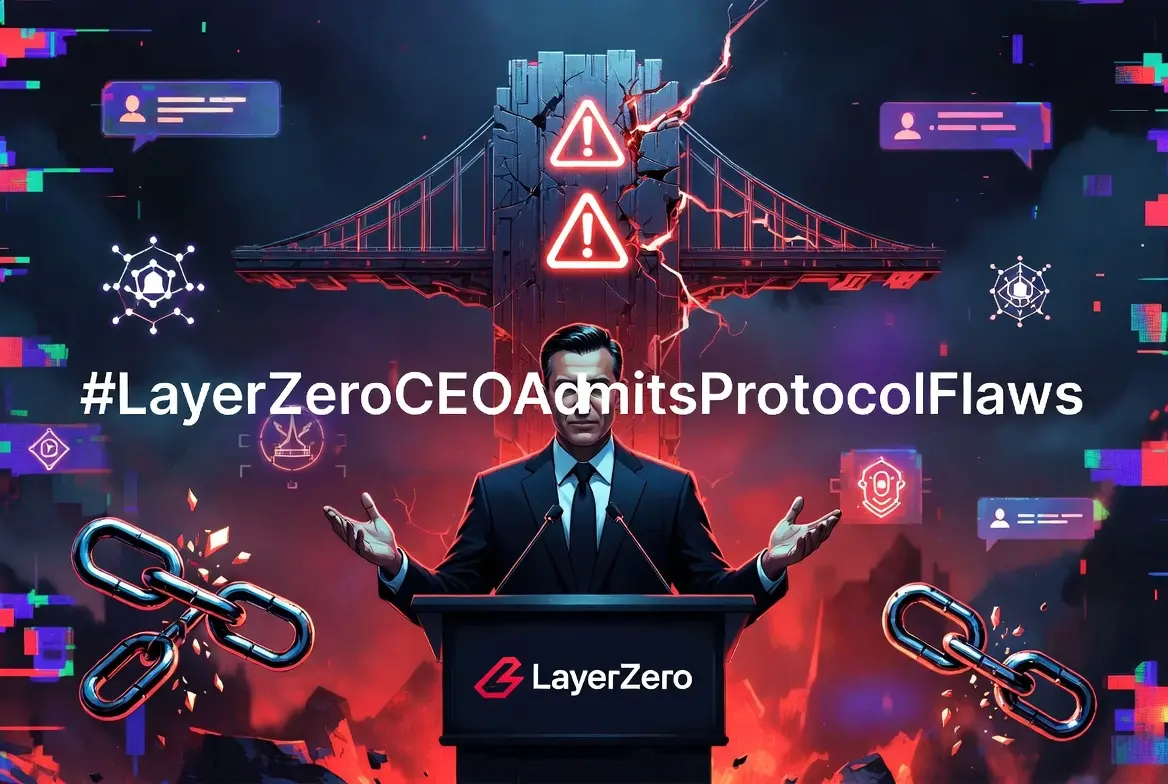
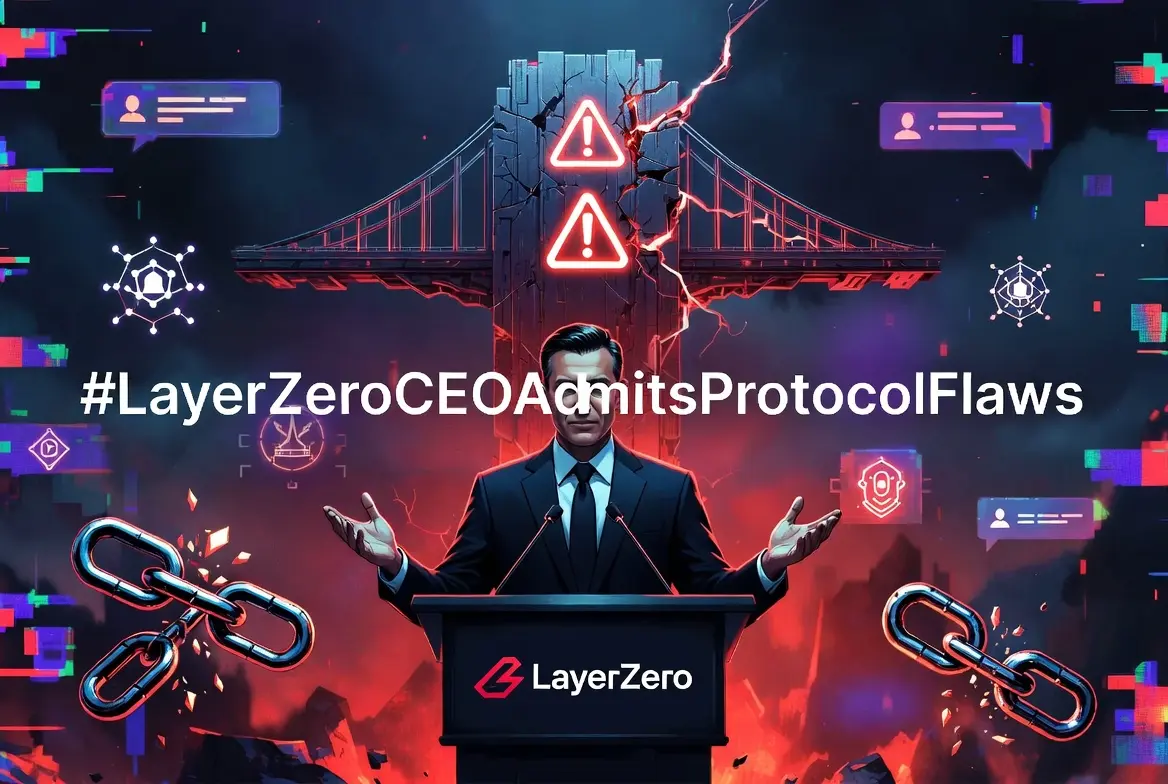
In a significant turnaround, LayerZero Labs CEO Bryan Pellegrino has publicly admitted protocol failures following the $292 million hack of Kelp DAO on April 18, 2026, where an attacker exploited a 1/1 security configuration to steal rsETH tokens.
Publishing his statement on X (formerly Twitter) on May 4, 2026, Pellegrino confessed that the LayerZero protocol failed to prevent or flag the hazardous 1/1 configuration. He acknowledged he "wrongly assumed no application would secure billions in TVL on such a configuration". Additionally, Pellegrino admitted that
ZRO6.04%
LINK3.19%
Raveena
#LayerZeroCEOAdmitsProtocolFlaws
In a significant turnaround, LayerZero Labs CEO Bryan Pellegrino has publicly admitted protocol failures following the $292 million hack of Kelp DAO on April 18, 2026, where an attacker exploited a 1/1 security configuration to steal rsETH tokens.
Publishing his statement on X (formerly Twitter) on May 4, 2026, Pellegrino confessed that the LayerZero protocol failed to prevent or flag the hazardous 1/1 configuration. He acknowledged he "wrongly assumed no application would secure billions in TVL on such a configuration". Additionally, Pellegrino admitted that LayerZero further worsened the crisis by enforcing RPC quorum changes without notifying affected clients, calling their communication "a complete failure". He concluded by pledging that the company would fully refocus on serving asset issuers and the upcoming launch of Zero.
This admission marked a dramatic reversal from LayerZero's initial response, which placed the blame squarely on the application layer and Kelp DAO's own configuration choices. The public apology followed extensive criticisms from the crypto community, particularly after third-party developers demonstrated how the dangerous 1/1 configuration was featured prominently in LayerZero's official documentation as a starting point. The shift in sentiment eventually forced Pellegrino to take responsibility for what critics termed "systemic arrogance".
Kelp DAO, however, remains unconvinced. On May 5, they published a detailed rebuttal arguing the compromised configuration was the platform's standard, claiming that roughly 47% of LayerZero's 2,665 active contracts ran on 1/1 setups at the time of the exploit. Kelp also released telegram screenshots allegedly showing a LayerZero employee approving the 1/1 configuration prior to the incident. Kelp further questioned why LayerZero's monitoring failed to detect the RPC node compromise before the forged messages were signed, a breach they tie directly to North Korea's Lazarus Group.
Consequently, Kelp DAO has confirmed its migration of rsETH from LayerZero to Chainlink's CCIP standard across all supported chains, underscoring the permanent loss of trust in the protocol's architecture.
#LayerZero #KelpDAO #CryptoHack #DeFi

repost-content-media
  • Reward
  • Comment
  • Repost
  • Share
#LayerZeroCEOAdmitsProtocolFlaws
The $292M Hack That Shattered Cross-Chain Trust, and the CEO's Candid Confession
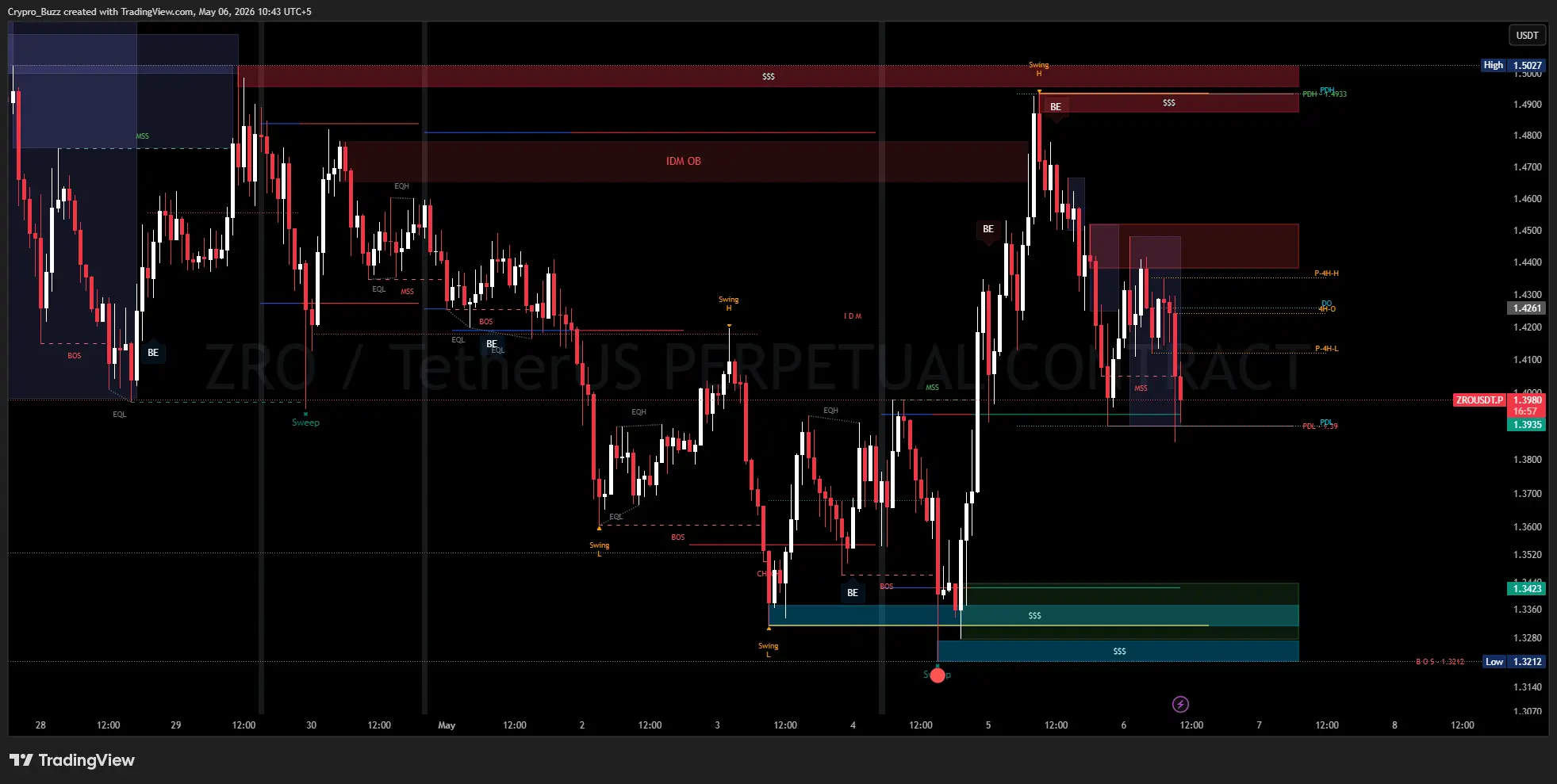
ZRO Price: $1.412 | 24H: -3.22% | 30D: -32.34% | Market Cap: $356M
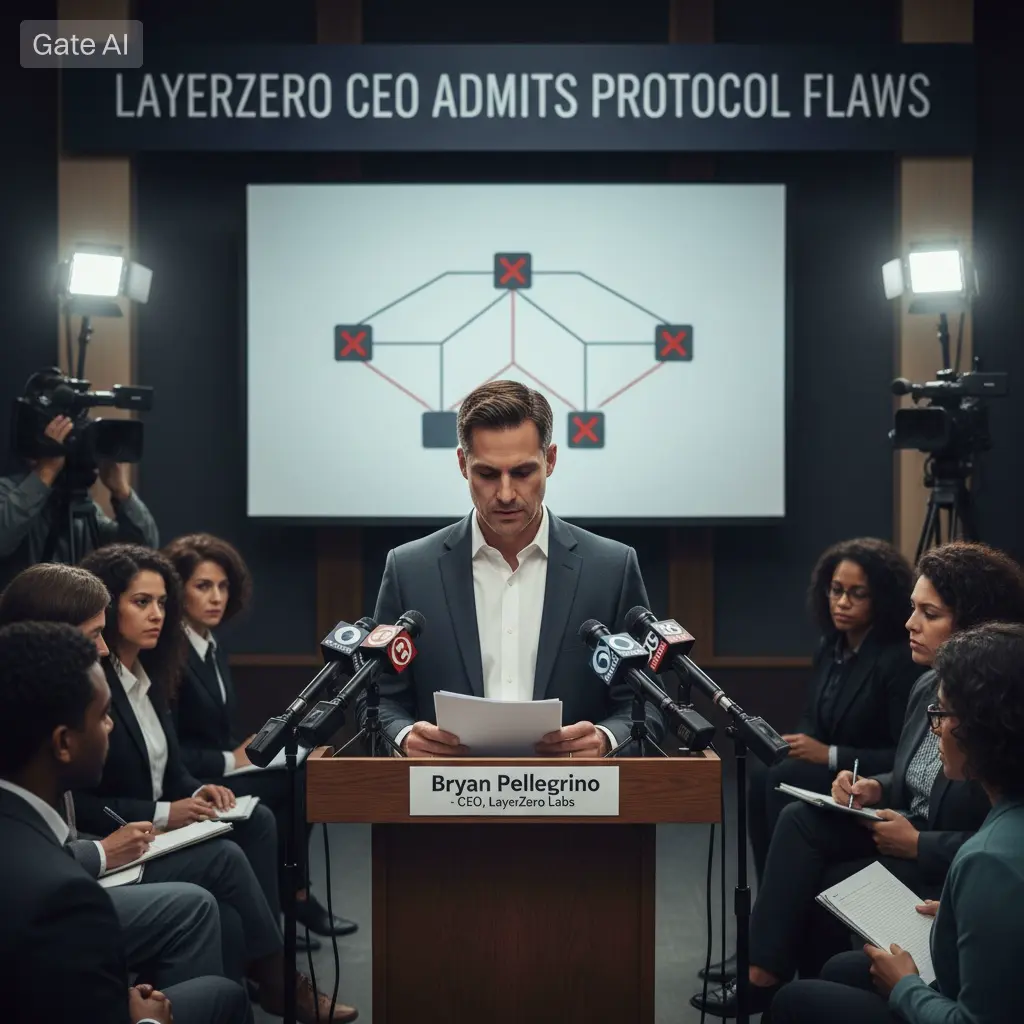
On May 4, 2026, LayerZero Labs CEO Bryan Pellegrino published a raw, unfiltered statement on X that sent shockwaves through the cross-chain ecosystem. He admitted something no infrastructure CEO wants to say: "I was wrong." The admission came two weeks after the largest DeFi exploit of 2026 a $292 million drain of Kelp DAO's rsETH bridge that exposed致命 flaws in LayerZero's core architecture.
Here's the full breakdo
ZRO6.04%
AAVE-0.07%
LINK3.19%
post-image
post-image
Falcon_Official
#LayerZeroCEOAdmitsProtocolFlaws — The $292M Hack That Shattered Cross-Chain Trust, and the CEO's Candid Confession
ZRO Price: $1.412 | 24H: -3.22% | 30D: -32.34% | Market Cap: $356M
On May 4, 2026, LayerZero Labs CEO Bryan Pellegrino published a raw, unfiltered statement on X that sent shockwaves through the cross-chain ecosystem. He admitted something no infrastructure CEO wants to say: "I was wrong." The admission came two weeks after the largest DeFi exploit of 2026 a $292 million drain of Kelp DAO's rsETH bridge that exposed致命 flaws in LayerZero's core architecture.
Here's the full breakdown of what happened, what the CEO confessed, and why it matters for every crypto user.
💥 THE EXPLOIT: How $292 Million Vanished in Minutes
On April 18, 2026, at 17:35 UTC, an attacker executed a devastating strike on Kelp DAO's rsETH bridge a cross-chain asset powered by LayerZero's messaging infrastructure.
The attack mechanics:
The attacker, attributed with "preliminary confidence" to North Korea's Lazarus Group (TraderTraitor subunit), compromised two RPC nodes that LayerZero Labs' Decentralized Verifier Network relied on
Simultaneously DDoS'd the remaining clean RPC nodes, forcing failover to the poisoned infrastructure
Delivered a forged cross-chain message instructing the bridge to drain 116,500 rsETH (approximately $292 million)
The stolen rsETH was moved to Aave V3 and used to borrow WETH, causing Aave to freeze rsETH markets and triggering over $10 billion in outflows
A second attack targeting 40,000 additional rsETH (~$95M) was blocked after Kelp paused contracts and blacklisted the attacker's wallet
The cascading impact:
Multiple protocols paused their LayerZero OFT bridges
DeFi TVL dropped approximately 7% to $86.3 billion
The exploit was the single largest DeFi hack of 2026, part of a record $650 million hack month in April
The critical vulnerability: Kelp DAO was running a 1-of-1 DVN configuration meaning only one verifier (LayerZero Labs' own DVN) was validating cross-chain messages for billions in TVL. When that single verifier was compromised, there was zero redundancy to catch the forged message.
⚡ THE BLAME GAME: LayerZero vs. Kelp DAO
LayerZero's initial post-mortem placed blame squarely on Kelp: the protocol had "ignored multi-verifier recommendations" and chose a risky 1/1 setup against advice.
Kelp DAO fought back with explosive counter-claims:
The 1-of-1 verifier configuration was LayerZero's own documented default, not a rogue configuration Kelp chose independently
Kelp presented screenshots of Telegram exchanges showing a LayerZero team member saying: "No problem on using defaults either just tagging [redacted] here since he mentioned you may have wanted to use a custom DVN setup for verifying messages, but will leave that to your team!" effectively approving the setup
The compromised DVN was LayerZero's own infrastructure, not a third-party verifier Kelp had selected
The communications channel open since January 2024 never produced a specific recommendation to change the rsETH DVN configuration
Public data shows approximately 47% of all LayerZero OApp contracts were running 1-of-1 DVN setups Kelp's configuration was not an outlier; it was the norm
Kelp DAO's response: Migrate rsETH off LayerZero's OFT standard entirely, switching to Chainlink's Cross-Chain Interoperability Protocol (CCIP) for future cross-chain operations. This is a direct competitive loss for LayerZero their biggest bridge client moved to their chief rival.
🙏 THE CEO'S ADMISSION: "I Was Wrong"
On May 4, Pellegrino broke the silence with a personal statement that marked a dramatic shift from LayerZero's earlier deflection stance:
Three key admissions:
"Cognitive dissonance" about user configurations He initially viewed LayerZero like Gnosis Safe: solid infrastructure where applications set their own configs. He assumed no one would secure billions in TVL with a risky 1/1 verifier setup, especially since LayerZero helped major apps with secure configs. His words: "I was wrong." Nearly half of all LayerZero OApps were running the exact configuration he thought nobody would use.
Poor communication on security changes LayerZero quietly implemented stricter measures (forcing RPC quorums, requiring multiple RPCs per chain) which disrupted a customer's business operations. The customer "screamed" at Pellegrino for 3-5 minutes, and he admitted they were "completely right." Changing security parameters without transparent communication isn't acceptable when billions depend on your infrastructure.
Failure in customer support He apologized for failing customers, thanked partners like ZeroShadow, Aave, and DeFiUnited for recovery efforts (tracking and seizing attacker funds), and pledged LayerZero Labs' full focus on serving asset issuers and launching "Zero."
Mixed reactions: Some community members praised the honesty. Others called it "gaslighting" accountability after two weeks of blame-shifting doesn't erase the initial deflection. Trust, once broken in security infrastructure, doesn't rebuild with a single apology.
📉 MARKET IMPACT: ZRO Under Pressure
The token data tells its own story:
ZRO at $1.412, down 3.22% in 24 hours
30-day decline of -32.34% one of the worst monthly performances among major infrastructure tokens
90-day decline of -12.5% the damage extends beyond short-term panic
25.71M token unlock scheduled for May 20 additional selling pressure incoming
Weekly volume light at $16M relative to market cap, amplifying price swings on modest selling
The bearish pressure reflects more than just the hack it reflects fundamental questions about whether LayerZero's DVN architecture can be trusted as the backbone of cross-chain DeFi.
🔍 WHY THIS MATTERS BEYOND LAYERZERO
This incident exposes three systemic problems in cross-chain infrastructure:
1. Default configurations are dangerous defaults. When 47% of applications on a protocol run the same vulnerable configuration, that's not a user error it's a design failure. Infrastructure providers must treat defaults as their most critical security responsibility, because users will overwhelmingly choose the path of least resistance.
2. Transparency isn't optional in security infrastructure. Quietly changing verification parameters without notifying affected customers is unacceptable. When your protocol secures billions, every configuration change needs clear communication, migration paths, and transition timelines.
3. Single points of failure scale catastrophically. A 1-of-1 verifier means one compromised node can forge messages for the entire bridge. Multi-verifier setups with independent security domains aren't a luxury they're the minimum viable architecture for any protocol handling significant TVL.
⚔️ THE COMPETITIVE SHIFT: Chainlink CCIP Wins
Kelp DAO's migration to Chainlink CCIP is the most consequential competitive signal in cross-chain infrastructure this year. When your largest bridge client leaves for your direct competitor after a security failure, the market reads that as a verdict on architectural trust. CCIP's risk management framework with independent oracle networks, mandatory multi-verifier configurations, and explicit risk limits now has a powerful reference client that chose it specifically because LayerZero's architecture failed.
🎯 THE BOTTOM LINE
Pellegrino's admission is a step toward accountability, but it comes after two weeks of blame displacement that eroded trust further. The real test isn't what the CEO says it's what LayerZero does. Will "Zero" deliver meaningful architectural reform? Will the 47% of apps still on 1/1 setups migrate before the next attack? Will communication practices change permanently?
The $292 million exploit didn't just drain funds it drained confidence in the entire cross-chain verification model. Rebuilding that confidence requires more than an apology. It requires proof that the architecture itself has changed.
Cross-chain infrastructure is the backbone of DeFi. When that backbone cracks, everything built on top shakes. The industry is watching LayerZero's next move carefully and so should you.
#Gate广场五月交易分享
repost-content-media
  • Reward
  • 3
  • Repost
  • Share
Crypto__iqraa:
good work
View More
#LayerZeroCEOAdmitsProtocolFlaws
In a significant turnaround, LayerZero Labs CEO Bryan Pellegrino has publicly admitted protocol failures following the $292 million hack of Kelp DAO on April 18, 2026, where an attacker exploited a 1/1 security configuration to steal rsETH tokens.
Publishing his statement on X (formerly Twitter) on May 4, 2026, Pellegrino confessed that the LayerZero protocol failed to prevent or flag the hazardous 1/1 configuration. He acknowledged he "wrongly assumed no application would secure billions in TVL on such a configuration". Additionally, Pellegrino admitted that
ZRO6.04%
LINK3.19%
post-image
  • Reward
  • Comment
  • Repost
  • Share
#LayerZeroCEOAdmitsProtocolFlaws
April–May 2026 exposed major cracks in the cross-chain ecosystem. LayerZero CEO Bryan Pellegrino flagged a critical flaw in the Across Protocol token contract, while the same period saw the $292M KelpDAO hack. The community response was clear: simply adding more validators is not enough.
According to Pellegrino, a sensitive function in the ERC20 implementation was mistakenly left public, allowing the contract owner to withdraw tokens from any wallet and even set balances to zero. On top of that, unlimited minting rights created a permanent vulnerability. The pr
ZRO6.04%
ACX-1.2%
discovery
#LayerZeroCEOAdmitsProtocolFlaws
LayerZero CEO Confession: Protocol Vulnerabilities and After $290M Hack
The cross-chain world was shaken in April-May 2026. LayerZero CEO Bryan Pellegrino revealed a critical flaw in the Across Protocol token contract. The same week, the $292 million KelpDAO hack occurred. The community rose up: “Just increasing the number of validators isn’t enough.”
1. CEO Confession: “Red Alert” in Token Contract
Pellegrino addressed the Across team: “You accidentally left a function that should be private in your ERC20 implementation public. The contract owner can withdraw tokens from any wallet and set the balance to zero. Also, Across and UMA contracts have unlimited minting rights.”
Suggested solution: Transfer contract ownership to an immutable smart contract. Disable mint/burn rights. Because this is a permanent vulnerability. Pellegrino: “If there’s a bug bounty, contact the LayerZero team.”
2. $292M KelpDAO Disaster: Responsibility Dispute
Around April 20, KelpDAO’s LayerZero bridge was drained: 116,500 rsETH, $292M stolen. Lazarus Group suspected.
LayerZero: “The attack was not on our protocol, but an infrastructure attack. KelpDAO used a 1-of-1 DVN, so it’s an isolated incident.” In other words, they trusted a single validator network; our recommendation was multi-DVN.
The community is angry: “Your RPC infrastructure was hacked, you can’t just blame KelpDAO.” 47% of OApp still uses 1-of-1 DVN. At risk is $4.5 billion.
3. Structural Issue: DVN Architecture
LayerZero claims “modular security”: Applications choose their own DVNs. But if default settings are weak, projects unknowingly entrust a single validator. This happened with KelpDAO too. Attackers poisoned RPCs and approved fake messages.
Stani Kulechov warned: “Bridge exploits are an existential threat to DeFi. After Ronin, Poly Network, Nomad, now LayerZero-based bridges are in the spotlight.”
Market Impact • ZRO Token: Fell 20% after the hack, ranging from $1.47 to $2.28. Despite a 5.18% jump in the last 3 days, the trend remains downward. • TVL Risk: $4.5B+ OApp operates with 1-of-1 DVN. If similar attacks recur, contagion risk is high. • Trust Crisis: “Zero contagion” was claimed, but the community is not convinced. Bridge security is now the top priority in DeFi.
Summary: LayerZero says “applications choose their own security,” but defaults put billions at risk. The CEO’s disclosure about Across was well-intentioned, but the “responsibility is not ours” stance after KelpDAO drew criticism. Protocol-level security cannot be solved simply by adding more validators. Industry-wide audits, standards, and transparency are essential.
#GateSquareMayTradingShare
#LayerZeroCEOAdmitsProtocolFlaws
repost-content-media
  • Reward
  • 5
  • Repost
  • Share
ybaser:
2026 GOGOGO 👊
View More
#LayerZeroCEOAdmitsProtocolFlaws #LayerZeroCEOAdmitsProtocolFlaws
LayerZero CEO Admits Protocol Failures After $292M Hack — But Kelp DAO Says "You Approved the Setup You're Now Blaming"
For weeks, LayerZero pointed the finger at Kelp DAO for the $292 million exploit that shook DeFi. "They used a 1-of-1 verifier configuration — we warned against it." That was the narrative. But now, LayerZero's CEO Bryan Pellegrino has publicly acknowledged protocol-level shortcomings, pledging a security overhaul. And Kelp DAO just dropped evidence that could flip the entire blame game on its head.
Let me un
ZRO6.04%
ETH-0.44%
post-image
  • Reward
  • 7
  • Repost
  • Share
ybaser:
Buy To Earn 💰️
View More
#DailyPolymarketHotspot #LayerZeroCEOAdmitsProtocolFlaws #LayerZeroCEOAdmitsProtocolFlaws
LayerZero CEO Admits Protocol Failures After $292M Hack — But Kelp DAO Says "You Approved the Setup You're Now Blaming"
For weeks, LayerZero pointed the finger at Kelp DAO for the $292 million exploit that shook DeFi. "They used a 1-of-1 verifier configuration — we warned against it." That was the narrative. But now, LayerZero's CEO Bryan Pellegrino has publicly acknowledged protocol-level shortcomings, pledging a security overhaul. And Kelp DAO just dropped evidence that could flip the entire blame gam
ZRO6.04%
ETH-0.44%
LINK3.19%
post-image
  • Reward
  • 6
  • Repost
  • Share
AYATTAC:
Ape In 🚀
View More
#LayerZeroCEOAdmitsProtocolFlaws
A notable moment for cross-chain infrastructure as LayerZero faces internal scrutiny, with its CEO acknowledging existing protocol flaws. This admission signals a shift toward transparency in a sector where security and trust are foundational to growth.
Cross-chain systems are inherently complex, and even minor vulnerabilities can expose significant risks across interconnected networks. By openly addressing these issues, LayerZero sets a precedent for accountability — a crucial step in strengthening long-term confidence among d
ZRO6.04%
post-image
  • Reward
  • Comment
  • Repost
  • Share
#LayerZeroCEOAdmitsProtocolFlaws — The $292M Hack That Shattered Cross-Chain Trust, and the CEO's Candid Confession
ZRO Price: $1.412 | 24H: -3.22% | 30D: -32.34% | Market Cap: $356M
On May 4, 2026, LayerZero Labs CEO Bryan Pellegrino published a raw, unfiltered statement on X that sent shockwaves through the cross-chain ecosystem. He admitted something no infrastructure CEO wants to say: "I was wrong." The admission came two weeks after the largest DeFi exploit of 2026 a $292 million drain of Kelp DAO's rsETH bridge that exposed致命 flaws in LayerZero's core architecture.
Here's the full breakd
ZRO6.04%
AAVE-0.07%
LINK3.19%
post-image
post-image
  • Reward
  • 10
  • Repost
  • Share
ybaser:
2026 GOGOGO 👊
View More
⚠️ #LayerZeroCEOAdmitsProtocolFlaws
The DeFi space is heating up as LayerZero faces serious scrutiny following recent security incidents. Reports suggest leadership acknowledged protocol-level weaknesses, sparking intense debate across the crypto community.
💥 The issue comes after a massive ~$292M exploit tied to cross-chain infrastructure, where critics argue that design and security assumptions may have played a role.
🔍 Key concerns now:
• Are cross-chain protocols truly secure at scale?
• Who is responsible protocol design or project configuration?
• Will this push stricter standards acro
ZRO6.04%
  • Reward
  • Comment
  • Repost
  • Share
#LayerZeroCEOAdmitsProtocolFlaws
LayerZero CEO Admits Protocol Failures After $292M Hack — But Kelp DAO Says "You Approved the Setup You're Now Blaming"
For weeks, LayerZero pointed the finger at Kelp DAO for the $292 million exploit that shook DeFi. "They used a 1-of-1 verifier configuration — we warned against it." That was the narrative. But now, LayerZero's CEO Bryan Pellegrino has publicly acknowledged protocol-level shortcomings, pledging a security overhaul. And Kelp DAO just dropped evidence that could flip the entire blame game on its head.
Let me unpack why this matters for every c
ZRO6.57%
ETH-0.44%
post-image
post-image
  • Reward
  • 14
  • Repost
  • Share
ChuDevil:
Just charge forward 👊
View More
Load More