Layer 1 vs. Layer 2: In-Depth Analysis of Blockchain Scaling Solutions

Layer 1 vs. Layer 2: In-Depth Analysis of Blockchain Scaling Solutions

In-depth comparison of Layer 1 and Layer 2: effective solutions for blockchain scalability. Discover the distinctions between sharding, rollups, and sidechains, and select the best option on Gate for crypto trading.
2026-02-08 05:09:29
Byzantine Fault Tolerance Explained

Byzantine Fault Tolerance Explained

This comprehensive guide explores Byzantine Fault Tolerance (BFT), a foundational mechanism enabling blockchain networks to maintain security and consensus despite malicious or faulty nodes. The article traces BFT's origins in the Byzantine Generals' Problem and demonstrates its practical application across leading blockchain platforms including Hyperledger Fabric, Stellar, and Tendermint. Discover how Practical Byzantine Fault Tolerance (pBFT) algorithms achieve immediate transaction finality and low energy consumption while examining critical trade-offs between scalability and decentralization. Learn about emerging consensus mechanisms incorporating BFT innovations, real-world implementation challenges, and solutions optimizing blockchain performance on platforms like Gate. Whether you're a developer, blockchain enthusiast, or security researcher, this guide provides essential insights into how BFT technology secures decentralized networks and enables trustless consensus mechanisms.
2026-02-08 04:12:56
What is Ergo? A Combination of Bitcoin and Ethereum

What is Ergo? A Combination of Bitcoin and Ethereum

Ergo is a next-generation blockchain platform combining Bitcoin's security model with Ethereum's smart contract capabilities. Created by blockchain veteran Alexander Chepurnoy and Dmitry Meshkov, Ergo addresses critical shortcomings of both platforms through innovative features: Autolykos mining algorithm enables energy-efficient GPU-based mining, while negligible transaction fees (approximately $0.01) make everyday transactions practical. Ergo's Extended UTXO model and ErgoScript language provide enhanced privacy and security for DeFi applications. With notable DApps like ErgoMixer for transaction privacy and SigmaUSD stablecoin, plus a deflationary ERG token supply capped under 100 million, Ergo positions itself as a resilient platform for contractual money. This comprehensive guide explores Ergo's architecture, tokenomics, mining mechanisms, and growth potential for developers and investors seeking secure, efficient blockchain solutions.
2026-02-08 04:07:36
What is Distributed Ledger Technology?

What is Distributed Ledger Technology?

An in-depth beginner's guide to Distributed Ledger Technology (DLT). Explore the core concepts, how DLT differs from blockchain, practical applications in healthcare, supply chains, and real estate, along with its benefits, drawbacks, and future prospects. Gain essential Web3 knowledge, clearly explained for newcomers.
2026-02-08 03:58:49
What is Zero-Knowledge Proof Technology—The Blockchain Innovation Gaining Momentum in the Web3 Industry?

What is Zero-Knowledge Proof Technology—The Blockchain Innovation Gaining Momentum in the Web3 Industry?

Zero-knowledge proof is a groundbreaking technology that enables verification of authenticity without revealing sensitive information. This article offers an in-depth look at variants like ZK-SNARKs and ZK-STARKs, highlights the advantages of privacy protection and improved scalability, and examines real-world applications. It's a must-read for both newcomers and developers in the Web3 and blockchain space.
2026-02-07 23:54:34
What is DID (Decentralized ID)? Latest Developments and Applications

What is DID (Decentralized ID)? Latest Developments and Applications

DID stands for decentralized digital identity controlled by individuals. This article offers an in-depth explanation of next-generation ID management systems that leverage blockchain technology, highlighting the advantages of enhanced security and privacy, case studies from eight leading domestic companies, and the latest trends including World ID 2.0. Gain a clear understanding of these essential technologies for the Web3 era.
2026-02-07 23:13:36
What Is Digital Identity?

What Is Digital Identity?

This comprehensive guide demystifies digital identity in Web3, exploring its definition, key concepts, and practical applications. It covers four primary identity categories—credential, user, character, and reputation—while addressing critical challenges including privacy vulnerabilities, data centralization risks, and lack of universal standardization in traditional systems. The article examines both the benefits of digital identity adoption across healthcare, finance, and government sectors, and essential protective measures for safeguarding personal data. Significantly, it introduces decentralized identity solutions powered by blockchain technology on Gate, enabling individuals to maintain sovereign control over their personal information through cryptographic verification and zero-knowledge proofs. Readers gain actionable insights on implementing robust identity security practices while understanding how Web3's decentralized approaches revolutionize identity management by eliminating centralized intermedi
2026-02-07 09:54:12
What Is DID (Decentralized Identity)? Latest Updates and Use Cases

What Is DID (Decentralized Identity)? Latest Updates and Use Cases

This comprehensive guide explores Decentralized Identity (DID), a blockchain-powered identity system enabling individuals to manage their personal information independently without central authorities. The article explains DID's core characteristics including self-sovereign identity management, enhanced security architecture, and cross-platform convenience, while highlighting key advantages such as strengthened privacy protection, user-controlled data management, and improved internet interoperability. It addresses challenges like technical complexity and limited compatibility standards. Real-world implementations—including Japan's DID/VC Consortium, TicketMe's scalping prevention, China's RealDID system, and Worldcoin's World ID 2.0 integration—demonstrate DID's practical applications across finance, government, and entertainment sectors. The FAQ section covers implementation mechanisms, security protocols, and industry adoption roadmaps, positioning DID as a transformative solution for digital identity mana
2026-02-07 06:16:18
Anonymity vs. Pseudonymity: Key Differences Explained

Anonymity vs. Pseudonymity: Key Differences Explained

Explore the distinctions between anonymous and pseudonymous accounts in blockchain and Web3. This in-depth guide examines cryptocurrency privacy, transaction security, and strategies for selecting the optimal identity protection method to suit your requirements. Includes insights into Gate's implementations and leading privacy protocols.
2026-02-06 23:47:42
Everything About Distributed Ledger Technology

Everything About Distributed Ledger Technology

Distributed Ledger Technology (DLT) revolutionizes data management by replacing centralized systems with decentralized networks, enabling secure and transparent transactions across multiple nodes. This comprehensive guide explores how DLT operates through consensus algorithms and cryptographic security, distinguishing it from blockchain while highlighting its broader applications. Discover the key advantages including enhanced transparency, superior security, immutability, and automation through smart contracts that reduce intermediaries and operational costs. The article examines diverse DLT implementations—from public networks to private enterprise solutions—and their practical applications in finance, supply chain, government, and healthcare sectors. Learn about emerging opportunities like asset tokenization and IoT integration, while understanding critical challenges such as scalability, energy consumption, and regulatory frameworks. Whether you're exploring DLT for your organization or seeking to underst
2026-02-06 21:34:34
What is a blockchain oracle? A straightforward explanation

What is a blockchain oracle? A straightforward explanation

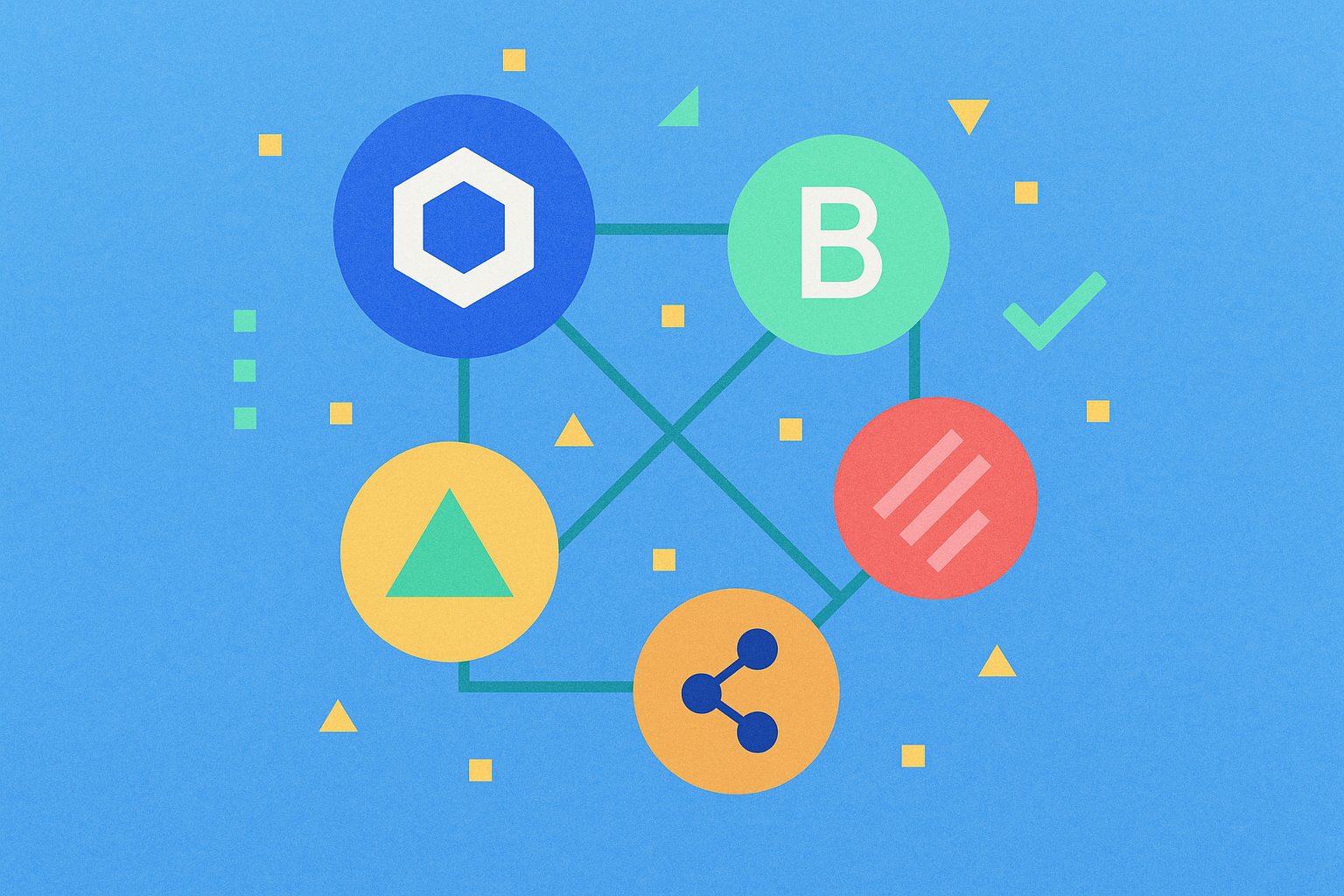
Explore the world of blockchain oracles with a complete guide to how they transmit external data to smart contracts. Learn about different types of oracles, delve into Chainlink and Band Protocol projects, assess security risks, and see how oracles are used in DeFi. This resource is perfect for Web3 newcomers and developers.
2026-02-06 10:18:27
Everything About Vitalik Buterin, Founder of Ethereum

Everything About Vitalik Buterin, Founder of Ethereum

This comprehensive biography explores Vitalik Buterin's journey from a gifted programmer to Ethereum's visionary co-founder. The article covers his early life in Russia and Canada, educational achievements, and pivotal role in creating Ethereum—introducing smart contracts that revolutionized blockchain technology. It examines his major accomplishments including the Ethereum 2.0 transition to Proof-of-Stake, substantial charitable contributions exceeding $1 billion, and ongoing innovations in privacy protection and quantum resistance. The article details his perspectives on decentralization, artificial intelligence integration, and scalability solutions, while highlighting his influence at Korea Blockchain Week and global recognition through prestigious awards. Readers gain insights into how Buterin shaped Web3's foundation and his vision for Ethereum's decentralized future on the Gate blockchain ecosystem.
2026-02-06 02:17:05
What is ZF: A Comprehensive Guide to the Zermelo-Fraenkel Set Theory Axioms and Their Foundational Role in Modern Mathematics

What is ZF: A Comprehensive Guide to the Zermelo-Fraenkel Set Theory Axioms and Their Foundational Role in Modern Mathematics

zkSwap Finance (ZF) is an innovative Swap to Earn DeFi platform on the zkSync Era ecosystem, addressing the challenge of simultaneously incentivizing liquidity providers and traders. Launched in September 2023, ZF combines zero-knowledge proof technology with a dual-reward mechanism, enabling users to earn through both liquidity provision and trading activities. With over 145,000 token holders, the platform leverages zkSync Era's Layer 2 infrastructure for efficient and secure transactions. While ZF has experienced significant market volatility and competitive pressures, its unique incentive structure positions it as an interesting development in the evolving DeFi landscape. Users can purchase ZF tokens on Gate and participate directly in the platform's ecosystem.
2026-02-06 00:46:29
Is zkSwap Finance (ZF) a good investment?: A Comprehensive Analysis of Features, Risks, and Market Potential

Is zkSwap Finance (ZF) a good investment?: A Comprehensive Analysis of Features, Risks, and Market Potential

This comprehensive analysis evaluates whether zkSwap Finance (ZF) represents a viable investment opportunity within the DeFi sector. The article examines ZF's position as the first Swap to Earn platform on zkSync Era, currently trading at $0.000651 with a market cap of approximately $402,850. By analyzing historical price trajectories—from $0.0002 launch price to $0.087 peak—investors gain insight into extreme volatility patterns alongside the platform's dual incentive model rewarding liquidity providers and traders. The analysis covers investment forecasts, risk management strategies, and security considerations, while addressing regulatory uncertainties and technical dependencies on the zkSync Era ecosystem. Suitable for speculative investors with 1-8% portfolio allocation, ZF demands careful position sizing given its limited trading volume of $19,268 and competitive DeFi landscape.
2026-02-06 00:25:46
Who Is Vitalik Buterin? An In-Depth Look at the Co-Founder of Ethereum

Who Is Vitalik Buterin? An In-Depth Look at the Co-Founder of Ethereum

Experience the extraordinary intellect of Vitalik Buterin, Ethereum’s co-founder, and his pivotal influence on the blockchain revolution. Delve into his visionary contributions, outstanding achievements, and the transformative effects he has had on decentralized technology and modern cryptocurrencies.
2026-02-05 17:27:30