CFG is the native token of the Centrifuge protocol and is primarily used for governance voting, network staking, and ecosystem incentives. Users who hold CFG can participate in protocol governance by voting on parameter changes and upgrade proposals, while node operators stake CFG to help maintain network security. In addition, CFG is used to incentivize protocol participants and support the long-term operation of the Centrifuge ecosystem.
2026-04-22 02:28:29
Centrifuge is a decentralized protocol focused on financing real-world assets (RWA). By tokenizing assets such as invoices, loans, and receivables, it enables them to access liquidity through DeFi markets. The protocol connects asset originators with investors via asset pools and smart contracts, providing liquidity to real-world assets while introducing more stable yield sources into DeFi. As decentralized finance expands beyond crypto-native assets into traditional financial domains, Centrifuge is emerging as a key piece of infrastructure linking off-chain assets with on-chain capital.
2026-04-22 02:24:22
Centrifuge’s asset pool mechanism uses Tinlake to transform real-world assets (RWA) into on-chain financial instruments that can access DeFi liquidity. Asset originators deposit assets such as invoices and receivables into pools, while investors supply stablecoins to fund these assets and earn returns based on pool performance. Tinlake relies on smart contracts to manage capital flows, linking off-chain assets with on-chain liquidity. This structure allows asset holders to secure financing through blockchain protocols while giving DeFi investors exposure to real-world yield opportunities. As a core module of Centrifuge, Tinlake plays a central role in bringing RWA financing into on-chain financial markets.
2026-04-22 02:14:36
The AB token is the core economic asset within AB’s multi-chain infrastructure ecosystem. It is designed to support network operations, cross-chain communication, and the coordinated execution of the ecosystem’s incentive framework. The token exists not only on the AB Core mainnet, but also across multiple blockchain environments, including the AB IoT sidechain and BNB Smart Chain, forming a unified economic model through a cross-chain structure.
2026-04-22 01:55:01
0G and Bittensor are both part of the decentralized AI sector, but their roles are fundamentally different. Bittensor is developing a decentralized AI model network that links machine learning models through incentive mechanisms. In contrast, 0G functions as an infrastructure layer for AI applications, offering execution, storage, data availability, and computational resources. Bittensor is oriented toward AI model collaboration networks, while 0G underpins the operation of AI applications. As a result, they each fulfill separate functions within the AI ecosystem.
2026-04-22 01:50:11
0G is a decentralized AI Layer1 infrastructure network that serves as an AI operating system, purpose-built for AI Agents and on-chain AI applications. It combines the execution layer, data availability (DA), decentralized storage, and computing power to deliver a high-performance, cost-effective, and verifiable environment for AI applications. Unlike traditional blockchains, 0G is modularly optimized for AI workloads, making it ideal for large-scale AI inference and on-chain intelligent solutions.
2026-04-22 01:45:17
0G is a decentralized Layer 1 infrastructure tailored for AI applications, featuring a modular architecture with four layers: Chain, Storage, Data Availability (DA), and Compute. This structure delivers a scalable computing and storage environment for on-chain AI and AI Agents. Specifically optimized for AI workloads, the architecture enables AI applications to efficiently execute computations, store data, and verify outcomes within a decentralized network, ultimately improving overall performance and trustworthiness.
2026-04-22 01:44:26
AB is a decentralized infrastructure project built on a multi-chain and modular architecture. Its core system consists of the AB Core mainnet, the AB IoT sidechain, and cross-chain bridges. This design is intended to support interactions between real-world data and on-chain assets, while providing a unified technical foundation for IoT devices and multi-chain applications. By distributing different functions across separate network layers, AB aims to improve scalability and operational efficiency.
2026-04-22 01:39:10
AB is a crypto asset deployed across its own mainnet (AB Mainnet), the AB IoT network, and BNB Smart Chain. It aims to establish decentralized infrastructure for data and asset operations. Through a multi-chain architecture and modular design, the project supports blockchain deployment across various use cases, with a strong emphasis on real-world environments such as the Internet of Things (IoT) and real-world assets (RWA).
2026-04-22 01:34:21
1inch Fusion is an advanced swap mechanism developed by 1inch that enables users to exchange tokens without directly incurring Gas fees. Orders are executed through competitive bidding by Resolvers, optimizing trade paths, reducing Slippage, and mitigating MEV risks for users. Compared to conventional DEX trades, 1inch Fusion delivers clear advantages in trading efficiency and user experience, establishing itself as an essential part of the 1inch DeFi infrastructure.
2026-04-21 14:48:42
1inch is a decentralized trade aggregator that sources liquidity from multiple DEXs to secure the best possible trade prices for users. Its core Pathfinder algorithm automatically splits trade routes, minimizes slippage, and optimizes Gas costs. Additionally, 1inch has evolved into essential DeFi infrastructure through features like Fusion, Cross Chain Swap, and the Developer API. The 1INCH token fulfills both governance and incentive roles.
2026-04-21 14:48:10
At the "Web3 Dialogues @ HKU - Academia x Industry" event hosted at the University of Hong Kong, Gate Founder and CEO Dr. Han emphasized that the core nature of the crypto industry is not fair competition—instead, it revolves around the ever-intensifying "Matthew Effect" driven by first-mover advantage.
2026-04-21 14:13:51
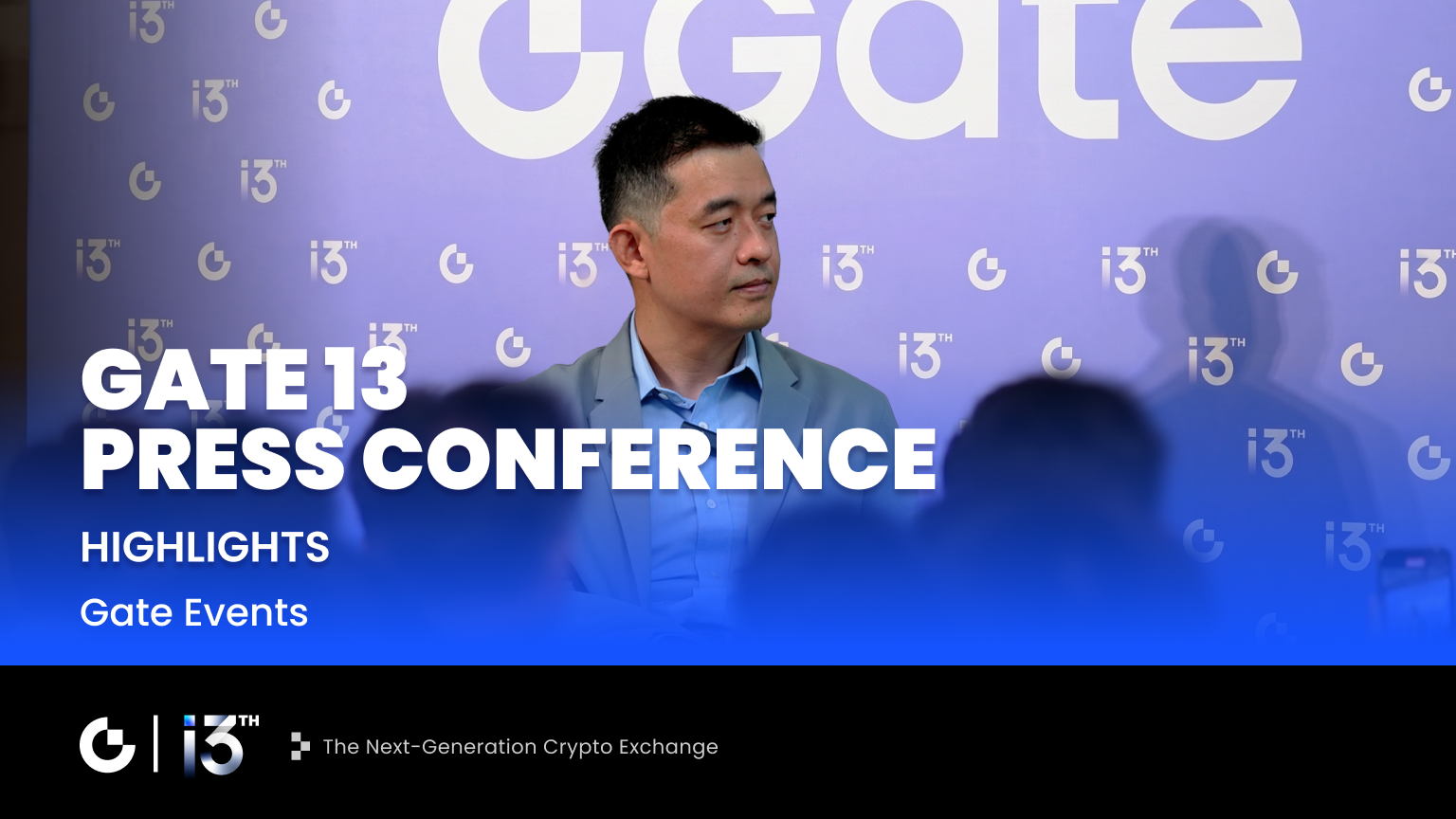
Highlights from Gate Founder & CEO Dr. Han's media interview at Rosewood Hong Kong.During the session, Dr. Han shared his outlook on the industry and Gate's long-term direction.Key highlights:Crypto is entering a more mature phase, driven by RWA, AI × crypto integration, and CeFi–DeFi convergence; AI is evolving from an efficiency tool into a core trading capability across decision-making, risk management, and asset allocation; Multi-asset trading is rising, with growing demand for access across crypto and traditional markets like equities, gold, and forex; Prediction markets are emerging as a form of information pricing, turning collective expectations into market signals. Gate continues to strengthen its infrastructure and expand its asset offerings, building toward a more complete crypto ecosystem.
2026-04-21 12:34:52
Gate will hold the "Institutional Circle: Al Reshaping Crypto Liquidity & Market Access" institutional exchange event in Hong Kong, aimed at institutional participants, focusing on discussions related to "AI Reshaping Crypto Liquidity and Market Structure."
2026-04-21 12:04:17
PANews reported on April 21 that Dr. Han, founder and CEO of Gate, delivered a speech at the main stage of the Hong Kong Web3 Carnival, focusing on the theme "Move Everything On-Chain" and sharing his insights on future industry trends.
2026-04-21 11:50:12