BlueGlassJelly

vip
Age 0.1 Yıl
Peak Tier 0
No content yet
Recently, I've been seeing new L1/L2 projects offering incentives to boost TVL, and in the community, people are rushing to participate while complaining "mining, selling."
I'm actually more concerned about whether the cross-chain process is reliable...
To put it simply, bridges are just "you give your tokens, and wait for others to acknowledge it."
Who are the multi-signature signers, and are they the same company just using different aliases?
Will the prices/status fed by the oracle be manipulated or get stuck?
And that "waiting for confirmation"—don't complain about it being slow.
View Original
  • Reward
  • Comment
  • Repost
  • Share
I took another look at the AMM curves of a few more pools today, and the more I watch, the more it feels like market making is definitely not the kind of job where you just lie back and collect fees. If the price drifts, your position gets “automatically rebalanced” along the curve. Impermanent loss, in plain terms, is that you’re forced to sell when prices are rising and buy when prices are falling—then when you go back and tally it up, you realize it’s actually not as good as just holding still. That’s pretty gutting. And that’s not even mentioning the current “yield stacking” through re-sta
View Original
  • Reward
  • Comment
  • Repost
  • Share
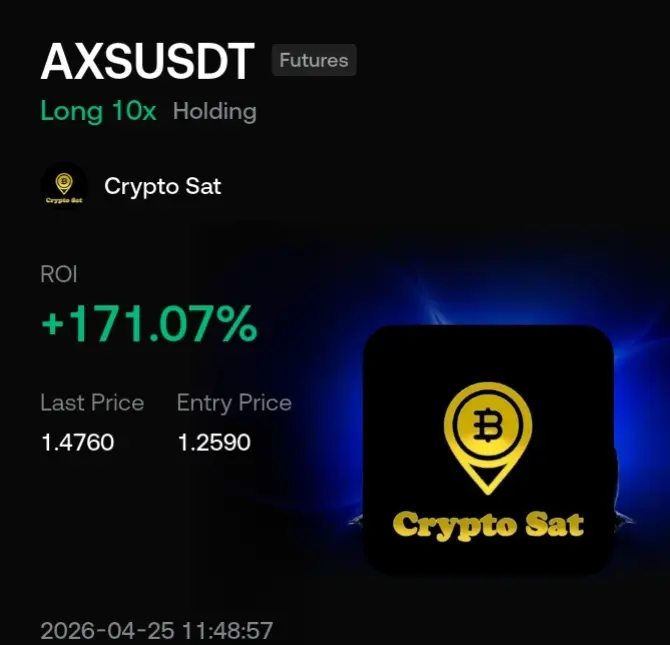
Once you send me this profit screenshot, I'll believe half; once you share the trading plan, I'll believe completely.
View Original
CryptoSat
Crypto Sat Made a 171% profit on Saturday morning $AXS trade !
Do you following me?
repost-content-media
  • Reward
  • Comment
  • Repost
  • Share
Stop playing left hand upside down with the right hand. The narrative that can generate its own cash flow is the real strength.
View Original
Furan86999
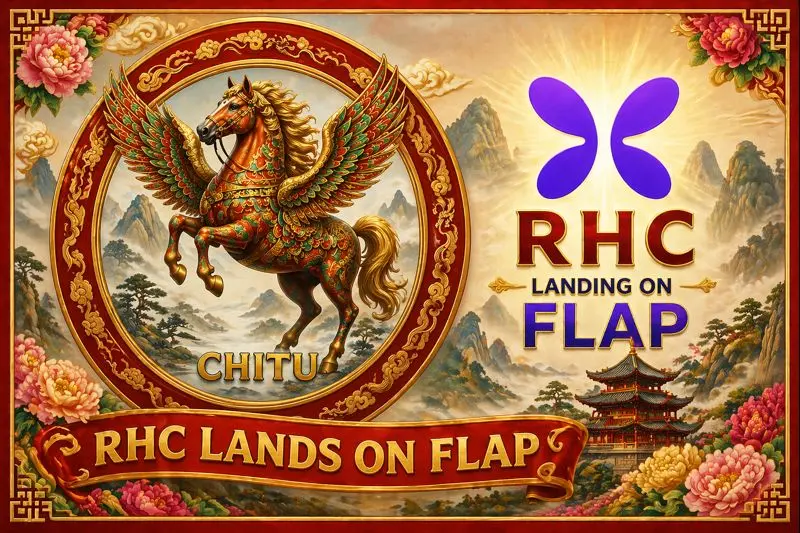
Many Web3 projects die in “left-hand-to-right-hand” liquidity pool games, while @RedHare_Legend follows a path of “endogenous growth.”
Built on the real-economy footprint of Tayang Group @TayangGroup, the Chitu Horse ecosystem has real profit sources and expected cash-flow buybacks. This logic—extracting profits from real business and feeding them back to on-chain holders—completely overturns the traditional Ponzi model. This is the underlying logic that can truly support a market value of hundreds of billions. As a seasoned investor, I only invest in projects with “profits you can see.” Tayang Group is the strongest profit guarantee behind Chitu Horse.
CA: 0x8ea350c0a5cd5247647b312515fe21e0fe597777
repost-content-media
  • Reward
  • Comment
  • Repost
  • Share
Lately, I've been a bit obsessed with DAO voting, to be honest. The proposal texts are meant for "everyone" to see, but the incentives and power structures are designed for "those few people." For example, the subsidy wording is very gentle, but the real key points are: who can submit proposals, who can modify parameters, whose delegated votes will automatically follow... I also casually check related contract interaction records to see if there's a wave of fixed addresses "checking in" before and after voting. That kind of pattern is so obvious that it makes my OCD want to mark it.
Recently,
View Original
  • Reward
  • Comment
  • Repost
  • Share
Another case of traditional financial "internal control failure," regulators are now clearly more stringent.
View Original
CryptoFrontier
FCA Censures Sapia, Orders £19.6M Payment to WealthTek Clients
The Financial Conduct Authority (FCA) has censured Sapia and required the firm to pay £19.6 million to clients of WealthTek following an investigation into inadequate client money safeguards. The payment, comprising £19.1 million to WealthTek's administrators and £500,000 to the Financial Services C
  • Reward
  • Comment
  • Repost
  • Share
Can retail investors also get in on private equity at the level of OpenAI?
View Original
CryptoFrontier
Robinhood Invests $75M in OpenAI via New Venture Fund
Robinhood, a US trading platform, announced on April 22 that its venture fund invested $75 million in OpenAI as it seeks to provide retail investors access to private technology companies, according to Reuters. The investment comes as OpenAI has attracted strong investor interest amid a rush by
  • Reward
  • Comment
  • Repost
  • Share
Don't just envy the increase; what you really need to watch is correlation: once they rise and fall together, diversification is an illusion.
View Original
CryptoFrontier
AI Stocks Reach 45% of S&P 500 as NVIDIA Becomes Index Leader
AI stocks have surged to nearly 45% of the S&P 500's total market capitalization as of March 30, 2026, driven by massive infrastructure spending and a concentration in megacap technology leaders. According to S&P 500 data, the dominance of this "AI backbone"—tied to data center, semiconductor, and e
  • Reward
  • Comment
  • Repost
  • Share
This line about Pixels is so true: even if people are not here, the world keeps running.
View Original
CryptoManMab
these days when I log back into Pixels, things feel different without me choos
  • Reward
  • Comment
  • Repost
  • Share
Stop relying on indicators blindly; first, master risk control and execution.
View Original
CurrencyGodfather
The Dual Cultivation of Buddha and Tao in Trading: Developing a Top-Level Trading System That Makes Profits Without Panic Amid Price Fluctuations
Many traders believe that "trading cultivation" is about studying countless indicators, chasing hot trends everywhere, or bowing to "gurus" to seek a "limit-up password."
It's too superficial, so shallow that it repeatedly halves your account.
True trading cultivation is not about stacking techniques or gambling with luck, but about a robust, closed-loop, underlying operating system that allows you to survive long-term in the market's battlefield.
It addresses the two most deadly stubborn problems in trading: greed and fear.
Not for overnight riches, but to develop a set of trading mindsets and strategies that can "attack when appropriate, defend when necessary, profit can be held, losses can be stopped" in the unpredictable market.
1. The "Buddha-Tao Dual Cultivation" in Trading: Break it Down, and the Trading Becomes Instantaneously Clear
Taoism is your "technique," your confidence in trading
Understand the rules, grasp the cycles, leverage trends, and achieve results.
Laozi said, "Man follows the Earth, Earth follows Heaven, Heaven follows the Tao, and the Tao follows Nature," and the "Tao" in trading is the market law—the inertia of trends, the cycle of repetitions, the flow of funds.
It teaches you to identify direction amid oscillations and seize opportunities within the market. For example, understanding "following the trend" means recognizing the power of the trend and not fighting against the market; mastering "extremes must reverse" means understanding the rhythm of cycles, escaping peaks in madness, and positioning during panic.
This is the ability to break through externally in trading, your skill to settle in the market, preventing you from becoming "harvested by the weeds" in complex movements.
Buddhism is your "mind," your composure in trading
Break attachment, be indifferent to gains and losses, eliminate obsessions, and cut internal friction.
The Diamond Sutra says, "All appearances are false," and the ups and downs, profits and losses in trading are just market "appearances." If you cling to every profit frenzy or pain of loss, you'll be led by emotions, ultimately exhausting your capital in chasing rises and selling dips.
It teaches you to remain humble in profit and not collapse in loss. For example, practicing "a mind free of hindrance" means keeping your trading plan unaffected by emotions; cultivating "absence of fear" means sticking to rules when facing floating losses.
This is internal stability in trading psychology, your armor to protect your account, preventing your mindset from being hijacked by fluctuations.
Together, they form a trader capable of long-term profitability.
Use Tao as technique to formulate executable strategies; cultivate Buddha to refine an undisturbed trading mindset.
Externally, leverage laws to capture market movements; internally, maintain awareness to withstand volatility. Lacking either half, trading becomes a "money-losing business."
2. Why is the Buddha-Tao Dual Cultivation the Most Top-Level Practice in Trading?
Taoism grants you the ability: to hold firm, not to be weak
Only talking about sentiment without understanding rules is called "chives," and you'll only be repeatedly harvested by the market.
Taoism helps you see market laws clearly and follow the trend. For example, understanding "Heaven's way has no favoritism, always with the good" (here "good" refers to those who follow market laws), means trading without recklessness or speculation, strictly following signals from trends, funds, and patterns.
Build positions based on evidence, have rules for taking profits and stopping losses, and avoid being led by market noise. It gives you the "decisiveness" in trading and the confidence to "protect capital and profit."
As the old saying in trading goes: "Those who buy are apprentices, those who sell are masters, those who stay in cash are ancestors." This wisdom of "selling" and "holding cash" embodies Taoist law-based thinking.
Buddhism gives you perspective: to let go, not to be arrogant
Only understanding techniques without letting go makes people prone to inflation during profits and losing control during losses, ultimately leading to elimination by the market.
Buddhism helps you break the obsession with "getting rich quickly" and see short-term gains and losses lightly.
Profits are given by the market, not by your "divine status"; losses are just trading costs, not the end of the world.
It equips you with a "mindset bulletproof vest": expecting profits but not greedy; prepared for losses but not fearful. This is the "long-term attitude" that allows you to survive in the market.
Unified, they form a closed trading loop for continuous profits
Taoism helps you "generate income"—study the market, refine strategies, seize opportunities, and keep your account earning;
Buddhism helps you "save expenses"—manage your mindset, enforce discipline, and control risks, preventing large drawdowns from devouring your account.
One outward, one inward; one attack, one defense; one movement, one stillness.
As a trading master said: "Trading is a probability game, a profitable trading system + a stable mindset = long-term profits." This is the most complete "profit cycle" in trading, ensuring you always have "the next opportunity" in the market.
3. Why is it the Top-Level "Cultivation" in Trading?
Focusing only on "techniques" (Taoism) can lead to "technique superstition," where if the market doesn't go as expected, you doubt your strategy and yourself, ultimately losing your way through frequent adjustments;
Focusing only on "mind" (Buddhism) can turn into "Buddha-like passivity," seeming to have a good mindset but lacking strategy, with your account gradually declining without solutions.
A trader practicing both Buddha and Tao can both rely on strategies to catch trends and rely on mindset to withstand volatility.
Just like those investment giants who survive bull and bear markets—they understand economic cycles (Taoist techniques) and can calmly position during market crashes (Buddhist mindset).
In trading:
First, use Taoist thinking—calmly analyze trends, funds, and patterns, and develop a cold, calculated trading plan;
Then, use Buddhist calm—strictly execute the plan, remain steady in profits, and stay composed during losses.
With strategies unbreakable and mindset flawless.
They don't talk about "secrets" or "dark horses," but can live clearly and earn steadily in the market.
This is the true "winner" in trading.
4. What Does a Truly Buddha-Tao Dual Cultivator Look Like?
- Strategies are extremely stable, cognition is highly insightful, targeting high-probability opportunities, avoiding meaningless trades;
- Discipline like Tao, mindset like Buddha, plans as sharp as a knife, yet unaffected by gains or losses;
- Present in the market, but mind not hijacked by K-line charts.
They have the ability to seize opportunities and accept volatility, combining both, switching effortlessly.
They are greedy for opportunities but set boundaries; fearful of losses but disciplined—markets have no way to control them.
5. The Ultimate One-Liner
The Buddha-Tao dual cultivation in trading is not a wavering "fence-sitter,"
but the most complete and highest form of "profit evolution" for traders.
Understand the market with Tao, cultivate the mind with Buddha.
True trading masters are like this:
Entering with the confidence of "standing firm, facing trends head-on";
exiting with the calm of "profits and losses at will, let it be."
May you:
Have Taoist skills externally, secure your place in the market, and grasp definite opportunities amid rises and falls;
Have Buddha-heartedness internally, trade freely, and cultivate a "sure-win, panic-free" mindset amid profits and losses.
Trades are orderly, rises and falls unshaken.
In the trading market, profit clearly and complete your account. #GatePreIPOs首发SpaceX
repost-content-media
  • Reward
  • Comment
  • Repost
  • Share
Recently, I've been seeing the narratives of "modularization" and "DA layer" being repeated again, with developers talking excitedly, while ordinary users are mostly confused... I myself am a perfectionist, so I focus on one main thread: from the moment you transfer money to "irreversibility," who is actually holding your data, who is queuing, and who makes the decisions.
Changing terms back and forth really boils down to three things: whether the data can be found (DA), how your transaction gets included in the block (ordering), and finally when it is considered final (finality). The only "si
View Original
  • Reward
  • Comment
  • Repost
  • Share
Holding steady sometimes is the strongest strategy, especially during volatile periods.
View Original
CryptoSat
Hold without sl
  • Reward
  • Comment
  • Repost
  • Share
In the past few days, I've seen a bunch of large on-chain transfers and hot/cold wallet movements at exchanges being screenshot as "smart money." Honestly, many of these are just moving or consolidating assets; they have nothing to do with how you should manage your assets.
My rough categorization: if your assets are still small and you're mainly using one or two blockchains, a hardware wallet is enough. Don't find it troublesome—signing once gives peace of mind; when your holdings grow to the point of "fear of losing everything with a slip-up," multi-signature is more like a safe. It's slower
View Original
  • Reward
  • Comment
  • Repost
  • Share
Opportunities are always there; the question is, are you ready?
View Original
CryptoSat
Missed $BASED, $BLZ, $ENJ, $ORDI? … no problem 👀
There’s always another opportunity — and right now
  • Reward
  • Comment
  • Repost
  • Share
Just checked on-chain data again and saw someone using "privacy" as a stealth cloak... To be honest, on-chain is a public ledger, and what you can hide is mostly just making the path more complicated. If you really get targeted, once you pass the compliance threshold at the exchange, you'll still be linked together. I don't think ordinary users should have overly optimistic expectations: avoid mixing everyday transfers with unfamiliar addresses, minimize signature interactions, and keeping some "explainable" records can actually make you feel more secure. Recently, everyone’s been anxious abou
View Original
  • Reward
  • Comment
  • Repost
  • Share
The same report provides two answers: one is a cash society, and the other is a mobile payment society. Product strategies should not be one-size-fits-all.
View Original
CryptoFrontier
South Africa Ride-Hailing 80% Cash-Based, Bolt-Ipsos Report
More than 80% of ride-hailing transactions in South Africa are processed in cash, according to a Bolt gig economy report conducted in partnership with research firm Ipsos. The finding highlights a stark contrast with Nigeria, where over 85% of trips are settled through cashless channels,
  • Reward
  • Comment
  • Repost
  • Share
Kalshi's odds reflect market sentiment; when the sentiment is right, it's a smooth ride, but it can change quickly if the sentiment shifts.
View Original
CryptoFrontier
Kalshi Traders Forecast XRP to Hit $1.60 in April
Kalshi traders predict XRP will reach $1.60 in April amid rising demand and significant ETF inflows. With a bullish technical outlook and upcoming regulatory votes, XRP's market dynamics show potential for further gains, despite risks of declining support levels if outcomes are unfavorable.
  • Reward
  • Comment
  • Repost
  • Share
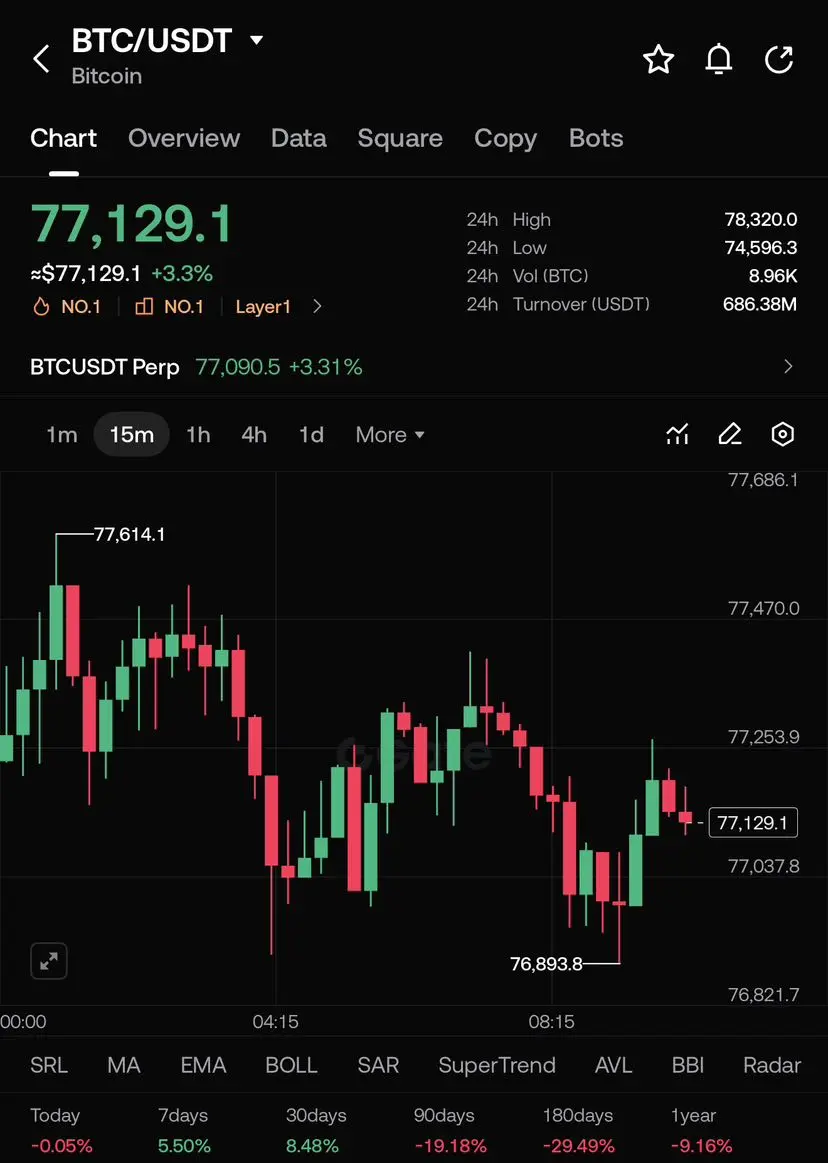
$BTC Right now, it's a strong consolidation with higher lows; whether the momentum continues and we see 78.3 depends on the market.
BTC-0,3%
View Original
LedgerBull
$BTC showing steady strength with controlled pullbacks.
Structure remains intact with buyers defending key zones.
EP
76,900 – 77,200
TP
TP1 77,600
TP2 78,000
TP3 78,300
SL
76,500
Liquidity sweep below 77K followed by quick reaction suggests absorption. Price holding mid-range with higher lows forming, indicating continuation potential if momentum sustains.
Let’s go $BTC ‌
repost-content-media
  • Reward
  • Comment
  • Repost
  • Share
Don't just focus on candlestick charts; the net inflow of spot ETFs is the footprint of big capital.
View Original
Coinstages
🏛️ ALTCOIN ETF AWAKENING: SOLANA AND CHAINLINK LOG RECORD INFLOWS AS INSTITUTIONS RETURN
According to the latest data from SoSoValue and BeInCrypto, spot ETFs for Solana (SOL) and Chainlink (LINK) recorded their most significant daily inflows in over a month on April 16.
repost-content-media
  • Reward
  • Comment
  • Repost
  • Share
  • Pin