Peacefulheart

vip
Age 0.7 Yıl
Peak Tier 5
No content yet
In April 2026, a major controversy emerged at the intersection of military operations, prediction markets, and cryptocurrency, centered around allegations that a U.S. Special Forces soldier profited from classified information linked to a covert operation in Venezuela. The case quickly gained global attention because it was not just a financial scandal, but also a national security incident involving real-world military action and digital betting markets operating on blockchain infrastructure.
According to federal authorities, the soldier identified as Gannon Ken Van Dyke was involved in plann
MrFlower_XingChen
In April 2026, a major controversy emerged at the intersection of military operations, prediction markets, and cryptocurrency, centered around allegations that a U.S. Special Forces soldier profited from classified information linked to a covert operation in Venezuela. The case quickly gained global attention because it was not just a financial scandal, but also a national security incident involving real-world military action and digital betting markets operating on blockchain infrastructure.
According to federal authorities, the soldier identified as Gannon Ken Van Dyke was involved in planning and execution-related phases of a covert mission reportedly known as “Operation Absolute Resolve,” which targeted the Venezuelan political leadership. Prosecutors allege that during the days leading up to the operation, he placed multiple bets on a crypto-based prediction platform, focusing on outcomes directly related to political change in Venezuela and possible U.S. military involvement. These positions were allegedly placed before public awareness of the operation, raising immediate concerns about the misuse of insider information.
The most controversial aspect of the case is the timing and scale of the final wager. Investigators claim that just hours before the operation became publicly known, a significantly larger position was placed, which ultimately generated hundreds of thousands of dollars in profit after the geopolitical event unfolded. This sudden and highly accurate positioning triggered internal compliance alerts on the prediction platform and later contributed to a formal investigation by federal authorities. The fact that the trades were executed using cryptocurrency added additional complexity, as funds were routed through multiple digital wallets and later converted into traditional financial instruments.
Authorities further allege that efforts were made to obscure the origin of the funds. This included the use of privacy tools such as VPN routing during account creation, rapid movement of winnings across crypto wallets, and attempts to remove or deactivate trading history on the prediction platform. Despite these actions, blockchain tracing tools and exchange cooperation reportedly allowed investigators to reconstruct the flow of funds with high accuracy, ultimately linking the profits back to the accused individual.
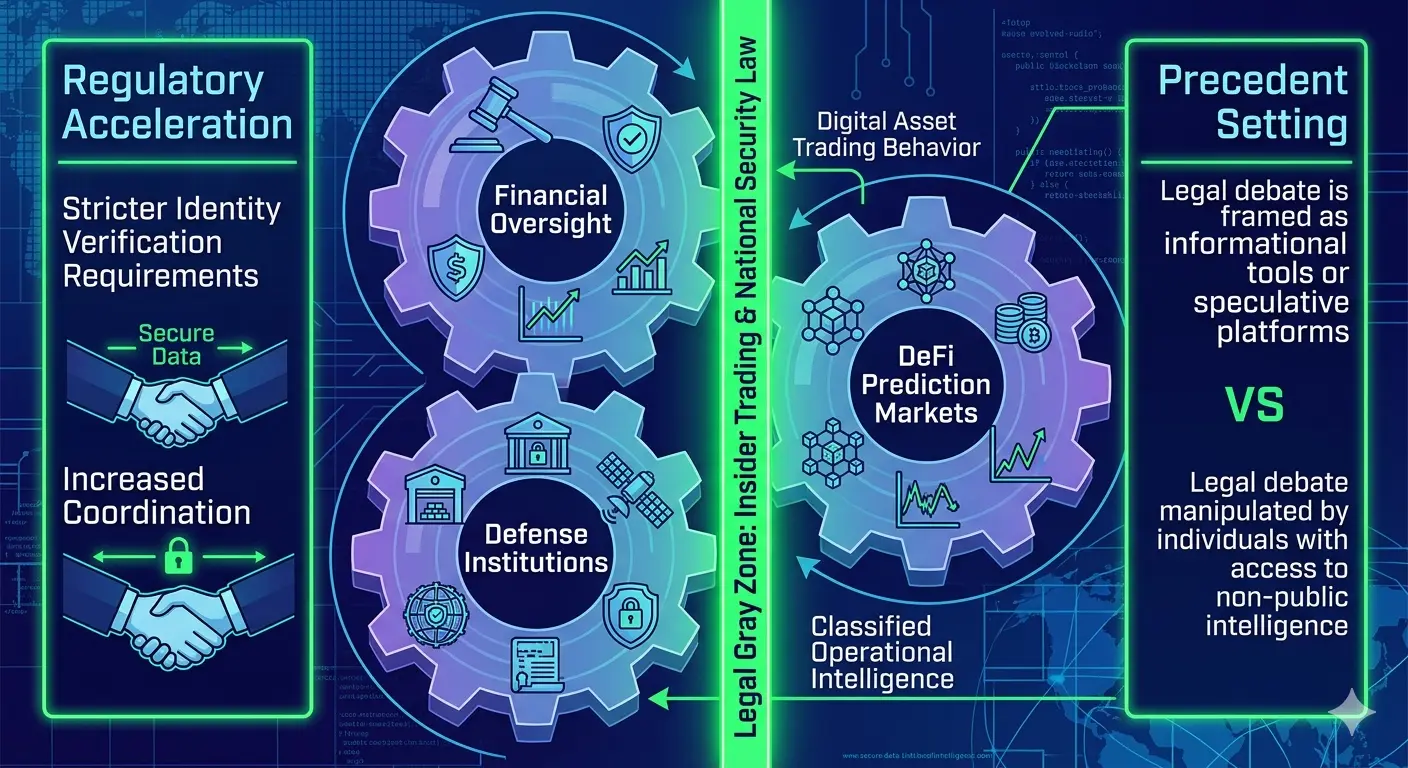
The legal implications of this case are significant because it represents one of the first instances where prediction markets are being treated as a potential venue for insider trading tied to classified military operations. Prosecutors have argued that while prediction markets are often framed as informational tools or speculative platforms, they can still be manipulated by individuals with access to non-public intelligence, especially when geopolitical outcomes are involved. This has created a legal gray zone where financial trading behavior intersects directly with national security law.
The prediction market platform involved in the case publicly stated that it cooperated fully with federal investigators and emphasized that insider trading using classified information violates its core policies. However, the incident has sparked a broader debate about whether decentralized prediction markets can effectively enforce compliance standards when users operate across borders and use privacy-enhancing technologies. Critics argue that while blockchain systems provide transparency in transactions, they do not inherently prevent misuse of privileged information.
Market reaction to the underlying geopolitical events also became part of the controversy. Following the operation, certain prediction markets tied to military escalation and regime change experienced extreme volatility, with sudden spikes in probability estimates occurring shortly before official announcements. This raised concerns among analysts that information leakage—whether intentional or indirect—may be influencing market pricing behavior in real time. The lack of clear definitions around what constitutes “invasion,” “military action,” or “regime change” further complicated resolution outcomes and led to disputes among participants.
Politically, the incident triggered strong reactions from policymakers and public figures. The idea that active-duty military personnel could potentially profit from classified operational knowledge using crypto-based platforms has raised questions about ethical boundaries, oversight mechanisms, and the future regulation of prediction markets. Comparisons were drawn to historical sports betting scandals, but the stakes in this case are significantly higher due to the involvement of international security operations and sovereign state conflict.
From a regulatory perspective, the case is expected to accelerate discussions within U.S. financial oversight agencies regarding how prediction markets should be classified and controlled. There is growing consideration of introducing stricter identity verification requirements for participants, especially those in sensitive government or military positions. Additionally, there may be increased coordination between financial regulators and defense institutions to monitor potential conflicts of interest involving classified information and digital asset trading.
In broader terms, this incident highlights a new reality in which geopolitical events, crypto markets, and information asymmetry are becoming deeply interconnected. Prediction markets, which were originally designed to aggregate public information efficiently, now face scrutiny over their vulnerability to insider influence. As digital finance continues to evolve, the boundary between legitimate speculation and illegal information exploitation is becoming increasingly difficult to define.
Ultimately, the #USMilitaryMaduroBettingScandal represents more than a single legal case. It reflects a structural challenge in the modern financial system where decentralized platforms, real-world conflict, and classified intelligence can intersect in unpredictable ways. The outcome of the trial and subsequent regulatory response may set a precedent for how governments handle the growing overlap between blockchain-based markets and national security operations in the years ahead.
#GateSquare
#ContentMining
#CreaterCarnival
#USMilitaryMaduroBettingScandal
repost-content-media
  • Reward
  • 7
  • Repost
  • Share
CryptoDiscovery:
To The Moon 🌕
View More
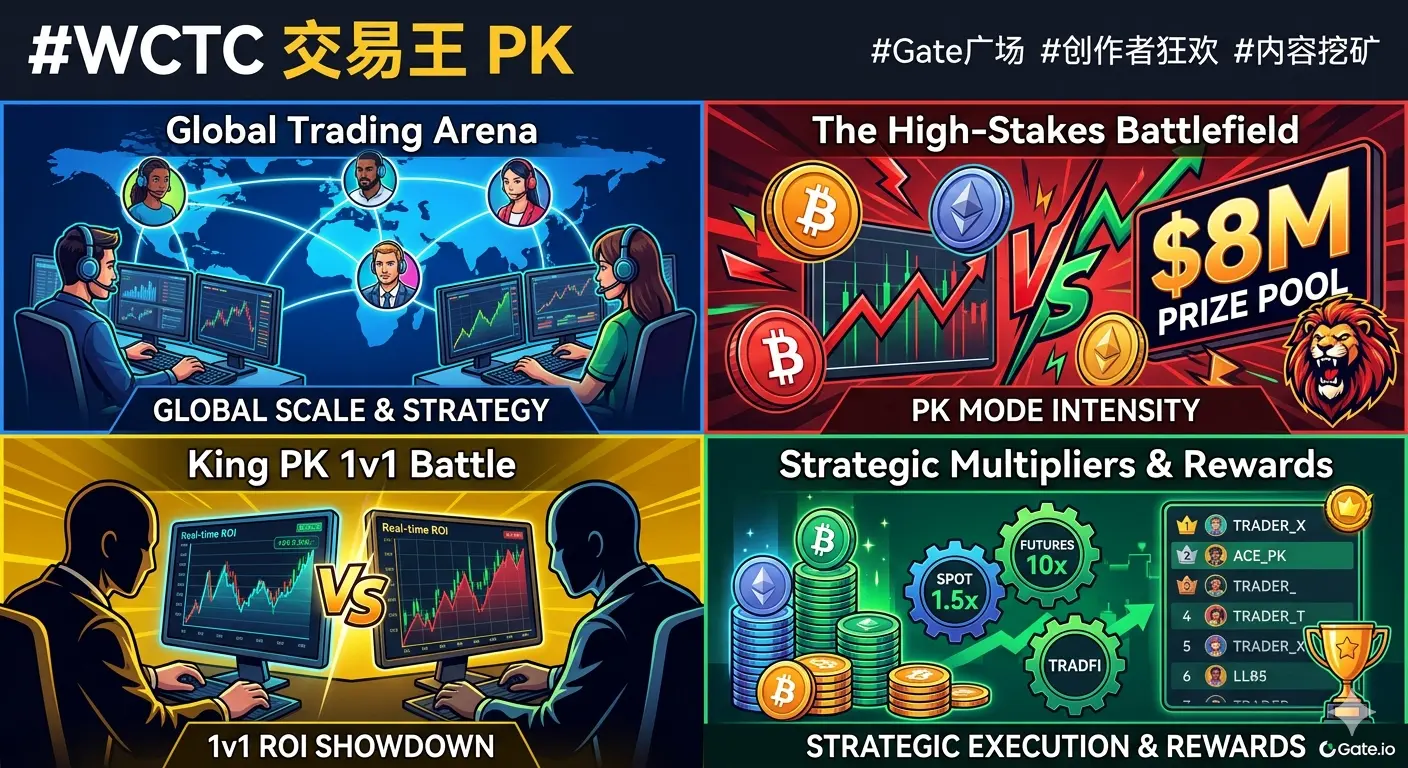
#WCTCTradingKingPK
✨ WCTC S8 Ignites the Global Trading Battlefield with Unmatched Scale and Strategy
The launch of WCTC Season 8 marks a defining moment in the evolution of competitive crypto trading. With an astonishing $8 million prize pool, this season is not just larger in numbers—it is deeper in structure, sharper in competition, and more demanding in skill than ever before. Traders from across the globe are stepping into an arena where every move is measured, every decision is strategic, and every second counts. This is no longer a simple trading contest; it is a high-stakes ecosystem
MrFlower_XingChen
#WCTCTradingKingPK
✨ WCTC S8 Ignites the Global Trading Battlefield with Unmatched Scale and Strategy
The launch of WCTC Season 8 marks a defining moment in the evolution of competitive crypto trading. With an astonishing $8 million prize pool, this season is not just larger in numbers—it is deeper in structure, sharper in competition, and more demanding in skill than ever before. Traders from across the globe are stepping into an arena where every move is measured, every decision is strategic, and every second counts. This is no longer a simple trading contest; it is a high-stakes ecosystem where precision, endurance, and adaptability define success.
What sets WCTC S8 apart is its multi-dimensional competitive framework. Unlike traditional competitions that focus purely on profit, this season emphasizes a hybrid model combining trading volume, return on investment (ROI), and strategic positioning. The leaderboard is heavily influenced by trading activity, pushing participants to maintain consistent engagement rather than relying on occasional high-profit trades. This creates a fast-paced environment where traders must balance aggressive execution with calculated risk management.
Another key transformation in this season is the enhanced weighting system. Spot, ETF, and swap trades contribute 1.5x toward volume calculations, while futures and traditional finance (TradFi) transactions carry a powerful 10x multiplier. This mechanism dramatically shifts the competitive landscape, rewarding traders who can effectively navigate leveraged markets. However, with higher rewards comes higher risk, making discipline and risk control more critical than ever. Traders are no longer just chasing profits—they are engineering strategies that maximize efficiency across multiple asset classes.
Entry into this elite competition requires commitment. A minimum trading volume threshold of $20,000 ensures that only serious participants enter the arena. This barrier filters out casual traders and creates a concentrated environment of skilled competitors. Once this threshold is crossed, participants are instantly integrated into the global ranking system, where every trade begins to shape their competitive standing.
WCTC S8 also introduces a powerful dual-competition dynamic. Participants simultaneously contribute to both individual and team leaderboards, creating a layered strategic experience. A single trade can influence multiple outcomes, encouraging collaboration without sacrificing individual ambition. Teams must coordinate strategies, share insights, and optimize collective performance, while individuals still strive to stand out in global rankings. This dual structure adds psychological depth to the competition, blending cooperation with rivalry.
Among all formats, the King PK mode stands out as the most intense and unforgiving. This 1v1 battle system operates in real time, with traders competing anonymously in high-pressure environments. Each round lasts only two hours, forcing participants to deliver peak performance within a limited timeframe. The winner is determined purely by ROI, making every trade crucial. There is no room for hesitation—only sharp execution and rapid decision-making can secure victory. The anonymity factor removes bias and focuses purely on skill, making it a true test of trading ability.
The evaluation system in WCTC S8 goes beyond crypto markets. By incorporating both futures and TradFi performance into ROI calculations, the competition rewards versatility. Traders who can adapt across different financial instruments gain a significant edge. This approach reflects the evolving nature of global trading, where boundaries between crypto and traditional markets are increasingly blurred.
To maintain competitiveness, the system enforces strict participation rules. Minimum activity requirements ensure that traders remain engaged throughout the event. Passive strategies are ineffective here—consistent action is necessary to stay relevant. This keeps the leaderboard dynamic, with positions constantly shifting as traders respond to market conditions.
The reward distribution model is equally compelling. The top 100 participants are guaranteed prizes, providing strong incentives for high performance. At the same time, random rewards for non-ranking participants ensure that engagement remains high across all levels. This inclusive approach encourages broader participation while still recognizing elite performance.
Timing plays a crucial role in WCTC S8. Running from April 23 to May 20, the event coincides with a period of expected market volatility. This creates both opportunities and risks, as price swings can rapidly impact trading outcomes. Successful participants will be those who can interpret market signals, adapt quickly, and maintain composure under pressure.
In essence, WCTC Season 8 is not just about making profitable trades—it is about mastering a complex system where strategy, speed, and discipline intersect. Traders must think beyond individual positions and consider the broader competitive framework. Every trade contributes to a larger narrative, where consistency often outweighs short-term gains.
This season represents a new era in trading competitions—one where intelligence, adaptability, and resilience are the true currencies of success. In this arena, victory is not given to the boldest or the luckiest, but to those who understand the game at its deepest level and execute with precision.
✨ WCTC S8 is more than a competition—it is a proving ground for the next generation of elite global traders.
#Gate广场 #创作者狂欢 #内容挖矿 #Gate13周年现场直击
repost-content-media
  • Reward
  • 9
  • Repost
  • Share
Yusfirah:
LFG 🔥
View More
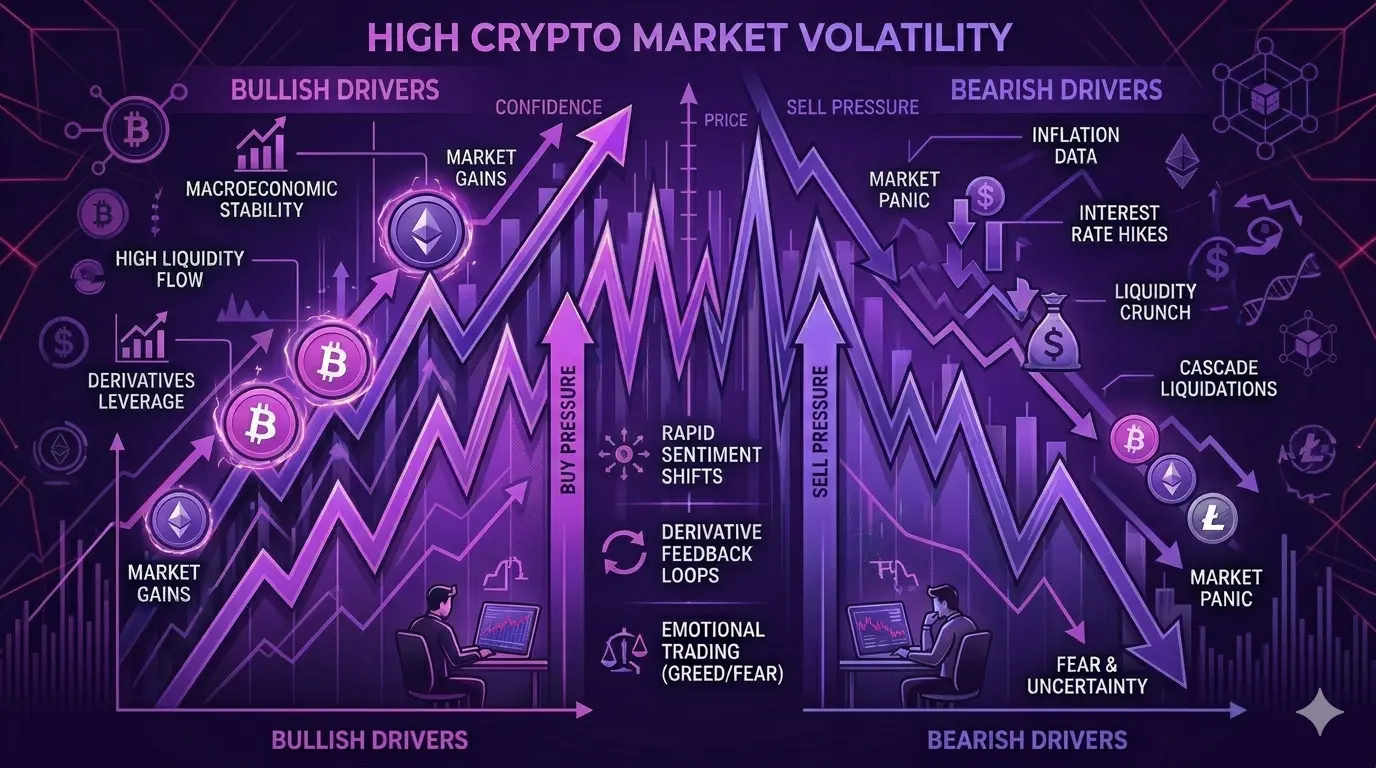
The crypto market has once again entered a phase of heightened volatility, drawing attention from traders, investors, and analysts across the globe. Price swings have become sharper, trends are shifting faster, and uncertainty is dominating short-term sentiment. This environment is not unusual for digital assets, but the current intensity suggests a complex mix of macroeconomic pressure, liquidity shifts, and evolving trader behavior.
At the core of this volatility lies the interaction between global financial conditions and the inherently speculative nature of cryptocurrencies. When tradition
BTC0,25%
ETH0,52%
MrFlower_XingChen
The crypto market has once again entered a phase of heightened volatility, drawing attention from traders, investors, and analysts across the globe. Price swings have become sharper, trends are shifting faster, and uncertainty is dominating short-term sentiment. This environment is not unusual for digital assets, but the current intensity suggests a complex mix of macroeconomic pressure, liquidity shifts, and evolving trader behavior.
At the core of this volatility lies the interaction between global financial conditions and the inherently speculative nature of cryptocurrencies. When traditional markets react to inflation data, interest rate decisions, or geopolitical developments, the crypto market often amplifies those reactions. Large-cap assets like Bitcoin and Ethereum tend to set the tone, but altcoins frequently experience even more dramatic movements due to lower liquidity and higher risk appetite among traders.
One of the key drivers behind recent market instability is the changing structure of liquidity. During bullish periods, liquidity flows easily into the market, supporting upward trends and creating strong momentum. However, when uncertainty increases, capital becomes more cautious. This leads to thinner order books, where even moderate buy or sell pressure can cause significant price movements. As a result, traders are seeing rapid spikes and drops within short timeframes, making timing more critical than ever.
Another contributing factor is the growing influence of derivatives trading. Futures and perpetual contracts now represent a substantial portion of total trading volume. While these instruments provide opportunities for leverage and hedging, they also introduce additional risk. Liquidations can cascade quickly, triggering chain reactions that push prices further in one direction. This creates a feedback loop where volatility feeds on itself, especially during periods of high leverage.
Market psychology is also playing a crucial role. In volatile conditions, emotions such as fear and greed become more pronounced. Retail traders may panic sell during sudden drops or chase rallies without proper confirmation. At the same time, experienced traders often capitalize on these emotional reactions, creating further imbalance in the market. The result is a cycle of rapid sentiment shifts, where confidence can turn into doubt within hours.
Institutional participation has added another layer of complexity. Unlike earlier market cycles dominated by retail investors, the presence of institutional capital introduces more strategic positioning. Large players often operate with longer-term perspectives, but they also react to macroeconomic signals and risk exposure. Their movements can influence market direction significantly, especially when they adjust portfolios or rebalance positions.
Technological developments and network-specific events are also contributing to price fluctuations. Upgrades, partnerships, regulatory announcements, and security concerns can all impact investor confidence. In a market where information spreads instantly, even rumors can trigger immediate reactions. This highlights the importance of staying informed and critically evaluating news before making trading decisions.
Despite the challenges, volatility is not purely negative. For active traders, it creates opportunities to profit from price movements in both directions. Short-term strategies such as scalping and swing trading become more attractive, while long-term investors may see volatility as a chance to accumulate assets at lower prices. The key difference lies in approach—those who manage risk effectively can navigate these conditions, while those who act impulsively often face losses.
Risk management has therefore become more important than ever. Setting stop-loss levels, avoiding excessive leverage, and maintaining a balanced portfolio are essential practices in such an environment. Traders who adapt to changing conditions and remain disciplined are more likely to survive and succeed. On the other hand, ignoring market signals or overcommitting to a single position can lead to significant setbacks.
Looking ahead, the crypto market is likely to remain volatile as it continues to mature. External economic factors, regulatory developments, and technological innovation will all play a role in shaping future trends. While periods of stability may emerge, volatility will remain a defining characteristic of this asset class.
In conclusion, the current phase of market turbulence reflects both the strengths and weaknesses of the crypto ecosystem. It highlights the market’s sensitivity to external influences while also showcasing its dynamic nature. For participants, this is a time to focus on strategy, discipline, and continuous learning. Those who understand the underlying forces driving volatility will be better positioned to navigate uncertainty and make informed decisions in an ever-changing landscape.
#GateSquare
#ContentMining
#CreaterCarnival
#CryptoMarketSeesVolatility
repost-content-media
  • Reward
  • 4
  • Repost
  • Share
CryptoDiscovery:
LFG 🔥
View More
The rsETH exploit has continued to influence the crypto market well beyond the initial incident, evolving into a broader test of stability for the entire DeFi ecosystem. What began as a single cross-chain failure has triggered ongoing volatility, liquidity shifts, and structural changes across multiple protocols. The market is now reacting not just to the loss itself, but to what it reveals about underlying risks in decentralized finance.
In terms of current market conditions, Bitcoin has shown relative strength, maintaining key support levels despite periods of selling pressure. Ethereum has
BTC0,25%
ETH0,52%
MrFlower_XingChen
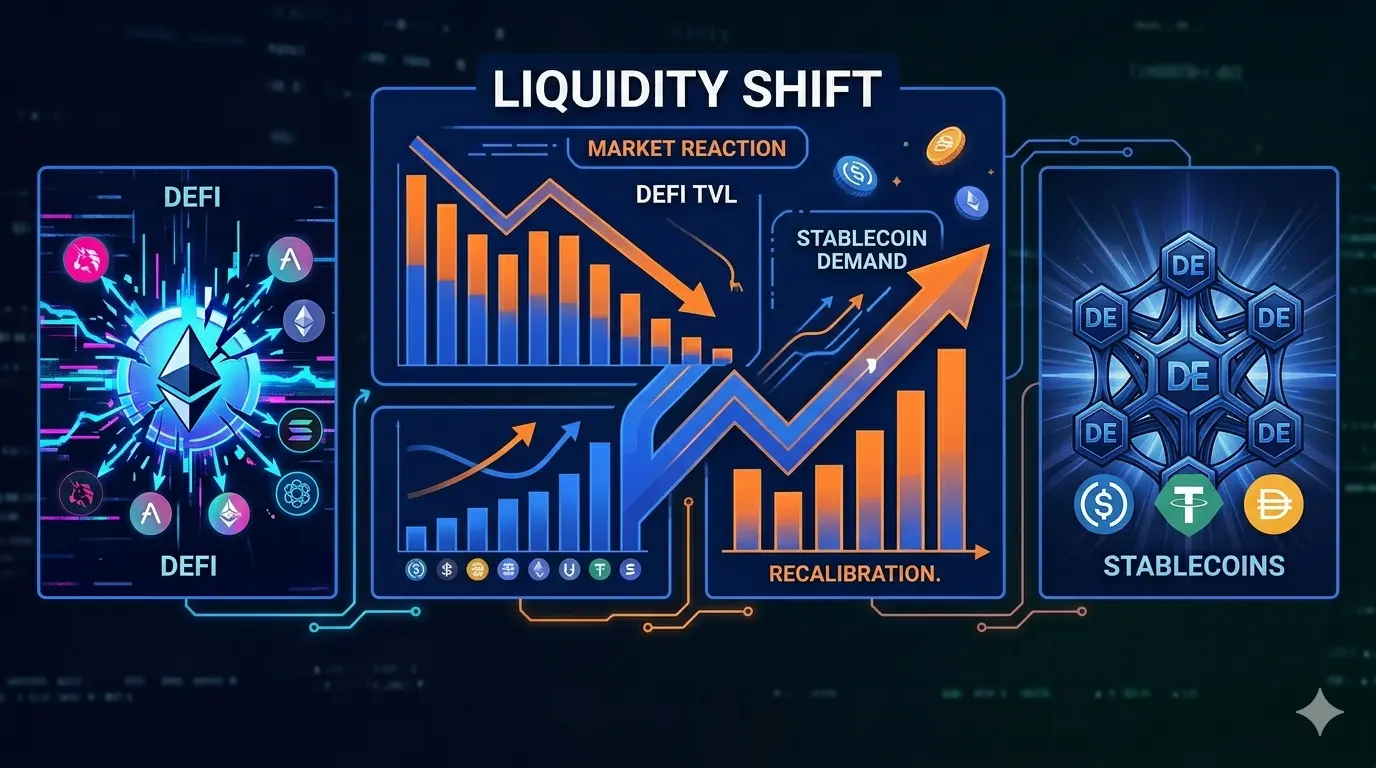
The rsETH exploit has continued to influence the crypto market well beyond the initial incident, evolving into a broader test of stability for the entire DeFi ecosystem. What began as a single cross-chain failure has triggered ongoing volatility, liquidity shifts, and structural changes across multiple protocols. The market is now reacting not just to the loss itself, but to what it reveals about underlying risks in decentralized finance.
In terms of current market conditions, Bitcoin has shown relative strength, maintaining key support levels despite periods of selling pressure. Ethereum has been more reactive due to its deeper connection with DeFi, experiencing sharper intraday swings as capital flows in and out of affected platforms. DeFi tokens, particularly those tied to lending and cross-chain infrastructure, have seen increased volatility and, in many cases, continued downward pressure as users reassess exposure.
Liquidity across the market has tightened. Following the exploit, a significant portion of funds moved out of DeFi protocols into more stable or liquid assets. Stablecoins have seen increased demand, reflecting a defensive posture among traders. Lending platforms have experienced a drop in total value locked, while borrowing activity has slowed due to increased caution and updated risk parameters.
New developments indicate that major DeFi platforms are actively adjusting their systems. Collateral requirements are being tightened, especially for bridged assets. Some protocols are introducing real-time monitoring tools to verify asset backing more effectively, while others are reconsidering which assets should be accepted at all. These changes suggest a shift toward stronger risk management practices across the industry.
On the infrastructure side, cross-chain technology is undergoing intense scrutiny. Developers are working on improving validation mechanisms by introducing more decentralized and distributed verification systems. The focus is on eliminating single points of failure and ensuring that message validation cannot be compromised by a single entity. While these upgrades may take time, they are likely to become a standard requirement moving forward.
Another important trend is improved coordination between protocols during crisis situations. Rapid response actions—such as freezing assets, restricting affected markets, and sharing threat intelligence—have helped contain further damage. However, these actions have also raised questions about the balance between decentralization and emergency control, highlighting an ongoing challenge within DeFi governance.
Market sentiment remains cautious. Traders are more selective, and risk appetite has decreased in the short term. However, there is also a growing perspective that such events, while damaging, ultimately strengthen the ecosystem by forcing improvements in security and design. This dual sentiment—fear in the short term and cautious optimism for the future—is driving current market behavior.
From a trading standpoint, volatility continues to create both risk and opportunity. Short-term traders are navigating rapid price movements, while long-term investors are waiting for clearer signs of stability before increasing exposure. Risk management remains essential, with a strong emphasis on position sizing, diversification, and avoiding over-leverage.
Looking ahead, the rsETH exploit is likely to have lasting effects on how DeFi evolves. Security standards for cross-chain bridges will become stricter, and protocols will prioritize resilience over rapid expansion. The incident has accelerated the industry’s shift toward more sustainable and secure infrastructure.
In conclusion, the market is in a phase of recalibration. Prices are adjusting to new risk perceptions, liquidity is being redistributed, and the industry is actively addressing vulnerabilities. While the immediate impact has been disruptive, it may ultimately lead to a more mature and secure DeFi environment. The pace of recovery will depend on how effectively these lessons are implemented in the coming months.
#GateSquare
#ContentMining
#CreaterCarnival
#rsETHAttackUpdate
repost-content-media
  • Reward
  • 7
  • Repost
  • Share
CryptoDiscovery:
1000x VIbes 🤑
View More
#US-IranTalksStall
The US–Iran geopolitical situation has continued to evolve into one of the most influential macro drivers for global markets in 2026. What started as stalled nuclear negotiations has now expanded into a broader economic and security standoff, affecting energy flows, inflation expectations, risk assets, and institutional trading behavior across multiple asset classes. The situation is no longer just diplomatic—it has become a structural market force shaping liquidity, volatility, and global investor sentiment.
Recent developments indicate that backchannel diplomacy has parti
BTC0,25%
MrFlower_XingChen
#US-IranTalksStall
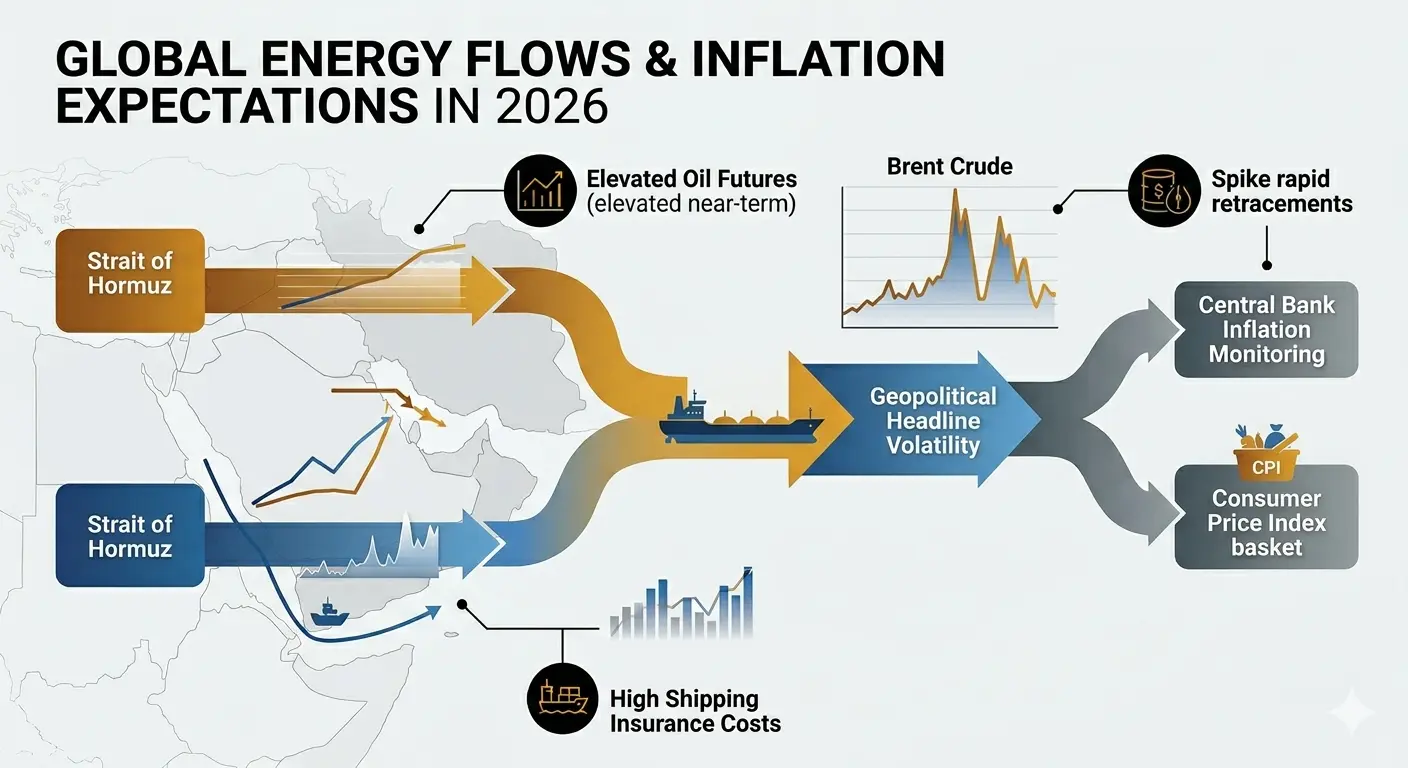
The US–Iran geopolitical situation has continued to evolve into one of the most influential macro drivers for global markets in 2026. What started as stalled nuclear negotiations has now expanded into a broader economic and security standoff, affecting energy flows, inflation expectations, risk assets, and institutional trading behavior across multiple asset classes. The situation is no longer just diplomatic—it has become a structural market force shaping liquidity, volatility, and global investor sentiment.
Recent developments indicate that backchannel diplomacy has partially resumed through indirect intermediaries, but no meaningful breakthrough has been achieved. Both sides remain locked on core issues, especially uranium enrichment limits and verification mechanisms. Iran continues to demand recognition of its nuclear sovereignty under strict monitoring conditions, while the United States maintains its position on deeper restrictions and long-term compliance frameworks. This gap remains the central obstacle, and neither side appears willing to make early concessions.
On the ground, maritime tensions around the Strait of Hormuz have entered a more complex phase. Instead of full-scale closure or reopening, the region is now operating under what analysts describe as “selective disruption.” This means certain commercial shipping lanes are intermittently delayed or rerouted due to security advisories, naval presence, and insurance restrictions. While oil continues to flow, the predictability of supply has significantly decreased, which is enough to maintain a persistent risk premium in global energy markets.
Oil markets have reacted accordingly. Brent crude has recently stabilized in a volatile band around elevated levels, reflecting uncertainty rather than outright shortage. Short-term spikes are still occurring whenever new political statements or military movements emerge, but sustained price explosions have been limited due to strategic reserves and alternative routing adjustments by major exporters. However, shipping insurance costs remain high, and freight volatility continues to affect refined product supply chains, especially diesel and jet fuel markets.
One of the newer market dynamics is the increasing role of algorithmic trading in amplifying geopolitical headlines. Automated systems reacting to news sentiment are now responsible for a significant portion of intraday price movement in oil and even crypto markets. This has led to sharper but shorter-lived spikes, where prices move aggressively within minutes of news releases but often retrace quickly once liquidity normalizes. As a result, volatility has become more fragmented rather than sustained.
In parallel, global central banks are closely monitoring the situation due to its inflationary impact. Energy price uncertainty is feeding directly into inflation expectations, especially in import-dependent economies. Some emerging markets have already begun adjusting monetary policy stances defensively, tightening liquidity conditions to protect their currencies from external shocks. This indirect tightening effect is also influencing global risk appetite, including in equities and crypto.
Bitcoin and the broader crypto market have entered a more complex correlation phase. Instead of reacting purely to liquidity cycles or interest rate expectations, crypto is now partially influenced by geopolitical risk sentiment. Bitcoin continues to behave as a hybrid asset—part risk-on technology exposure and part macro hedge narrative. This dual identity has created inconsistent reactions to geopolitical shocks: sometimes acting as a risk asset and other times showing relative resilience during global uncertainty.
Recent price behavior shows that Bitcoin has been consolidating in a broad range rather than trending strongly in either direction. Institutional flows remain a stabilizing factor, particularly through spot ETF accumulation, but leveraged derivatives markets continue to introduce short-term volatility. Liquidation clusters above and below key price levels are repeatedly being triggered during macro news events, creating a “liquidity hunt” environment where both bulls and bears are frequently trapped.
A notable shift in market structure is the growing influence of long-term institutional holders compared to short-term speculative traders. Large entities are increasingly using volatility to accumulate positions rather than exit them. This is gradually reducing the severity of long-term drawdowns but increasing the frequency of mid-cycle fluctuations. As a result, markets appear choppy but structurally supported.
On the energy side, forward-looking indicators suggest that markets are pricing in a prolonged period of uncertainty rather than an immediate crisis resolution. Futures curves for oil remain elevated in the near term but gradually normalize further out, implying that traders expect eventual diplomatic stabilization but not in the short horizon. This “extended uncertainty premium” is now a defining feature of pricing models.
Risk sentiment across global markets is currently divided. Equities are showing cautious optimism driven by earnings stability, while commodities reflect geopolitical anxiety. Crypto sits in between, reacting to both liquidity conditions and macro headlines. This fragmented sentiment environment makes directional trading more difficult but increases opportunities for tactical strategies.
From a trading perspective, current conditions favor adaptive positioning rather than fixed bias strategies. Markets are being driven more by event-based reactions than long-term trends. Sudden liquidity shifts around geopolitical announcements, inflation data, and central bank commentary are creating short-duration opportunities across multiple asset classes. However, the risk of rapid reversals remains extremely high.
Looking forward, the key market variables to watch include developments in indirect US–Iran communication channels, changes in maritime security patterns in the Strait of Hormuz, and global inventory adjustments in crude oil reserves. In crypto markets, ETF inflows, liquidation heatmaps, and dollar liquidity conditions will remain critical indicators for short-term direction.
In conclusion, the US–Iran situation has evolved into a multi-layered global market driver influencing energy, inflation, and risk assets simultaneously. The absence of a clear resolution has created a prolonged uncertainty regime where volatility is not an exception but a structural condition. Markets are adapting by pricing in risk premiums across asset classes, and this environment is likely to persist until a credible diplomatic or strategic shift occurs. Until then, traders and investors must navigate a landscape defined not by clarity, but by continuous adjustment to rapidly changing geopolitical signals.
repost-content-media
  • Reward
  • 6
  • Repost
  • Share
CryptoDiscovery:
Buy To Earn 💰️
View More
#ETHMemeCoinFLORKSurges
ETH Meme Coin FLORK Surge and the Return of Ethereum Meme Momentum
The Ethereum meme coin sector has entered a renewed phase of activity, with FLORK emerging as one of the most significant revival stories in recent market cycles. After spending an extended period in relative inactivity, this long-standing OG meme asset has unexpectedly regained attention, driven by speculation, narrative momentum, and a broader resurgence of meme trading culture on Ethereum.
Unlike newly launched tokens that rely purely on hype cycles, FLORK carries historical weight within the Ethereu
ETH0,52%
SOL-0,11%
MrFlower_XingChen
#ETHMemeCoinFLORKSurges
ETH Meme Coin FLORK Surge and the Return of Ethereum Meme Momentum
The Ethereum meme coin sector has entered a renewed phase of activity, with FLORK emerging as one of the most significant revival stories in recent market cycles. After spending an extended period in relative inactivity, this long-standing OG meme asset has unexpectedly regained attention, driven by speculation, narrative momentum, and a broader resurgence of meme trading culture on Ethereum.
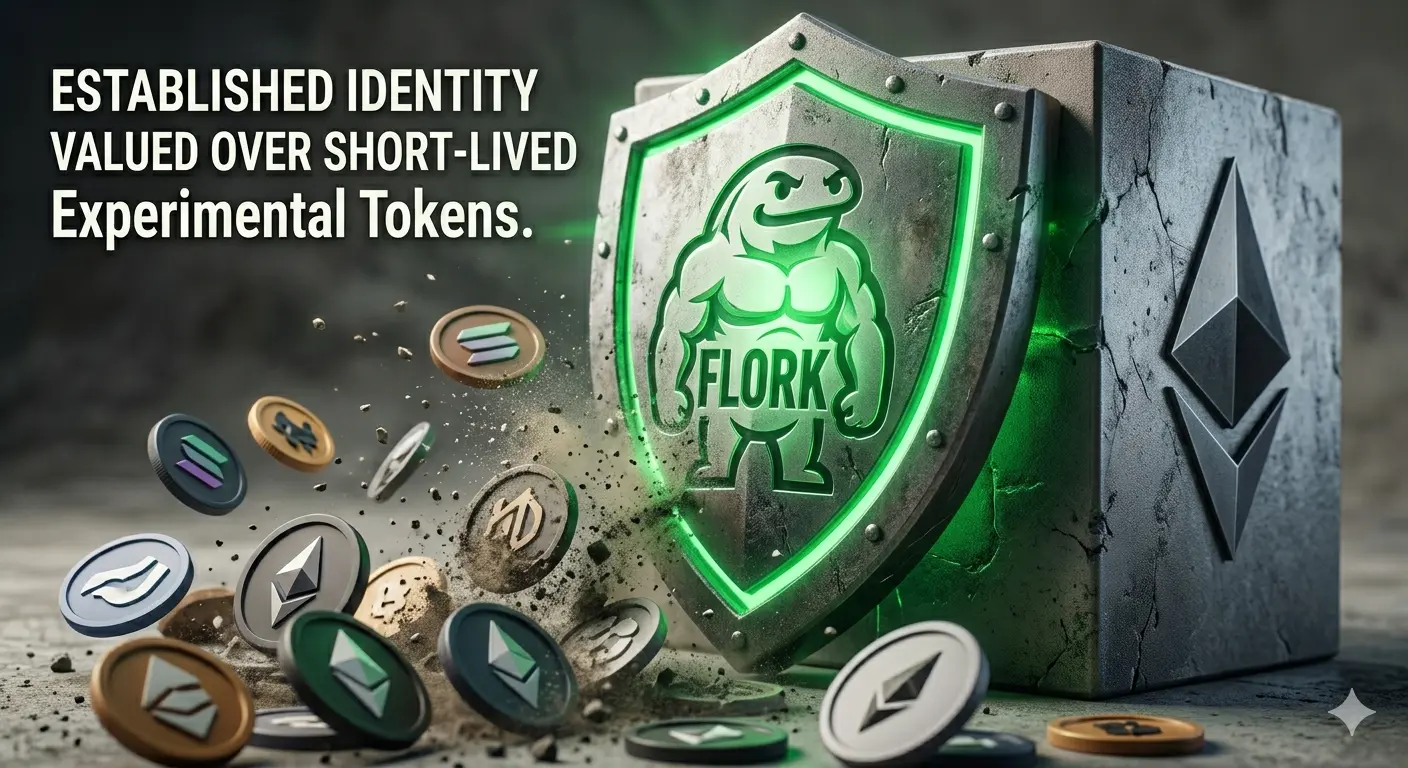
Unlike newly launched tokens that rely purely on hype cycles, FLORK carries historical weight within the Ethereum ecosystem. Having existed for several years, it has survived multiple market phases including bear markets, meme rotations, and liquidity shifts toward other chains such as Solana. This longevity has become one of its strongest narrative pillars during the current surge, as traders increasingly value established identity over short-lived experimental tokens.
The recent price expansion began when community speculation linked FLORK’s mascot identity to a newly introduced “Memes” category observed in a major social platform’s interface. Although no official confirmation exists, the ambiguity itself became a powerful catalyst. Traders began positioning aggressively around the possibility of cultural or platform-level recognition. As is often the case in meme-driven markets, uncertainty proved more powerful than clarity, fueling both volatility and volume expansion.
Market performance during this phase has been highly dynamic. FLORK’s valuation experienced a rapid acceleration, followed by equally sharp retracements as short-term traders took profits. This pattern reflects typical meme coin behavior where liquidity inflows are strong but not stable. Despite pullbacks, overall market attention has remained elevated, suggesting sustained interest rather than a single isolated spike.
Trading activity has also significantly increased. Transaction volume surged as both speculative traders and narrative-driven participants entered the market simultaneously. This dual participation has created heightened liquidity but also increased intraday volatility. Rapid price swings have become common, with momentum shifting quickly based on social sentiment and discussion trends.
One of the most notable developments is the broader return of meme activity on Ethereum itself. After a long period where Solana dominated meme coin trading due to lower fees and faster execution, Ethereum is once again attracting attention. This shift is not purely technical—it reflects a change in trader psychology. Many participants are now prioritizing security, established liquidity pools, and historical credibility over transaction cost efficiency. As a result, Ethereum-based meme coins like FLORK are benefiting from renewed capital rotation.
However, this environment has also introduced significant risk complexity. The surge in attention has led to the emergence of multiple imitation tokens attempting to capitalize on FLORK’s momentum. These copycat assets often replicate branding elements and attempt to mislead less experienced traders. In many cases, they operate with extremely low liquidity and short lifespans, increasing the likelihood of rapid value collapse. This has made contract verification and liquidity analysis more important than ever.
From a structural perspective, FLORK’s resurgence highlights the importance of narrative endurance in crypto markets. While many meme coins rely on short-lived viral moments, projects with historical identity tend to regain relevance when market conditions favor risk-taking behavior. This cycle demonstrates that in meme-driven ecosystems, survival itself can become a form of strength, as dormant assets can re-enter relevance when sentiment shifts.
Another key factor contributing to the current trend is the return of retail participation in high-risk assets. As broader market conditions stabilize in major cryptocurrencies, traders are increasingly allocating small portions of capital to speculative plays. Meme coins often serve as high-volatility instruments within this environment, allowing participants to engage in rapid, sentiment-driven trading cycles.
At the same time, macro conditions continue to influence liquidity behavior. Periods of uncertainty in global markets tend to push capital either toward safe assets or extremely high-risk speculative assets, bypassing mid-risk zones. Meme coins often benefit from this “extreme allocation effect,” where traders seek asymmetric upside opportunities during uncertain conditions.
Technically, FLORK’s price behavior reflects a classic meme coin lifecycle phase: accumulation by early holders, narrative ignition, rapid expansion, profit-taking, and stabilization attempts. Whether the asset can sustain long-term relevance depends on continued community engagement and sustained narrative reinforcement rather than fundamental utility.
Looking forward, several scenarios are possible. If meme activity on Ethereum continues to expand, FLORK may retain visibility and potentially establish a higher valuation baseline than previous cycles. On the other hand, if attention shifts toward new narratives or alternative chains, current gains could consolidate into a correction phase. In both cases, volatility is expected to remain high.
Ultimately, FLORK’s resurgence is less about the token itself and more about what it represents: the return of Ethereum meme culture, the power of narrative speculation, and the cyclical nature of attention in crypto markets. It demonstrates once again that in the meme coin sector, perception often drives price more strongly than fundamentals, and community belief can temporarily redefine market value.
As the Ethereum meme season continues to evolve, FLORK stands as a reminder that even long-dormant assets can re-enter the spotlight when liquidity, sentiment, and narrative align. Whether this marks a sustained revival or a temporary surge will depend entirely on the persistence of attention and the next rotation of market focus.
#GateSquare
#ContentMining
#CreaterCarnival
repost-content-media
  • Reward
  • 1
  • Repost
  • Share
Yunna:
To The Moon 🌕
#USMilitaryMaduroBettingScandal

US Military Maduro Betting Scandal and the Collapse of Information Boundaries in Modern Markets
The alleged US Military Maduro betting scandal has rapidly evolved into a landmark case that sits at the intersection of geopolitics, decentralized finance, prediction markets, and blockchain transparency. While the surface narrative appears to revolve around misconduct linked to a single individual, the deeper significance lies in what this incident reveals about the modern information economy—where sensitive geopolitical intelligence can indirectly interact with fi
MrFlower_XingChen
#USMilitaryMaduroBettingScandal
US Military Maduro Betting Scandal and the Collapse of Information Boundaries in Modern Markets
The alleged US Military Maduro betting scandal has rapidly evolved into a landmark case that sits at the intersection of geopolitics, decentralized finance, prediction markets, and blockchain transparency. While the surface narrative appears to revolve around misconduct linked to a single individual, the deeper significance lies in what this incident reveals about the modern information economy—where sensitive geopolitical intelligence can indirectly interact with financial systems in real time.
This case is not simply about illegal trading behavior. It is about how the structure of today’s digital financial infrastructure has fundamentally changed the way information moves, is priced, and is exploited across global markets.
A New Type of Financial Incident: Intelligence Meets Markets
At the center of the controversy is the alleged use of non-public or classified information tied to a sensitive US military operation involving Venezuela. Such operations are typically restricted to highly secure channels due to their strategic and geopolitical importance.
However, what makes this case unprecedented is the alleged interaction between that information and blockchain-based prediction markets. These platforms allow users to speculate on real-world outcomes such as political events, conflicts, and economic decisions by assigning market-driven probabilities.
The key concern is that trades may have been executed using knowledge that was not available to the general public. This transforms the nature of participation—from probabilistic speculation into informationally advantaged positioning, where outcomes are partially or fully known in advance by certain participants.
The Breakdown of Market Symmetry
Prediction markets are designed under a foundational assumption: all participants operate with unequal interpretations of the same public information, not unequal access to private truth.
This case challenges that assumption directly.
When private intelligence enters a prediction system, the market no longer functions as a forecasting tool. Instead, it becomes a pricing mechanism for asymmetric knowledge. This creates a structural distortion:
Some participants are interpreting probabilities
Others are acting on intelligence
And a small subset may already know outcomes with high certainty
This imbalance undermines the core principle of fair price discovery, replacing collective forecasting with hidden informational advantage.
Blockchain Transparency and the Paradox of Visibility
One of the most critical aspects of this case is how blockchain technology reshapes investigative capability.
Contrary to common perception, blockchain does not conceal activity—it permanently records it.
Every transaction, wallet interaction, and timing pattern is immutably stored. While identities may initially be pseudonymous, behavioral analysis can still reveal correlations between on-chain activity and real-world events.
In this case, investigators reportedly reconstructed transaction patterns that aligned closely with geopolitical developments. This demonstrates a key paradox:
Blockchain does not guarantee privacy—it guarantees permanence.
Once behavior is recorded, it can be analyzed indefinitely, often revealing patterns that traditional financial systems would obscure.
Legal Systems Facing a Technological Mismatch
The legal dimension of this scandal highlights a growing structural issue: modern decentralized markets are evolving faster than regulatory frameworks.
Traditional insider trading laws were designed for centralized institutions—banks, exchanges, and regulated brokers. In contrast, blockchain-based systems operate globally, pseudonymously, and continuously.
This creates a mismatch:
The behavior is digital and decentralized
The laws are analog and jurisdictional
Enforcement becomes reactive rather than preventive
As a result, regulators are increasingly forced to reinterpret legacy legal definitions for environments they were never designed to govern.
The Prediction Market Paradox
This case reignites a long-standing debate about prediction markets themselves.
In theory, they are powerful tools for aggregating distributed knowledge and producing accurate forecasts. They have been used to estimate election outcomes, economic indicators, and geopolitical probabilities.
However, their effectiveness depends on a critical assumption: informational symmetry.
When participants have unequal access to sensitive or classified information, prediction markets stop being neutral forecasting systems and begin reflecting hidden knowledge flows.
This raises a fundamental question:
Can a prediction market remain meaningful if some participants are effectively trading on known outcomes?
Geopolitical Spillover into Financial Infrastructure
Although the incident originates in a geopolitical context, its implications extend deeply into financial systems, particularly decentralized ones.
Three major spillover effects are becoming increasingly visible:
Markets are reacting faster to geopolitical intelligence than traditional news cycles
Blockchain systems allow forensic reconstruction of trading behavior
Prediction markets are increasingly exposed to real-world intelligence asymmetries
This creates a new class of risk where financial systems are no longer isolated from geopolitical information flows—they are directly embedded within them.
Systemic Risk: When Knowledge Becomes Capital
One of the most important lessons from this case is the growing value of information advantage in modern markets.
Execution speed and liquidity access still matter, but they are increasingly secondary to informational positioning.
In environments where real-world events can be partially known in advance by select actors, markets begin to shift from probabilistic systems into asymmetric extraction systems.
This introduces systemic risk:
If markets consistently price events already known to some participants, trust in the price discovery process erodes over time.
Regulatory and Institutional Response
Governments and regulatory bodies are now facing a difficult challenge. They must decide how to respond to decentralized systems that operate outside traditional oversight structures while still influencing global financial behavior.
Three competing pressures are emerging:
Restrict prediction markets to prevent misuse of privileged information
Preserve innovation in decentralized financial systems
Maintain global competitiveness in blockchain infrastructure
The result is likely to be a hybrid regulatory model combining compliance tracking, behavioral analytics, and selective access controls rather than outright prohibition.
Platform Evolution: From Open Markets to Monitored Systems
Prediction markets and decentralized financial platforms are entering a new phase of evolution:
Open Experimentation Phase – minimal oversight, rapid growth
Transition Phase – increased adoption and early regulatory pressure
Controlled Integration Phase – compliance tools and monitoring systems embedded into infrastructure
This trajectory mirrors broader trends across the crypto ecosystem, where systems initially designed for openness gradually evolve toward structured governance as their influence expands.
Market Implications for Crypto and Prediction Systems
While the scandal is geopolitical in origin, its implications for crypto markets are significant.
Key takeaways include:
On-chain transparency enables advanced behavioral analysis
Information asymmetry is becoming a central trading variable
Regulatory attention on DeFi-adjacent systems is increasing
Prediction markets may shift toward identity-linked participation models
For traders and institutions, this reinforces a new reality:
In modern markets, information structure is becoming as important as liquidity structure.
Conclusion: A Structural Turning Point
The US Military Maduro betting scandal is not simply an isolated legal or political event. It represents a structural turning point in how information, markets, and decentralized systems interact.
It exposes a fundamental tension:
Markets are designed to predict the future
But some participants may already know parts of it
As blockchain systems continue to expand and prediction markets become more integrated with real-world data flows, this tension will only intensify.
The long-term outcome will likely not be the collapse of these systems, but their transformation. Stronger compliance layers, improved monitoring tools, and more sophisticated market design will emerge to preserve integrity while maintaining openness.
Ultimately, this case highlights a defining challenge of the modern financial era: building systems that can remain fair, transparent, and functional in a world where information itself moves faster than regulation, and where the boundary between knowledge and capital is becoming increasingly blurred.
#GateSquare
#ContentMining
repost-content-media
  • Reward
  • 2
  • Repost
  • Share
CryptoDiscovery:
Diamond Hands 💎
View More
#OpenAIReleasesGPT-5.5
OpenAI Releases GPT-5.5
OpenAI has officially released GPT-5.5, marking one of its most significant AI upgrades in 2026 so far.
🚀 What is GPT-5.5?
GPT-5.5 is the latest large language model developed by OpenAI and is part of the GPT-5 series. It is considered a major improvement over GPT-5.4, especially in reasoning, coding, tool usage, and long-form task execution.
OpenAI describes it as a new class of intelligence designed for real-world work, capable of handling complex multi-step tasks more reliably and acting more like an autonomous digital assistant.
🧠 Key Impro
MrFlower_XingChen
#OpenAIReleasesGPT-5.5
OpenAI Releases GPT-5.5
OpenAI has officially released GPT-5.5, marking one of its most significant AI upgrades in 2026 so far.
🚀 What is GPT-5.5?
GPT-5.5 is the latest large language model developed by OpenAI and is part of the GPT-5 series. It is considered a major improvement over GPT-5.4, especially in reasoning, coding, tool usage, and long-form task execution.
OpenAI describes it as a new class of intelligence designed for real-world work, capable of handling complex multi-step tasks more reliably and acting more like an autonomous digital assistant.
🧠 Key Improvements in GPT-5.5
GPT-5.5 introduces several major upgrades:
Stronger reasoning and planning ability
Better coding and debugging performance
Improved long-context understanding
More efficient tool usage and task execution
Reduced errors through self-checking behavior
It is also more efficient, producing higher-quality responses with fewer computational resources.
⚙️ Performance Boost
GPT-5.5 shows major performance gains in internal evaluations:
Strong results in coding and software engineering tasks
Improved performance in research and analytical workloads
More reliable execution of multi-step instructions
This makes it especially useful for:
Software development
Data analysis
Business automation
Research assistance
🏢 Where GPT-5.5 is Being Used
The model is being rolled out across:
ChatGPT (Plus, Pro, Business, Enterprise users)
Coding tools and developer platforms
Enterprise AI systems and cloud services
It is also being integrated into business workflows where AI agents can handle tasks like writing reports, debugging code, and managing operations.
🔐 Safety and Control
GPT-5.5 includes improved safety systems:
Better misuse detection
Stronger content safeguards
Enhanced testing for reliability and security
These improvements aim to make the model safer for both consumer and enterprise use.
🌍 Why GPT-5.5 Matters
This release represents a shift toward more advanced AI systems that can:
Understand complex goals more deeply
Execute long, multi-step tasks with less supervision
Work across tools and environments more effectively
In simple terms, GPT-5.5 is a step closer to AI systems that can perform real digital work independently.
📊 Market & Tech Impact
GPT-5.5 is expected to influence several areas:
Software development workflows
AI-powered business automation
Productivity tools in enterprises
Competition in the global AI industry
🔚 Conclusion
GPT-5.5 is more than just an upgrade—it is a significant step toward more capable and autonomous AI systems. With improved reasoning, execution ability, and reliability, it pushes AI closer to becoming a true digital assistant for complex real-world tasks.
If earlier models focused on intelligence, GPT-5.5 focuses on action, execution, and reliability.
#GateSquare
#ContentMining
#CreaterCarnival
repost-content-media
  • Reward
  • 3
  • Repost
  • Share
CryptoDiscovery:
Diamond Hands 💎
View More
#IntelandTexasInstrumentsSurge
Intel and Texas Instruments Surge: A Signal of Converging Tech and Crypto Cycles
The recent rally in semiconductor giants like Intel and Texas Instruments is being interpreted as far more than a simple equity market move. What appears on the surface as strong corporate performance is increasingly viewed by analysts as a macro-level signal—one that reflects shifting institutional sentiment, capital rotation, and renewed confidence in technology-driven growth.
In today’s financial environment, markets are deeply interconnected. Movements in one sector—especially o
BTC0,25%
ETH0,52%
GT-0,67%
MrFlower_XingChen
#IntelandTexasInstrumentsSurge
Intel and Texas Instruments Surge: A Signal of Converging Tech and Crypto Cycles
The recent rally in semiconductor giants like Intel and Texas Instruments is being interpreted as far more than a simple equity market move. What appears on the surface as strong corporate performance is increasingly viewed by analysts as a macro-level signal—one that reflects shifting institutional sentiment, capital rotation, and renewed confidence in technology-driven growth.
In today’s financial environment, markets are deeply interconnected. Movements in one sector—especially one as foundational as semiconductors—tend to ripple outward. The strength in chipmakers is now influencing not only traditional equities but also crypto markets, where similar narratives around infrastructure, innovation, and risk appetite are playing out.
Semiconductor Strength as a Forward Indicator
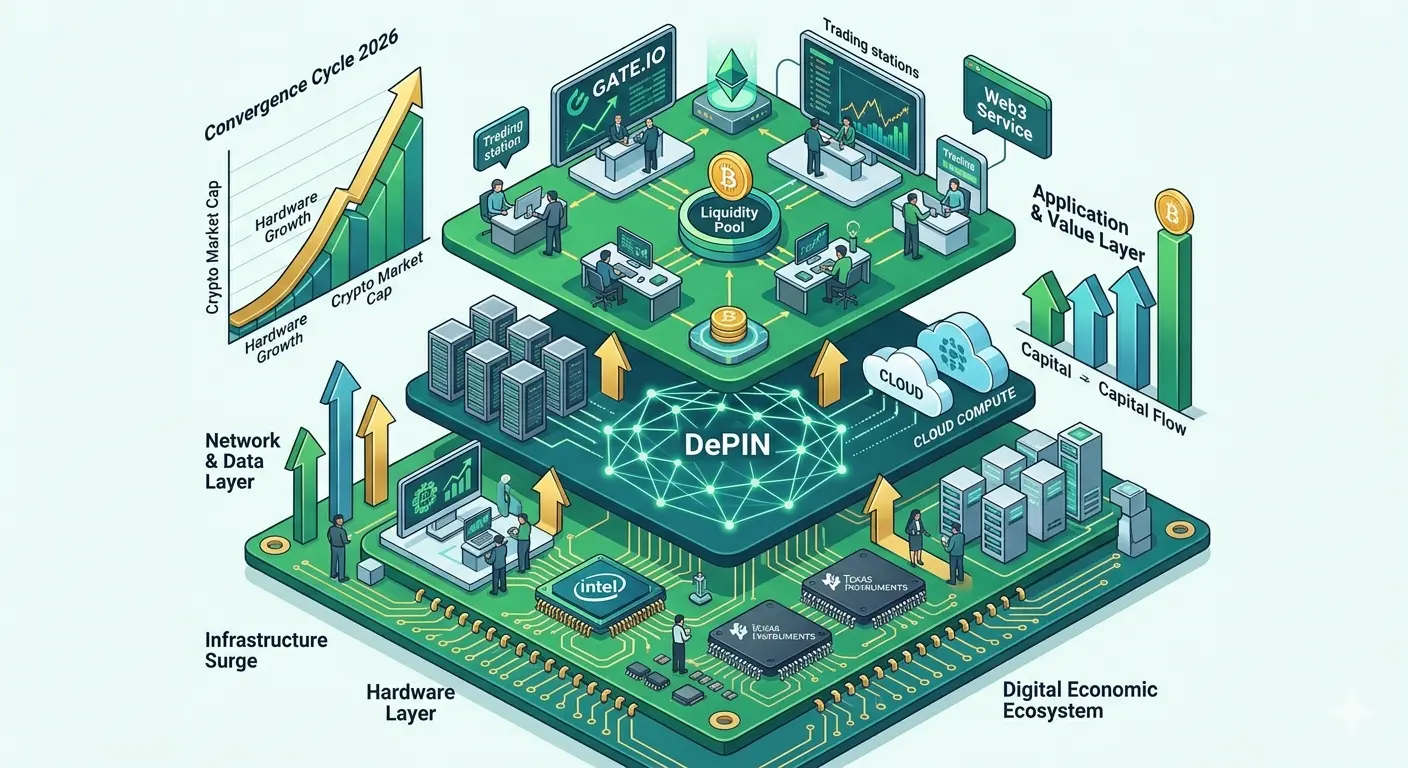
Semiconductor companies sit at the core of the global digital economy. From artificial intelligence to cloud computing and consumer electronics, nearly every technological advancement depends on chip production. When companies like Intel and Texas Instruments experience sustained upward momentum, it often signals broader expansion in technological demand.
Institutional investors increasingly interpret semiconductor rallies as confirmation that the innovation cycle is accelerating. This concept—sometimes referred to as “innovation beta”—means that when foundational infrastructure grows, capital tends to flow into adjacent sectors that benefit from that growth. Crypto assets, particularly those tied to infrastructure and computation, are now part of that extended ecosystem.
Capital Rotation: From Hardware to Digital Assets
One of the most important dynamics emerging from this trend is capital rotation. When institutions allocate more capital into semiconductor stocks, they are effectively positioning themselves for long-term technological expansion. This increased exposure to growth often extends into higher-risk, high-upside assets.
In this context, assets like Bitcoin and Ethereum are not viewed as isolated investments—they are part of the same macro narrative. They represent digital layers built on top of the physical infrastructure that semiconductors enable.
As a result, semiconductor strength often coincides with:
Increased liquidity across markets
Higher institutional risk tolerance
Renewed speculative positioning in tech-aligned assets
This environment historically supports inflows into crypto markets, especially during early or mid-cycle expansions.
The Rise of DePIN: Infrastructure Meets Decentralization
Beyond major cryptocurrencies, a more subtle but structurally important trend is emerging in the form of decentralized infrastructure. This falls under the category of Decentralized Physical Infrastructure Networks.
DePIN protocols aim to coordinate physical resources—such as computing power, storage, and bandwidth—through decentralized networks. As semiconductor capacity expands globally, the availability of raw hardware increases. DePIN acts as a coordination layer, enabling that hardware to be utilized more efficiently through decentralized systems.
This creates a powerful synergy:
More chips → more compute power
More compute → higher demand for coordination
More coordination → growth in decentralized infrastructure
Rather than competing with traditional tech, DePIN enhances it by adding a new layer of efficiency and accessibility.
Geopolitical Risk Beneath the Growth
Despite the bullish momentum, the semiconductor sector remains exposed to geopolitical risk. The global supply chain is concentrated in a limited number of regions, particularly in East Asia. Any disruption—whether political or logistical—can have immediate global consequences.
Markets are currently balancing two opposing forces:
Strong structural demand for technology
Persistent geopolitical uncertainty
This tension introduces fragility into the rally. While demand continues to rise, supply-side risks remain a key variable that could quickly shift sentiment.
Crypto and Semiconductor Correlation
An increasingly observed trend is the correlation between semiconductor performance and crypto market behavior. While crypto was once considered largely independent, it is now behaving more like a high-growth extension of the broader tech sector.
When semiconductor stocks rally, they often reflect:
Improved macro liquidity
Stronger growth expectations
Increased institutional confidence
These same factors tend to support crypto prices. While this relationship is not perfectly linear, it highlights how both sectors are reacting to the same underlying macro drivers.
Platforms Evolving into Ecosystems
Within this environment, crypto platforms are also evolving. Exchanges are no longer just trading venues—they are becoming full-scale ecosystems.
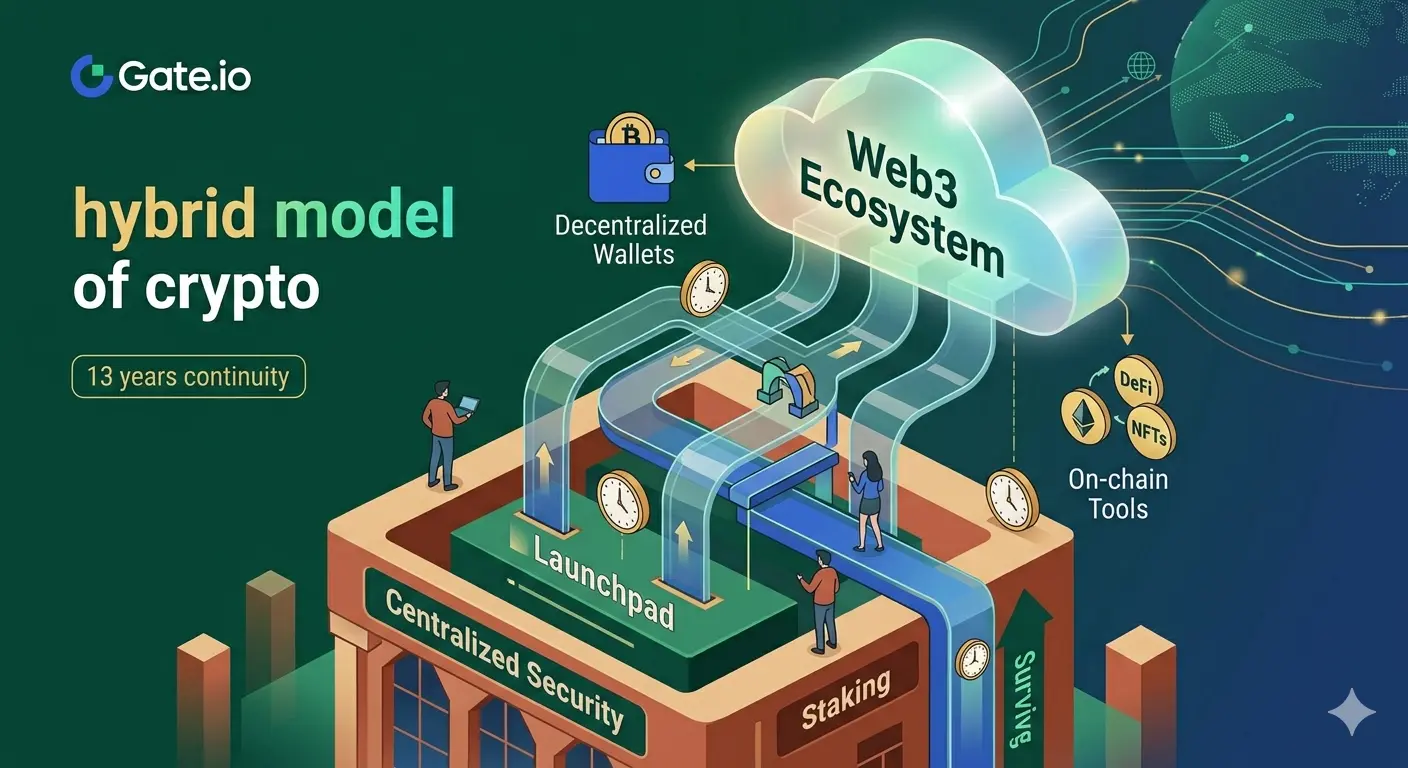
For example, Gate.io has transitioned from a traditional exchange into a multi-layer infrastructure platform. It now integrates trading, staking, launchpad participation, and Web3 services into a single ecosystem.
This reflects a broader industry shift:
Exchanges are becoming financial hubs
Users interact across multiple layers (trading, earning, investing)
Platforms retain liquidity through internal ecosystems
Token Utility and Feedback Loops
Native exchange tokens, such as GateToken, are playing an increasingly important role in these ecosystems. These tokens are no longer limited to fee discounts—they function as access mechanisms for platform features.
This creates a reinforcing cycle:
More user activity → higher token demand
Higher demand → stronger ecosystem engagement
Stronger engagement → deeper liquidity retention
Over time, this transforms platform tokens into infrastructure assets within their own ecosystems.
Behavioral Liquidity and Market Dynamics
Modern crypto platforms also influence trading behavior through incentives such as competitions and campaigns. These mechanisms introduce what can be described as “behavioral liquidity.”
Unlike passive markets, these environments actively shape:
Trading frequency
Risk-taking behavior
Capital rotation speed
Volatility levels
This results in short-term liquidity spikes, particularly in trending sectors like AI tokens, infrastructure assets, and meme-driven markets.
Trust as a Core Asset
In a market shaped by past failures and volatility, trust has become one of the most valuable assets. Platforms that demonstrate long-term stability gain a significant advantage.
Security measures such as:
Proof-of-reserves
Cold storage systems
Transparent operations
are no longer optional—they are essential. Investors increasingly prioritize reliability alongside returns.
2026 Outlook: A Unified Digital Economy
The broader trajectory of global markets in 2026 points toward convergence. Traditional finance, technology infrastructure, and crypto ecosystems are no longer separate domains—they are interconnected layers of a single system.
The cycle now looks like this:
Semiconductor growth increases hardware capacity
Hardware capacity enables AI and cloud expansion
AI growth attracts capital investment
Capital flows extend into crypto markets
This creates a unified macro structure where each layer reinforces the others.
Conclusion
The surge in semiconductor leaders like Intel and Texas Instruments is more than a sector-specific rally—it is a signal of broader systemic change. It reflects a world where hardware, software, and financial systems are deeply interconnected.
Crypto markets are no longer operating in isolation. They are responding to the same forces that drive traditional technology sectors: liquidity, innovation, and institutional capital flow.
As this convergence continues, the distinction between traditional finance and decentralized systems will become increasingly blurred. What we are witnessing is not just a market cycle—but the formation of a fully integrated digital economic system.
#GateSquare
#ContentMining
#CreaterCarnival
repost-content-media
  • Reward
  • 4
  • Repost
  • Share
CryptoDiscovery:
To The Moon 🌕
View More
#Gate13thAnniversaryLive
Gate 13th Anniversary: A Milestone of Survival, Evolution, and Market Influence
The celebration of Gate 13th Anniversary is far more than a symbolic moment—it represents endurance in one of the most volatile and unforgiving industries ever created. In crypto, where platforms can rise and disappear within a single market cycle, surviving for 13 continuous years is not normal. It signals structural strength, disciplined operations, and the ability to adapt through constant disruption.
To truly understand the weight of this milestone, it is necessary to step back and exa
GT-0,67%
MrFlower_XingChen
#Gate13thAnniversaryLive
Gate 13th Anniversary: A Milestone of Survival, Evolution, and Market Influence
The celebration of Gate 13th Anniversary is far more than a symbolic moment—it represents endurance in one of the most volatile and unforgiving industries ever created. In crypto, where platforms can rise and disappear within a single market cycle, surviving for 13 continuous years is not normal. It signals structural strength, disciplined operations, and the ability to adapt through constant disruption.
To truly understand the weight of this milestone, it is necessary to step back and examine what 13 years in crypto actually means. This industry has gone through multiple extreme phases—aggressive bull markets, deep and prolonged bear cycles, liquidity crises, regulatory crackdowns, and major platform failures. Many exchanges have struggled to survive even one cycle with their credibility intact. Very few have managed to endure multiple cycles while continuing to grow globally.
In this context, Gate.io represents more than just longevity—it represents continuity in chaos. From the early days of crypto experimentation to today’s complex, multi-layered financial ecosystems, its evolution reflects the broader transformation of the entire industry.
From Simple Exchange to Financial Infrastructure
In the early years, exchanges were basic systems designed for order matching. Users deposited funds, executed trades, and withdrew assets. That was the entire experience. Over time, however, the demands of the market changed.
Today, exchanges have evolved into full-scale financial ecosystems. They now offer:
Advanced spot and derivatives trading
Staking and yield generation systems
Launchpads for early-stage projects
Copy trading and social trading tools
Web3 wallets and decentralized access
Cross-chain liquidity integration
This transformation reflects a fundamental shift: exchanges are no longer just marketplaces—they are becoming financial operating systems within the digital economy.
The Industry Journey: Cycles, Crises, and Reinvention
The past decade of crypto has been defined by constant transformation. The industry has experienced:
Massive retail-driven bull markets that injected liquidity
Deep downturns that tested trust and resilience
High-profile exchange failures that reshaped risk perception
Growing regulatory attention across global markets
The rise of DeFi, NFTs, and cross-chain ecosystems
A shift toward interconnected liquidity networks
In such an environment, survival becomes more valuable than rapid growth. Stability becomes more meaningful than short-term hype. Platforms that maintain consistency across cycles build something far more valuable than user numbers—they build trust.
Risk Management as the Foundation of Longevity
Operating a crypto exchange is inherently high-risk. Security threats, liquidity management, and user trust must all be maintained simultaneously. A failure in any one of these areas can lead to irreversible damage.
The ability of Gate.io to operate continuously across multiple market cycles highlights the importance of strong internal risk frameworks. Infrastructure resilience, security systems, and disciplined operational strategies are not optional—they are the foundation of long-term survival.
Ecosystem Expansion and User Integration
Modern exchanges now function as multi-layer ecosystems rather than single-purpose platforms. This expansion allows users to interact with the market in multiple ways within one environment.
Users can:
Trade across spot and derivatives markets
Earn passive income through staking and yield products
Participate in early-stage token launches
Engage in social and copy trading systems
Access decentralized applications through Web3 integration
This multi-layer approach increases engagement and creates internal capital flows, where users move seamlessly between different financial activities.
Behavioral Liquidity and Market Influence
Events like the Gate 13th Anniversary introduce a unique phenomenon known as behavioral liquidity. Through competitions, rewards, and incentives, user activity increases significantly.
During such periods:
Trading frequency rises
Volume concentrates in specific markets
Short-term volatility increases
Capital rotates more aggressively
These dynamics temporarily reshape market structure, creating short-term opportunities and increased engagement across the platform.
Token Utility and Ecosystem Feedback
At the center of many exchange ecosystems lies the native token layer, such as GateToken. These tokens are no longer limited to fee discounts—they act as access mechanisms within the ecosystem.
They provide:
Reduced trading fees
Access to exclusive launch events
Participation in staking programs
Entry into reward campaigns
This creates a feedback loop: Higher activity → greater token demand → stronger ecosystem engagement → deeper liquidity retention
Over time, this loop strengthens platform stability and user loyalty.
Trust as a Competitive Advantage
In crypto, trust is not claimed—it is earned through consistent performance over time. Security systems, transparency measures, proof-of-reserves, and operational reliability all contribute to long-term credibility.
A 13-year track record signals that a platform has successfully navigated multiple stress events while maintaining user confidence. In an industry where many platforms fail during downturns, continuity itself becomes a major competitive advantage.
The Shift Toward Hybrid Financial Systems
Another major trend shaping the current phase of crypto is the integration of Web3 infrastructure into centralized platforms. The boundary between centralized and decentralized finance is becoming increasingly blurred.
Modern exchanges now support:
Wallet-based access
DeFi integration
Cross-chain routing
On-chain participation tools
This hybrid model represents the next stage of evolution, where centralized efficiency and decentralized flexibility coexist within a single system.
Institutional Influence and Market Maturity
The crypto market of 2026 is no longer purely retail-driven. Institutional capital has introduced new dynamics, including:
More structured liquidity flows
Greater correlation with global macro conditions
Increased demand for compliance and transparency
Exchanges that can support institutional participation—through liquidity depth, infrastructure, and risk management—are better positioned for long-term relevance.
The Power of Narrative and Community
Beyond infrastructure and liquidity, crypto markets are heavily influenced by narrative. Events like the Gate 13th Anniversary are not just operational milestones—they are psychological catalysts.
They:
Increase community engagement
Reinforce brand identity
Attract new participants
Create momentum cycles within the ecosystem
In many cases, this narrative layer is as important as technical development in driving market behavior.
Looking Ahead: The Future of Integrated Finance
The direction of the industry is becoming increasingly clear. Fragmented systems are merging into unified ecosystems where trading, investing, earning, and participation coexist.
The future of crypto will be defined by:
Interconnected financial layers
Seamless user experiences
Hybrid centralized-decentralized systems
Global accessibility
Conclusion
The Gate 13th Anniversary is not just a celebration of time—it is a reflection of resilience, adaptation, and long-term vision. It highlights how far the crypto industry has come and where it is heading.
In an environment defined by constant change, survival itself becomes the strongest form of success. And in the evolving landscape of digital finance, platforms that endure are not just participants—they become the infrastructure shaping the future.
#GateSquare
#ContentMining
#CreaterCarnival
repost-content-media
  • Reward
  • 3
  • Repost
  • Share
CryptoDiscovery:
LFG 🔥
View More
#TopCopyTradingScout 精准、纪律与复制交易中的新优势
这一趋势反映出当今交易者在加密市场中把握机会方式的明显转变。复制交易不再仅仅是盲目跟随高回报账户。它已发展成为一种有结构的流程,用于识别、验证和放大真实的交易表现。
到2026年,优势不再仅仅是速度——而是选择的质量。
顶级侦察员不追逐炒作。他们研究行为:
他们分析交易者在压力下的反应方式、他们如何管理回撤,以及他们在不同市场条件下执行的一致性。只在趋势市场表现良好的交易者,根本上与能在波动和不确定中适应的交易者不同。
这种区别是短期赢家与可持续表现者的分水岭。
现代复制交易生态系统现在围绕更深层次的评估框架展开。经验丰富的参与者不再仅关注利润百分比,而是追踪:
长期的回报一致性,而不仅仅是峰值ROI
最大回撤和恢复速度
每笔交易的风险与回报结构
仓位规模纪律和杠杆控制
实际为复制者带来的盈利能力
这种数据驱动的方法将复制交易转变为一种投资组合管理形式,用户可以策略性地而非情感化地配置资金。
另一个关键发展是多交易者多元化的崛起。聪明的参与者不再依赖单一的领头交易者,而是将资金分散到多个策略中。这减少了对单一风险的暴露,并创造出更平衡的表现曲线。
同时,平台也在加强复制交易的基础设施:
透明的业绩仪表盘
风险评分和交易者分类系统
限制下行风险的保护机制
通过共享结果
post-image
  • Reward
  • 14
  • Repost
  • Share
ShainingMoon:
To The Moon 🌕
View More
GSR Expands the ETF Frontier: Multi-Asset Crypto Exposure Enters a New Phase of Institutional Maturity
The digital asset market is undergoing a structural transformation—and the latest move by GSR is a clear signal of where things are headed. With the launch of its first multi-asset crypto ETF, Crypto Core3 (BESO), on Nasdaq, the firm is not just introducing a product—it is redefining how institutional capital accesses the crypto ecosystem.
This is not another single-asset vehicle. This is a curated exposure strategy.
By combining Bitcoin, Ethereum, and Solana into a single ETF, GSR is effecti
BTC0,25%
ETH0,52%
SOL-0,11%
CryptoDiscovery
GSR Expands the ETF Frontier: Multi-Asset Crypto Exposure Enters a New Phase of Institutional Maturity
The digital asset market is undergoing a structural transformation—and the latest move by GSR is a clear signal of where things are headed. With the launch of its first multi-asset crypto ETF, Crypto Core3 (BESO), on Nasdaq, the firm is not just introducing a product—it is redefining how institutional capital accesses the crypto ecosystem.
This is not another single-asset vehicle. This is a curated exposure strategy.
By combining Bitcoin, Ethereum, and Solana into a single ETF, GSR is effectively packaging three dominant narratives into one tradable instrument:
Bitcoin → Digital Store of Value / Macro Hedge
Ethereum → Smart Contract Infrastructure / Financial Layer
Solana → High-Performance Execution / Scalability Play
This tri-layer exposure reflects a more evolved understanding of crypto—not as a single trade, but as an interconnected system.
Why This Matters Now
The timing of BESO is not accidental.
We are witnessing a transition from exploratory institutional exposure to structured capital deployment. Early entrants focused almost exclusively on Bitcoin ETFs, testing regulatory waters and investor appetite. Now, the narrative is expanding.
Institutional players are no longer asking:
“Should we allocate to crypto?”
They are asking:
“How should we allocate across crypto?”
That shift is massive.
Multi-asset ETFs like BESO introduce portfolio construction at the product level, eliminating the need for institutions to actively rebalance between assets themselves. This lowers friction, reduces operational complexity, and aligns crypto investing with traditional asset allocation frameworks.
The Hidden Impact: Flow Dynamics & Market Structure
This is where things get interesting.
Products like BESO don’t just bring capital—they change how capital behaves.
Instead of isolated inflows into individual assets, we now get:
Synchronized capital distribution
Stronger cross-asset correlations
More stable relative rotations (in theory)
Liquidity reinforcement across multiple chains simultaneously
In simpler terms:
When money enters BESO, it doesn’t choose between BTC, ETH, or SOL—it buys all three.
That has long-term implications for:
Market dominance cycles
Altcoin season dynamics
Volatility clustering
Institutional hedging strategies
Strategic Positioning: Not Just Exposure, But Narrative Control
GSR’s asset selection is deliberate.
Bitcoin anchors the product with credibility and macro recognition
Ethereum captures the backbone of DeFi, NFTs, and tokenization
Solana introduces high-growth, high-throughput potential
This isn’t diversification for safety—it’s diversification for narrative dominance.
GSR is effectively telling the market:
“If you want to understand crypto’s future, you need exposure to all three dimensions.”
Risk Reality Check: Diversification ≠ Protection
There’s a misconception that multi-asset automatically means lower risk.
That’s not entirely true.
What BESO does is redistribute risk, not eliminate it.
BTC reacts strongly to macro liquidity and monetary policy
ETH is sensitive to network activity, fees, and ecosystem competition
SOL carries higher beta with performance-driven volatility
In periods of market stress, correlations can spike—meaning all three assets could move together, amplifying downside instead of cushioning it.
So the real question for investors becomes:
“Am I comfortable with system-wide crypto exposure rather than single-asset bets?”
Accessibility: The Real Game-Changer
One of the most powerful aspects of ETFs is simplicity.
Through Nasdaq, investors can now gain diversified crypto exposure without:
Managing private keys
Using exchanges
Understanding on-chain mechanics
Navigating custody risks
This is how markets scale.
ETFs act as on-ramps for institutional and traditional capital, bridging the gap between Wall Street and Web3.
The Bigger Picture: From Assets to Ecosystems
The launch of BESO reflects a deeper evolution in market thinking.
We are moving from:
“Which coin will outperform?”
To:
“How does the crypto ecosystem evolve as a whole?”
This is a shift toward ecosystem-level investing.
Capital is no longer just chasing individual winners—it is positioning around:
Infrastructure layers
Execution environments
Network effects
Final Thought: A Structural Signal, Not Just a Product Launch
BESO is not just another ticker.
It represents:
Institutional confidence expanding beyond Bitcoin
Product innovation catching up with market complexity
The beginning of bundled, narrative-driven crypto exposure
And most importantly—it signals that crypto is no longer being treated as a speculative edge case.
It is being integrated into the core architecture of modern portfolios.
Bottom Line:
This is how mainstream adoption actually happens—not through hype, but through structure.
And with players like GSR stepping into multi-asset ETF territory, the flow of capital into crypto is becoming not just bigger—but smarter.#GateSquare #CreatorCarnival #ContentMining #Gate13thAnniversaryLive #JustinSunSuesWorldLibertyFinancial
repost-content-media
  • Reward
  • 10
  • Repost
  • Share
ShainingMoon:
To The Moon 🌕
View More
#TopCopyTradingScout Future Framework — The Next Evolution of Copy Trading Intelligence (2026+ Edition)
Copy trading is no longer a beginner tool or passive income shortcut. It is evolving into a structured intelligence system where capital allocation behaves more like institutional portfolio engineering than retail speculation.
The real shift is simple but powerful:
The future is not about following traders. It is about understanding systems of traders.
1. From Copy Trading to Intelligence Allocation Networks
The next phase of is not individual selection—it is network-based capital distributi
post-image
  • Reward
  • 11
  • Repost
  • Share
ShainingMoon:
To The Moon 🌕
View More
#TopCopyTradingScout | THIS IS WHERE SMART MONEY STARTS THINKING DIFFERENTLY
Everyone wants profits.
But almost no one wants to study who is actually making them consistently.
That’s the gap.
That’s the opportunity.
That’s where Top Copy Trading Scouts are built.
💡 Let’s be real: Most traders lose not because the market is unfair —
They lose because they follow noise instead of data-backed performers.
Random signals
Hype influencers
Lucky trades
That’s not strategy. That’s gambling.
THE NEW GAME: Copy Trading is evolving.
It’s no longer about blindly copying trades.
It’s about intelligence,
post-image
  • Reward
  • 5
  • Repost
  • Share
CryptoDiscovery:
To The Moon 🌕
View More
#TopCopyTradingScout
The Future of Copy Trading Is Not Passive Anymore — It’s Strategic Intelligence
The era of blindly copying trades is over. What we are entering now is a new phase — Copy Trading Intelligence, where scouts don’t just follow traders, they identify performance patterns, risk behavior, and market adaptability before the crowd even reacts.
This is not just a post. This is a mindset shift.
Today, being a “Top Copy Trading Scout” means you are not a spectator — you are a market selector. You are scanning hundreds of traders, filtering out noise, and identifying real alpha genera
post-image
  • Reward
  • 7
  • Repost
  • Share
BitNovaLive:
To The Moon 🌕
View More
#ArbitrumFreezesKelpDAOHackerETH 🚨
The crypto market has once again been shaken by a high-impact security breach, as the Kelp DAO exploit exposed critical vulnerabilities within cross-chain infrastructure—triggering not only massive financial losses but also a deeper conversation about the true nature of decentralization. On April 18, 2026, the attacker leveraged weaknesses in a LayerZero-powered bridge to mint nearly $293 million in unbacked rsETH, subsequently draining over $200 million in real WETH from lending protocols like Aave. This wasn’t just an exploit—it was a systemic shock that r
ZRO-1,45%
AAVE-0,44%
ARB0,09%
post-image
  • Reward
  • 5
  • Repost
  • Share
MasterChuTheOldDemonMasterChu:
Just charge it 👊
View More
#USIranTalksProgress 🌍
Peace headlines travel fast—but real power transitions unfold in slow, calculated layers. What we are witnessing between the United States and Iran right now exists in that پیچیدہ middle ground where diplomacy creates the illusion of stability while deeper structural tensions quietly persist. On the surface, the narrative feels constructive: ceasefire extensions, indirect negotiations, reduced immediate escalation risks. Markets respond predictably—oil softens, equities stabilize, and risk assets like crypto regain short-term strength. But beneath that surface calm lies
BTC0,25%
post-image
  • Reward
  • 6
  • Repost
  • Share
MasterChuTheOldDemonMasterChu:
Just charge and you're done 👊
View More
#BitcoinBouncesBack Bitcoin has once again proven why it remains the cornerstone of the digital asset market, staging a قوية comeback from the $75,000 region and reclaiming strength above $78,000 with impressive momentum. This recovery is not just a short-term reaction but a reflection of deeper structural support building within the market. Currently hovering around $78.4K, Bitcoin is showing resilience after weeks of consolidation, signaling that the recent correction may have been a necessary reset rather than the بداية of a larger downtrend. The price action now reflects a shift from fear-
BTC0,25%
post-image
  • Reward
  • 6
  • Repost
  • Share
CryptoFiler:
To The Moon 🌕
View More
#WCTCTradingChallengeShare8MUSDT 🚀
The global crypto arena is heating up once again as Gate unveils one of the most anticipated trading spectacles of the year — the WCTC 2026 Trading Competition. This is not just another event; it is a high-stakes battlefield where strategy meets precision, and where traders from around the world step forward to prove their dominance in a rapidly evolving financial ecosystem. As part of Gate’s 13th anniversary celebration, this edition of WCTC arrives with a significantly enhanced structure, deeper engagement mechanics, and an expanded prize pool that can rea
post-image
  • Reward
  • 4
  • Repost
  • Share
discovery:
To The Moon 🌕
View More
#Gate13thAnniversaryLive 🎉
Today marks a powerful milestone in the evolution of the crypto industry as Gate celebrates 13 years of innovation, resilience, and global leadership. What started as a simple trading platform has transformed into a comprehensive digital asset ecosystem, serving millions of users across the world with cutting-edge technology, deep liquidity, and a strong commitment to security. This journey reflects not just growth in numbers, but the continuous reinvention of what a modern crypto platform can achieve in an ever-changing financial landscape. 🚀
Over the years, Gate
post-image
  • Reward
  • 5
  • Repost
  • Share
ybaser:
2026 GOGOGO 👊
View More
  • Pin