GateUser-6d0b045b

vip
Age 0.1 Yıl
Peak Tier 0
No content yet
#GENIUSImplementationRulesDraftReleased
The U.S. Department of the Treasury has issued its first proposal for the (NPRM) regarding the regulation of stablecoins (Genius Act), indicating that the bill is entering a tangible implementation phase.
This proposal focuses on the regulatory pathway for "small stablecoin issuers," aiming to establish standards to assess whether state-level regulatory systems are "substantively equivalent" to the federal framework. According to the bill, institutions with issuance volumes below $1 billion can choose to accept state-level regulation, provided their reg
View Original
post-image
post-image
Unoshivip
#GENIUSImplementationRulesDraftReleased
The U.S. Department of the Treasury has released its first rulemaking proposal (NPRM) regarding the regulation of stablecoins (GENIUS Act), marking the entry of the bill into a concrete implementation stage.
This proposal focuses on the regulatory path for 'small stablecoin issuers,' intending to establish criteria to assess whether state regulatory systems are 'substantially equivalent' to the federal framework. According to the bill, institutions with issuance scales below $1 billion can choose to accept state regulation, provided their regulatory systems meet federal standards
repost-content-media
  • Reward
  • Comment
  • Repost
  • Share
#GateSquareAprilPostingChallenge
Ethereum — Comprehensive Analysis and Complete Guide
1. What is Ethereum?
Ethereum is a decentralized blockchain platform designed not only for digital currency but also for smart contracts and decentralized applications (dApps).
It was created by Vitalik Buterin and launched in 2015. Unlike Bitcoin, which primarily focuses on being a store of value, Ethereum is a programmable blockchain, meaning developers can build applications directly on it.
2. How does Ethereum work?
Ethereum operates using a decentralized network of nodes that verify transactions and exe
ETH-0,35%
BTC0,06%
View Original
Vortex_Kingvip
#GateSquareAprilPostingChallenge
Ethereum — Complete Deep Analysis & Full Guide
1. What is Ethereum?
Ethereum is a decentralized blockchain platform designed not only for digital currency, but also for smart contracts and decentralized applications (dApps).
It was created by Vitalik Buterin and launched in 2015. Unlike Bitcoin, which focuses mainly on being a store of value, Ethereum is a programmable blockchain, meaning developers can build applications directly on it.
2. How Ethereum Works
Ethereum operates using a decentralized network of nodes that validate transactions and execute smart contracts.
Key Components:
Smart Contracts → Self-executing programs
Ethereum Virtual Machine (EVM) → Runs smart contracts
Gas Fees → Paid to execute transactions
Validators → Secure the network (Proof of Stake)
👉 Every transaction or interaction requires computational effort, which is paid in ETH.
3. Ethereum 2.0 & Proof of Stake
Ethereum has transitioned from Proof of Work (PoW) to Proof of Stake (PoS).
Before:
Mining (like Bitcoin)
High energy consumption
Now:
Validators stake ETH
More energy efficient
Faster transactions
👉 This upgrade significantly improved scalability and sustainability.
4. Key Features of Ethereum
1. Smart Contracts
Automatically execute when conditions are met
No middleman required
2. Decentralized Applications (dApps)
Built on Ethereum
Examples: DeFi, NFT platforms
3. Token Creation
ERC-20 tokens
ERC-721 (NFTs)
4. Programmability
Developers can build financial systems, games, and more
5. Ethereum Ecosystem
Ethereum is the backbone of the crypto ecosystem.
Major Sectors:
DeFi (Decentralized Finance)
NFTs (Digital ownership)
Web3 applications
DAO governance systems
👉 Most crypto innovation happens on Ethereum.
6. ETH Token Utility
ETH is used for:
Paying gas fees
Staking rewards
Collateral in DeFi
Governance participation
Securing the network
👉 ETH is both a utility token and a store of value.
7. Supply Dynamics of ETH
Unlike Bitcoin, Ethereum does not have a fixed supply.
However:
ETH can be burned (destroyed) via EIP-1559
This creates deflationary pressure
Supply can decrease when network activity is high
👉 High usage = more ETH burned = potentially bullish impact.
8. ETH Market Structure
Ethereum moves similarly to Bitcoin but with added complexity.
Phases:
Accumulation
Expansion (bull runs)
Distribution
Bear markets
👉 ETH often follows BTC but can outperform during altcoin cycles.
9. Support & Resistance (Trading View)
ETH key zones often include:
Support:
Previous accumulation zones
Institutional buying areas
Resistance:
Previous highs
Psychological price levels
👉 ETH respects liquidity zones strongly due to high trading volume.
10. Smart Money Concepts (ETH Analysis)
1. Liquidity
ETH hunts stop-losses above highs and below lows
2. Order Blocks
Institutional entry zones
3. Fair Value Gaps (FVG)
Price inefficiency zones often revisited
4. Structure Shift
Trend changes when market structure breaks
👉 ETH often provides clean ICT setups due to strong liquidity.
11. ETH Trading Setups (Practical)
⚠️ Educational setups only.
📈 Bullish Setup
Conditions:
Liquidity sweep below support
Break of structure upward
Retest of order block
Entry:
On confirmation candle
Stop Loss:
Below liquidity low
Take Profit:
Resistance / liquidity highs
📉 Bearish Setup
Conditions:
Liquidity sweep above resistance
Fake breakout
Bearish structure shift
Entry:
After confirmation
Stop Loss:
Above high
Take Profit:
Previous lows
🔁 Trend Continuation Setup
Conditions:
Strong trend
Pullback to FVG or support
Entry:
In trend direction
Goal:
Ride momentum
12. ETH vs BTC (Key Differences)
Feature
Bitcoin
Ethereum
Purpose
Store of value
Smart contracts & dApps
Supply
Fixed (21M)
Flexible
Speed
Slower
Faster
Use Case
Digital gold
Web3 infrastructure
Innovation
Limited
Highly innovative
13. Macro Factors Affecting ETH
1. Bitcoin Movement
ETH often follows BTC trends
2. DeFi Growth
More usage = more ETH demand
3. Network Activity
More transactions = higher gas usage
4. Regulations
Affects DeFi and ETH adoption
14. ETH Staking
With Proof of Stake:
Users stake ETH
Earn passive rewards
Help secure the network
👉 Staking reduces circulating supply, potentially supporting price.
15. Ethereum Upgrade Roadmap
Ethereum continues to evolve with upgrades:
Scalability improvements
Lower gas fees
Increased throughput
Layer 2 integration
👉 Future upgrades aim to make Ethereum faster and cheaper.
16. Layer 2 Scaling Solutions
To solve congestion, Ethereum uses Layer 2:
Rollups
Sidechains
Benefits:
Lower fees
Faster transactions
Increased scalability
17. Risks of Ethereum
High gas fees during congestion
Smart contract vulnerabilities
Competition from other blockchains
Regulatory pressure
18. Ethereum Market Psychology
Like all markets:
Fear → price drops
Greed → price pumps
Liquidity grabs → manipulation
👉 Smart traders follow structure, not emotions.
19. ETH Cycle Behavior
ETH often:
Lags BTC at first
Then outperforms during altseason
👉 When ETH gains strength, altcoins usually follow.
20. Trading Strategy Summary
✔ Identify trend
✔ Mark liquidity zones
✔ Wait for structure shift
✔ Enter on confirmation
✔ Use strict risk management
21. Final Thoughts
Ethereum is one of the most powerful blockchain ecosystems ever created. It is the foundation of DeFi, NFTs, and Web3.
Its value comes from:
Real-world utility
Strong developer ecosystem
Continuous upgrades
Network adoption
Compared to Bitcoin:
BTC = digital gold
ETH = digital economy
👉 Both play different but complementary roles in the crypto ecosystem.
https://www.gate.com/announcements/article/50520
repost-content-media
  • Reward
  • Comment
  • Repost
  • Share
#GateSquareAprilPostingChallenge
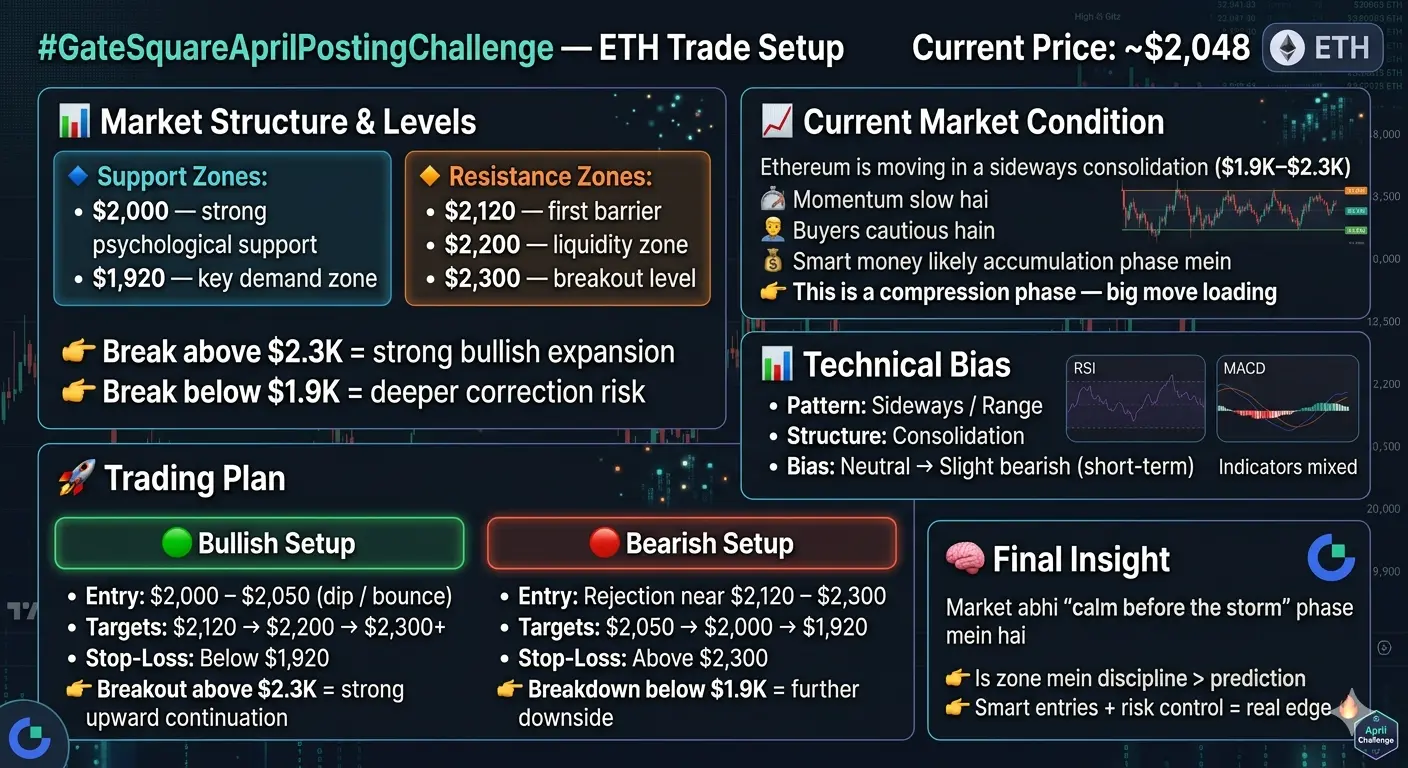
ETH Trading Setup
📌 Current Price: ~$2,048
📊 Market Structure and Levels
🔹 Support Zones:
$2,000 — Strong psychological support
$1,920 — Major demand area
🔸 Resistance Zones:
$2,120 — First barrier
$2,200 — Liquidity zone
$2.3k — Breakout level
👉 Break above $2.3K = Strong bullish expansion
👉 Break below $1.9K = Risk of deeper correction
📈 Current Market Condition
Now, Ethereum is moving sideways ($1.9K–$2.3K). The market seems calm, but downward pressure is building.
• Momentum is slow → No clear trend
• Buyers are cautious → No aggressive push
• Smart
ETH-0,35%
View Original
post-image
post-image
post-image
HighAmbitionvip
#GateSquareAprilPostingChallenge
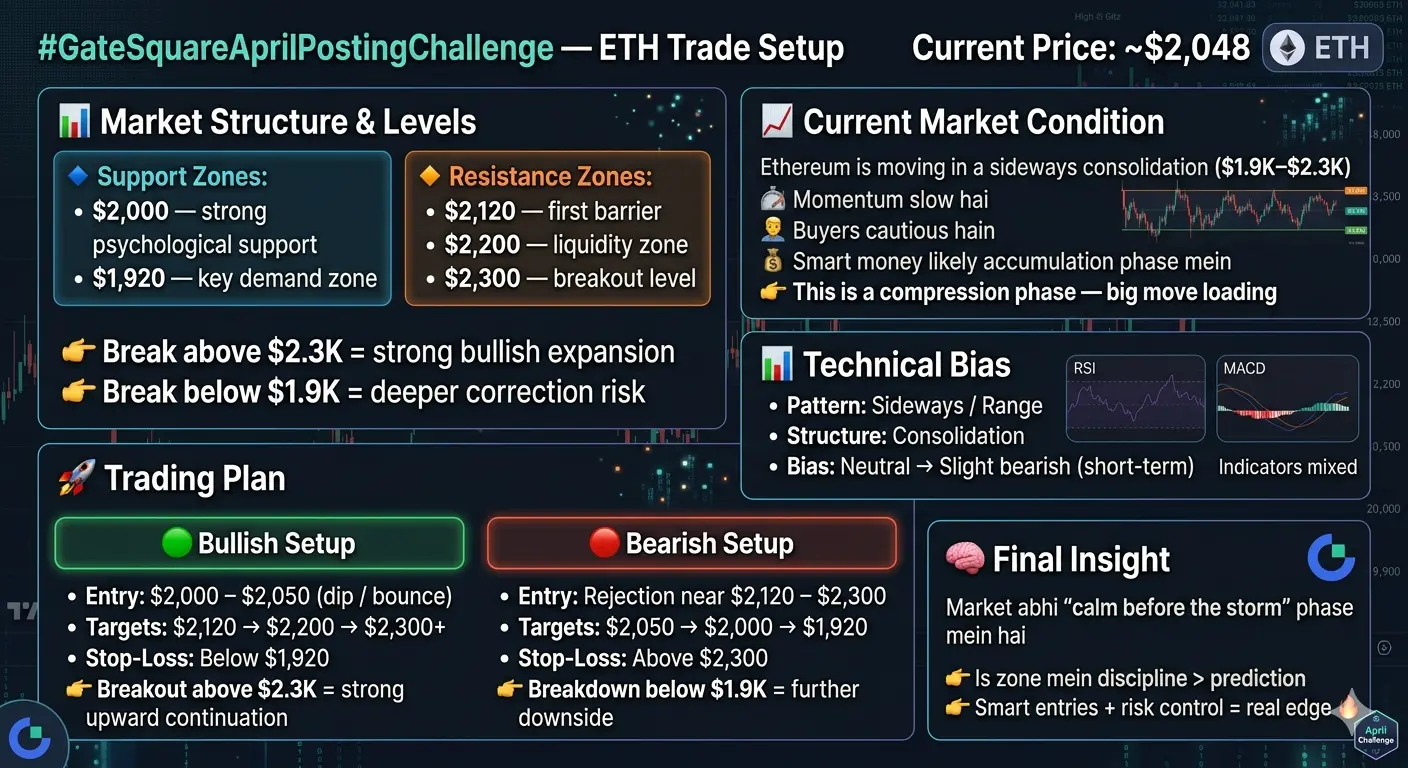
ETH Trade Setup
📌 Current Price: ~$2,048
📊 Market Structure & Levels
🔹 Support Zones:
$2,000 — strong psychological support
$1,920 — key demand zone
🔸 Resistance Zones:
$2,120 — first barrier
$2,200 — liquidity zone
$2,300 — breakout level
👉 Break above $2.3K = strong bullish expansion
👉 Break below $1.9K = deeper correction risk
📈 Current Market Condition
Right now, Ethereum is moving in a sideways consolidation ($1.9K–$2.3K). The market looks calm, but pressure is building underneath.
• Momentum is slow → no clear trend
• Buyers are cautious → no aggressive push
• Smart money likely accumulating quietly
Liquidity is forming on both sides, which often leads to a sharp breakout move.
👉 This is a compression phase — big move loading
📊 Technical Bias
• Pattern: Sideways / Range
• Structure: Consolidation
• Bias: Neutral → Slight bearish (short-term)
Indicators are giving mixed signals (RSI & MACD), confirming a choppy environment.
🚀 Trading Plan
🟢 Bullish Setup
• Entry: $2,000 – $2,050 (dip / bounce)
• Targets: $2,120 → $2,200 → $2,300+
• Stop-Loss: Below $1,920
👉 Breakout above $2.3K = strong upward continuation
🔴 Bearish Setup
• Entry: Rejection near $2,120 – $2,300
• Targets: $2,050 → $2,000 → $1,920
• Stop-Loss: Above $2,300
👉 Breakdown below $1.9K = further downside
🧠 Final Insight
The market is in “calm before the storm” mode. No need to rush — either trade the range or wait for confirmation.
👉 In this zone, discipline > prediction
👉 Smart entries + risk control = the real edge 🔥
repost-content-media
  • Reward
  • Comment
  • Repost
  • Share
Narrative Rotation: Money Never Stops Moving
Today, the meme sector is up 170%. Last month, the AI story was at its peak.
Three months ago, real-world assets (RWA) were leading everything. This is no coincidence — it’s a system.
In the world of cryptocurrencies, money doesn’t stay still. It just changes hands.
———
Why does money never stay in one place?
Traditional finance enters a sector and stays there for years. Digital assets don’t work that way.
Capital here is impatient, attention spans are short, and the market is always looking for the next story. Narrative rotation is exactly that: la
SIREN142,43%
STO56,59%
TAO-2,78%
RENDER-2,72%
View Original
post-image
post-image
xxx40xxxvip
Narrative Rotation: Money Never Stops Moving
Today, the Meme sector is up 170%. Last month, the AI narrative was at its peak.
Three months ago, RWA was leading everything. These are not coincidences — they are a system.
In crypto, money does not stay still. It only changes address.
———
Why Does Money Never Stay in One Place?
Traditional finance enters a sector and waits there for years. Crypto does not work that way.
Capital here is impatient, attention spans are short, and the market is always searching for the next story. Narrative rotation is exactly that: large money exiting one theme and entering another. Prices follow these transitions — usually very fast.
Today's data makes this undeniable.
———
What Is the Market Saying Right Now?
April 4, 2026. BTC at $67,340, fear index at 11. The overall picture looks flat. But at the sector level, the story is completely different:
• Meme: +170% in 24 hours — SIREN leading with a single-day gain of +260%
• BRC20: +26% — StakeStone at the front
• DeFi: +4% — quiet but positive
• AI: +1.3% — still active, momentum slowing
• Layer1: +0.07% — nearly flat
Same day. Same market. Meme sector +170%, Layer1 +0.07%. That gap is narrative rotation in real time.
———
The Anatomy of the Cycle
Three distinct rotations have played out in the 2025-2026 cycle so far.
1. The AI Narrative (2025 Q2-Q3)
The artificial intelligence and blockchain integration story dominated the market. Names like Bittensor, Render, and DEXE produced striking gains. Institutional money flowed into this theme because the narrative was real: AI infrastructure was actually running on-chain.
2. The RWA Period (2025 Q4)
Real-world asset tokenization moved to the front. Stablecoin volumes crossed $10 trillion annually. Tokenized bonds, real estate, and commodity products captured the market's attention. The narrative strengthened when it met institutional capital.
3. The Meme Rotation (2026 Q1 — present)
As the AI and RWA themes began consolidating, capital rotated toward a higher-volatility profile. The SEC's classification of meme coins as "digital collectibles" reduced regulatory uncertainty. Retail attention shifted to the meme layer. Today, SIREN is up 260% in a single day.
———
Is It Possible to See Rotation Early?
There is no definitive answer. But the market leaves traces.
Volume comes first, price comes second. When trading volume in a theme begins expanding suddenly — before price has made a big move — this usually signals fresh capital entering. Today, the Meme sector's 24-hour volume stands at $117 million. At this same time yesterday, that number was substantially lower.
Social media signal is the second indicator. When a theme starts being discussed organically on X — without payment or coordination — the narrative is beginning to take hold. Artificial momentum tends to be short-lived; organic interest feeds longer-lasting rotations.
On-chain data is the third layer. Large wallets beginning to enter specific sector tokens shows whether a rotation carries an institutional component. During the RWA period, this signal was unmistakably clear.
———
The Danger of Rotation
This picture has a dark side.
Those who enter each rotation late provide liquidity for those who were already positioned in the previous theme. The Meme sector is up 170% today. But the investor who sees that number and enters now is typically positioning not at the beginning of the trend — but near its end.
Narrative rotation rewards those who position early. Not the crowd that arrives late.
———
The Question
Two names stand out in market discussion as candidates to host the next rotation in the remaining 2026 cycle: DePIN and privacy infrastructure.
So wherever you are positioned right now — are you there intentionally, or did you simply end up there?
———
This article is for informational purposes only and does not constitute financial or investment advice. Cryptocurrency markets involve significant risk. Always conduct your own research before making any investment decision.
#MarchNonfarmPayrollsIncoming #CryptoMarketSeesVolatility #BitcoinMiningIndustryUpdates #TetherEyes$500BFundraising #GateSquare
repost-content-media
  • Reward
  • Comment
  • Repost
  • Share
The cryptocurrency community is in shock after Drift Protocol, the decentralized trading platform known for derivatives and margin trading, announced a major security breach on April 4, 2026, resulting in an estimated loss of $35 million of user funds. The vulnerability appears to have been exploited through a weakness in a smart contract within the protocol’s liquidity pool management system, highlighting ongoing risks in decentralized finance despite rapid innovation and significant investment in audits. Early reports indicate that attackers exploited a function that incorrectly calculated
View Original
post-image
post-image
CryptoDiscoveryvip
#DriftProtocolHacked
The crypto community is reeling as Drift Protocol, a decentralized trading platform known for derivatives and margin trading, announced a significant security breach on April 4, 2026, resulting in the loss of an estimated $35 million in user funds. The exploit, which appears to have originated from a smart contract vulnerability in the protocol’s liquidity pool management system, underscores the ongoing risks in DeFi despite rapid innovation and heavy investment in audits. Initial reports indicate that attackers manipulated a function that incorrectly calculated collateral requirements during high-frequency leveraged trades, enabling them to withdraw more assets than permitted. Drift Protocol has temporarily halted all trading and withdrawals, notifying users via its official channels while coordinating with blockchain forensic firms to trace stolen funds and mitigate further damage.
The breach highlights a critical tension in DeFi: rapid growth and feature complexity often outpace security, and even platforms with multiple prior audits remain vulnerable. Drift Protocol had previously undergone three major audits in the past 12 months from top-tier security firms, and yet this incident demonstrates that continuous monitoring, formal verification, and bug bounty programs are essential, not optional. Community reactions are mixed; while some investors are frustrated by lost capital, others are analyzing the exploit as a learning opportunity for broader DeFi risk management. The hacker’s movement of funds shows sophistication in both timing and execution, suggesting professional-level knowledge of smart contract architectures and blockchain analytics.
From a market perspective, the exploit caused ripple effects across related DeFi derivatives platforms. Liquidations surged, volatility increased in correlated altcoins, and BTC and ETH saw temporary dips as risk sentiment spiked. Analysts point out that this event reinforces the importance of not only protocol-level due diligence but also personal risk management, including diversified holdings, careful leverage usage, and awareness of smart contract audit history before engaging with complex DeFi products.
Drift Protocol’s response has included emergency governance measures, including a temporary pause of margin positions, multi-signature approval of contract upgrades, and collaboration with other DeFi platforms to prevent cascading liquidations. The team has also promised full transparency, providing ongoing updates on the investigation and potential reimbursement or insurance claims for affected users, which could set a new standard for accountability in the industry.
Long-term implications are profound: this breach emphasizes the need for continuous improvement in security practices, formal verification of contracts, and incentivized community reporting. Investors are advised to reassess exposure to high-leverage DeFi products and to consider platform resilience, insurance mechanisms, and cross-chain risk when allocating capital. Drift Protocol’s experience serves as a cautionary tale and a call to action for the broader DeFi ecosystem, signaling that growth, innovation, and user trust must go hand in hand with rigorous security practices, transparent governance, and proactive risk mitigation strategies.
The breach is not just a financial event—it is a wake-up call for DeFi infrastructure, a reminder that even advanced, audited protocols remain exposed, and a signal for investors to prioritize security literacy alongside market opportunities.#DriftProtocolHacked #CreatorLeaderboard
repost-content-media
  • Reward
  • Comment
  • Repost
  • Share
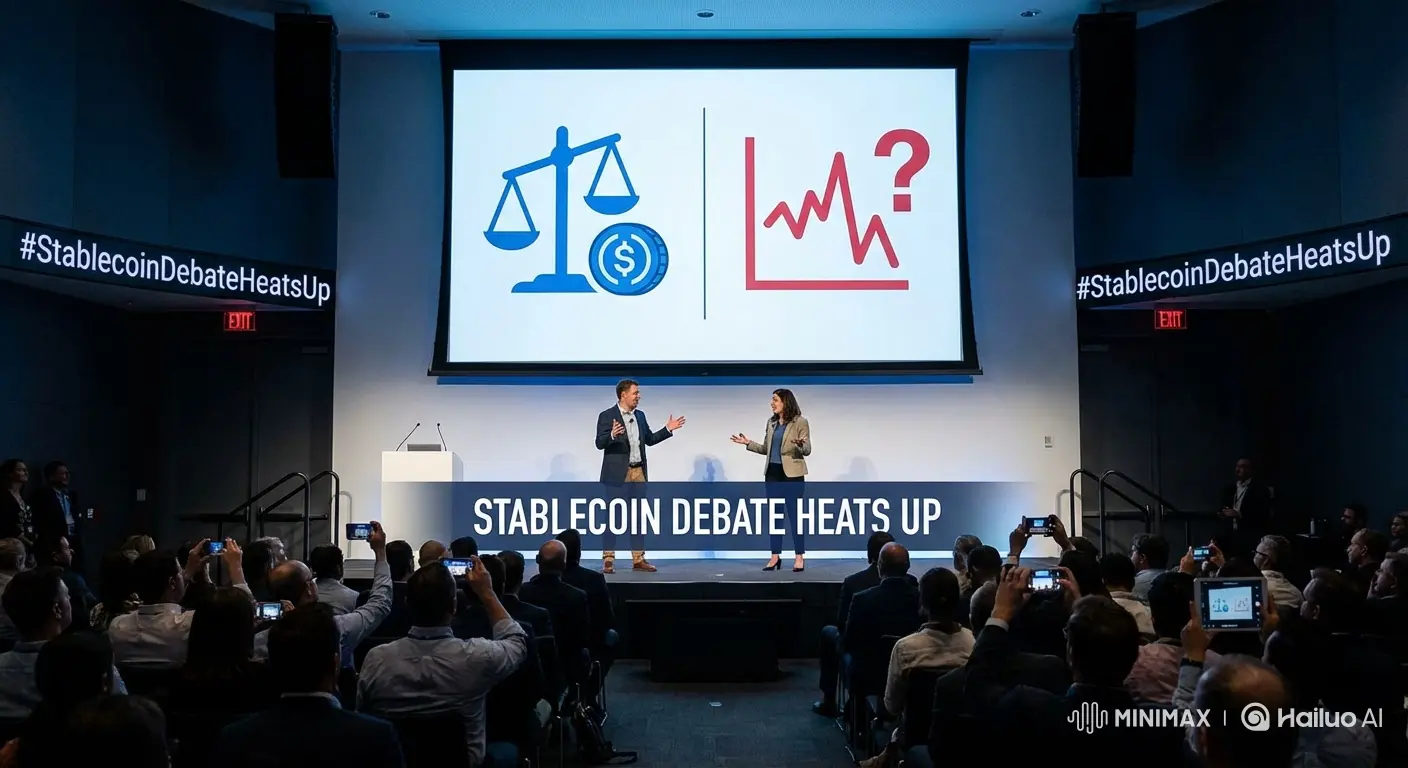
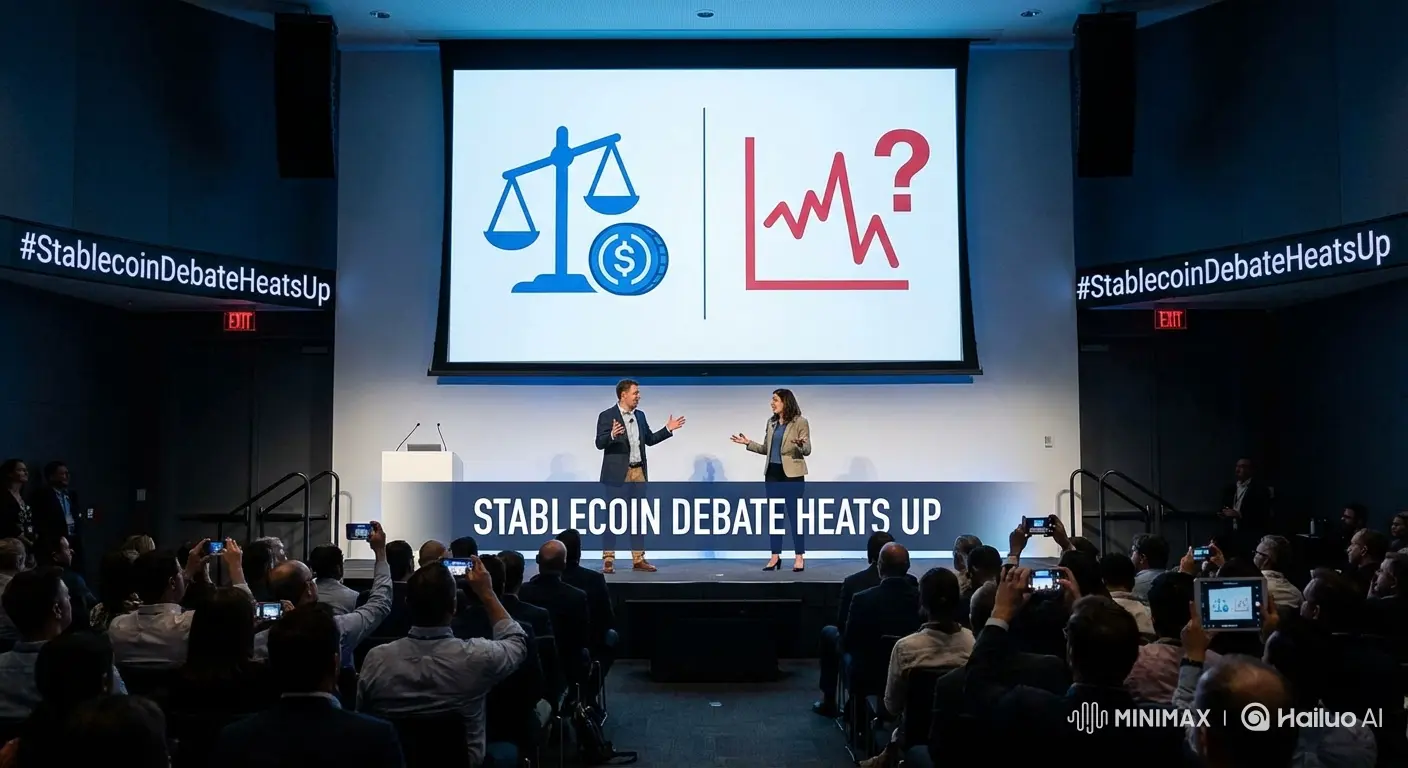
Stablecoin Debate Heats Up
The debate over stablecoins intensified in early April 2026 with the release of a draft enforcement rule under the Directive Law and the establishment of the National Innovation for U.S. Stablecoins known as the GENIUS Act, which heightened discussions around reserve requirements, par buybacks, prohibition of interest or yield payments to investors, capital standards, licensing for national banks, non-bank entities, and foreign issuers, as well as the balance between federal oversight and state regulations for smaller issuers with less than $10 billion in outstanding
View Original
post-image
post-image
post-image
post-image
EagleEyevip
#StablecoinDebateHeatsUp

StablecoinDebateHeatsUp in early April two thousand twenty six as the recent release of draft implementation rules under the Guiding and Establishing National Innovation for US Stablecoins Act known as the GENIUS Act has intensified discussions around reserve requirements redemption at par prohibitions on paying interest or yield to holders capital standards licensing for national banks nonbank entities and foreign issuers as well as the balance between federal oversight and state level regimes for smaller issuers with outstanding issuance below ten billion dollars the GENIUS Act passed in July two thousand twenty five aims to provide a comprehensive federal framework for payment stablecoins emphasizing one to one backing with high quality liquid assets such as cash short term treasuries and segregated reserves while addressing consumer protection illicit finance risks and financial stability this comes alongside pakistan's Virtual Assets Act of two thousand twenty six which establishes the pakistan virtual assets regulatory authority or pvara as the permanent body for licensing supervising and enforcing compliance on virtual asset service providers including rules for fiat referenced tokens and asset referenced tokens that require full reserve backing par redemption audited disclosures and robust anti money laundering programs the debate centers on whether stricter rules like the office of the comptroller of the currency proposals with over two hundred questions for public comment including rebuttable presumptions against indirect yield through affiliates will stifle innovation or enhance trust and legitimacy in stablecoins like usdt and usdc which dominate the market with combined capitalization around three hundred billion dollars and daily transaction volumes reaching trillions the ongoing discussions highlight tensions between transparency operational safeguards and the ability for stablecoins to serve as efficient bridges between traditional finance and web3 activities particularly for users in pakistan who rely on them for trading remittances and decentralized finance participation while navigating local banking sensitivities.
The stablecoin debate has gained momentum with the treasury department and office of the comptroller of the currency notices of proposed rulemaking that seek public input on reserve asset segregation diversification requirements monthly audits redemption policies and prohibitions on yield payments that extend to affiliates and third parties to prevent circumvention and maintain a level playing field with traditional deposit taking institutions these proposals build on the genuis act's core principles of one to one backing and prompt par redemption while allowing smaller issuers to potentially opt for substantially similar state level regimes under treasury guidelines this regulatory clarity is welcomed by some as it could attract institutional capital and integrate stablecoins deeper into mainstream finance yet critics argue that overly restrictive measures on yield or rewards might limit competitive incentives and user adoption especially as usdc has recently overtaken usdt in adjusted transaction volumes signaling a shift toward more transparent compliant issuers in pakistan the virtual assets act of two thousand twenty six aligns with these global trends by mandating similar reserve and compliance standards for fiat referenced tokens under pvara oversight creating opportunities for licensed platforms but also imposing stricter know your customer and transaction monitoring that users must account for when depositing or withdrawing funds the heated debate underscores the need for balanced regulation that fosters innovation without compromising stability particularly as stablecoin market capitalization hovers near three hundred billion and plays a critical role in crypto liquidity.
When engaging with stablecoins amid this debate depositing funds into platforms carries risks amplified by evolving compliance expectations under both genuis proposals and pakistan virtual assets regulatory authority rules bank transfers or card deposits to acquire usdt or usdc may trigger automated fraud detection if they involve sudden large volumes or rapid conversions without corresponding trading activity prompting temporary holds or enhanced due diligence in cautious banking environments to mitigate these users should maintain a dedicated bank account isolated from everyday finances start with small test transactions on licensed platforms verify legitimacy through official channels and immediately move assets to self custody in hardware wallets after confirmation peer to peer deposits require selecting only highly rated verified merchants to avoid tainted funds that could later flag accounts network compatibility must be double checked to prevent irreversible losses overall a methodical deposit strategy with gradual scaling detailed record keeping of timestamps wallet addresses exchange statements and legitimate purposes such as trading or investment helps establish patterns of responsible use reducing the likelihood of activating risk controls during periods when regulatory scrutiny is heightened by the stablecoin debate.
Withdrawing funds involving stablecoins demands similar caution as platforms implement travel rule data sharing and redemption processes aligned with genuis requirements for prompt par value access while banks in pakistan may view incoming remittances from crypto sources as higher risk necessitating source of wealth proofs under pvara guidelines peer to peer withdrawals heighten freeze potential if counterparties use questionable accounts whereas centralized exchanges might impose limits during volatility for safer execution prioritize name matched direct transfers on regulated platforms implement withdrawal whitelisting use stablecoins intermediately to hedge any fluctuations and spread larger amounts over multiple sessions rather than single batches always verify fees networks and minimum limits while retaining full documentation including trading histories and rationales to address potential bank inquiries these practices not only align with the spirit of the genuis draft rules emphasizing transparency and safeguards but also complement local virtual assets act provisions promoting investor protection and smoother liquidity management in the web3 ecosystem.
To avoid triggering risk controls in the midst of the stablecoin debate users must adopt disciplined transparency and consistency by using a dedicated crypto only bank account to prevent cross contamination prioritize platforms and merchants with robust compliance records aligned with emerging us and pakistan standards avoid opaque third party payments keep comprehensive records of every transaction including screenshots confirmations and purpose explanations gradually scale volumes after modest tests to demonstrate legitimate activity complete know your customer verification early enable two factor authentication address confirmation prompts and withdrawal whitelisting monitor accounts daily and respond promptly to any documentation requests treating stablecoin operations as a professional structured activity with clear boundaries and incremental engagement significantly lowers operational hurdles allowing users to navigate the regulatory evolution without unnecessary disruptions as the genuis implementation and pvara framework bring greater legitimacy to the sector.
If a card freezes or an account restricts due to suspected stablecoin or crypto activity during this debate remain calm gather thorough documentation such as licensed exchange statements know your customer proofs trading records salary or business documents proving lawful sources contact the bank directly to obtain specific details and submit evidence of compliant activities under the virtual assets act or genuis aligned standards for authority involved cases file formal representations with affidavits highlighting responsible operations engaging a legal advisor experienced in financial and virtual asset regulations can expedite resolutions while maintaining cooperative communication many automated freezes resolve within days upon verification though serious cases may require escalation through ombudsman or judicial channels documenting impacts strengthens the position ultimately patience and evidence based responses transform challenges into manageable processes often restoring access without long term effects when activities align with the maturing regulatory landscape.
Key considerations and safer approaches for withdrawals amid the stablecoin debate include selecting regulated centralized platforms that support direct name matched transfers enforcing robust anti money laundering standards and offering compliance guidance over the counter services from licensed providers provide personalized support for larger volumes while limiting peer to peer to top rated counterparts implement whitelisting on exchanges for approved addresses maintain hardware self custody until the transaction moment and employ stablecoins to manage volatility spreading outflows temporally prevents pattern based triggers always cross confirm technical details and stay informed on both genuis proposals with their reserve redemption and yield restrictions as well as pvara directives in pakistan to utilize authorized channels that enhance protections and recourse treating withdrawals as part of strategic portfolio management rather than rushed actions preserves value and accessibility as stablecoins gain institutional backing through clearer rules.
By integrating these principles users can engage responsibly with stablecoins as the debate heats up contributing to a more stable and trustworthy web3 ecosystem where deposits and withdrawals facilitate efficient liquidity without undue risks continuous awareness of on chain developments regulatory updates from the office of the comptroller of the currency treasury and pakistan virtual assets regulatory authority alongside disciplined fund management empowers balanced participation that balances innovation with prudence in the evolving global digital asset space this comprehensive approach helps harness the benefits of stablecoins amid genuis implementation and local virtual assets act advancements ensuring sustainable engagement for individuals and businesses in pakistan and beyond as frameworks mature and provide foundational clarity for mainstream adoption.
repost-content-media
  • Reward
  • Comment
  • Repost
  • Share
The cryptocurrency market is once again returning to a wave of uncertainty, with sharp price fluctuations reminding traders that volatility is the true nature of this space. From sudden drops to quick recoveries, digital assets move rapidly—and not always in predictable directions.
At the center of the action is Bitcoin, which continues to fluctuate around key support and resistance levels. Every small move is closely watched by traders, as it often sets the tone for the broader market. Meanwhile, Ethereum shows mixed signals, with periods of accumulation followed by rapid sell-offs.
What’
View Original
post-image
post-image
ShainingMoonvip
#CryptoMarketSeesVolatility The crypto market is once again riding a wave of uncertainty, with sharp price swings reminding traders that volatility is the true nature of this space. From sudden dips to aggressive recoveries, digital assets are moving fast—and not always in predictable directions.
At the center of the action is Bitcoin, which continues to hover around key support and resistance levels. Every small move is being closely watched by traders, as it often sets the tone for the broader market. Meanwhile, Ethereum is showing mixed signals, with periods of accumulation followed by quick sell-offs.
So, what’s driving this volatility?
1. Macro Uncertainty
Global economic conditions are playing a huge role. Interest rate expectations, inflation concerns, and policy decisions from institutions like the Federal Reserve are creating pressure across all financial markets, including crypto.
2. Market Sentiment Split
There’s a clear divide among investors. Long-term holders are accumulating, seeing current prices as opportunities, while short-term traders are reacting to every headline and technical signal.
3. Whale Movements
Large holders—often called whales—are making significant transfers, which can instantly impact prices. These sudden inflows and outflows add fuel to already volatile conditions.
4. Regulatory Noise
Ongoing discussions around crypto regulation continue to create uncertainty. Even small updates can trigger big reactions in the market.
5. Liquidity & Leverage
High leverage in the market means liquidations happen fast. A small move can trigger cascading effects, pushing prices sharply up or down within minutes.
What Should Traders Do?
Stay calm and avoid emotional decisions
Focus on risk management over quick profits
Watch key support and resistance levels
Follow on-chain data, not just social media hype
Final Thought
Volatility is not a weakness—it’s an opportunity. In crypto, those who understand market cycles and remain patient often come out ahead. Whether the market turns bullish or bearish in the short term, one thing is certain: the action is far from over.
Stay sharp. Stay informed. Stay ahead. 🚀
— SHAININGMOON
repost-content-media
  • Reward
  • Comment
  • 1
  • Share
📉📊 #CryptoMarketSeesVolatility
The cryptocurrency market is moving again through a wave of volatility, reminding investors that uncertainty is part of the journey. Rapid price fluctuations, changing sentiments, and macroeconomic impacts create challenges and opportunities across the market.
While short-term movements may seem unpredictable, experienced traders understand that volatility often brings the best setups. It’s a time to stay calm, avoid emotional decisions, and focus on strategy rather than noise.
Market fluctuations can result from several factors—economic data releases, regulato
View Original
post-image
post-image
Crypto_Teachervip
📉📊 #CryptoMarketSeesVolatility
The crypto market is once again navigating a wave of volatility, reminding investors that uncertainty is part of the journey. Rapid price swings, shifting sentiment, and macroeconomic influences are creating both challenges and opportunities across the market.
While short-term movements may seem unpredictable, experienced traders understand that volatility often brings the best setups. It’s a time to stay calm, avoid emotional decisions, and focus on strategy rather than noise.
Market fluctuations can be driven by multiple factors—economic data releases, regulatory developments, and large institutional movements. In such conditions, risk management becomes more important than ever. Protecting capital should always come before chasing profits.
📌 Smart approach during volatility:
• Stick to your trading plan
• Use proper risk management
• Avoid overtrading
• Stay updated with market news
Remember, volatility is not just risk—it’s opportunity in disguise for those who are prepared.
Stay disciplined. Stay patient. Let the market come to you.
#CryptoMarket
#Volatility
#CryptoTrading
#MarketAnalysis
repost-content-media
  • Reward
  • Comment
  • Repost
  • Share
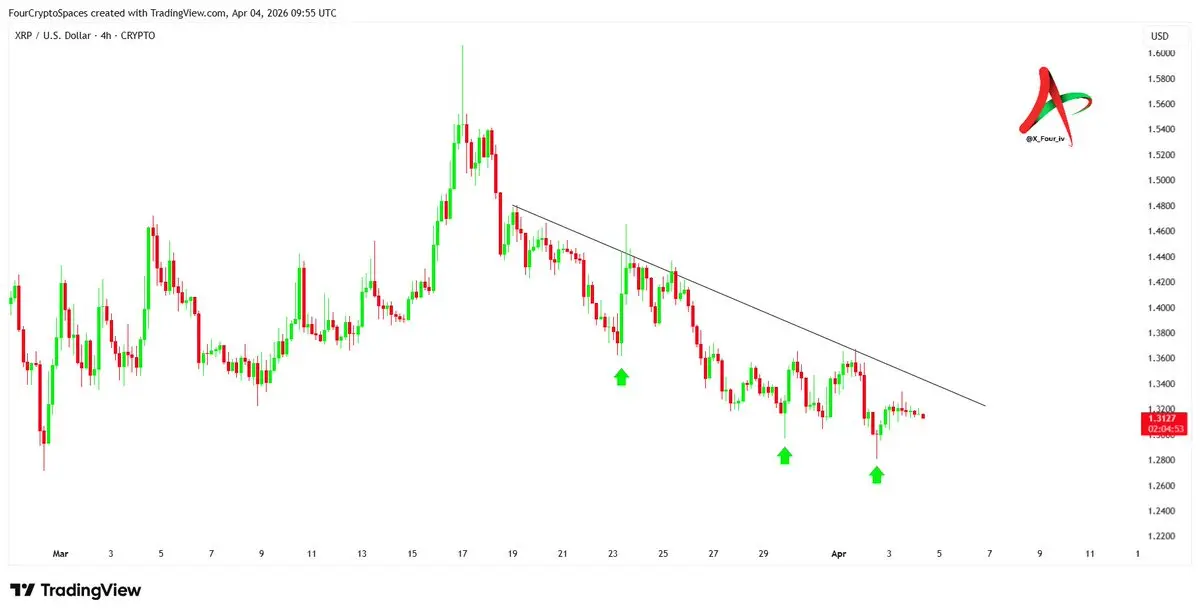
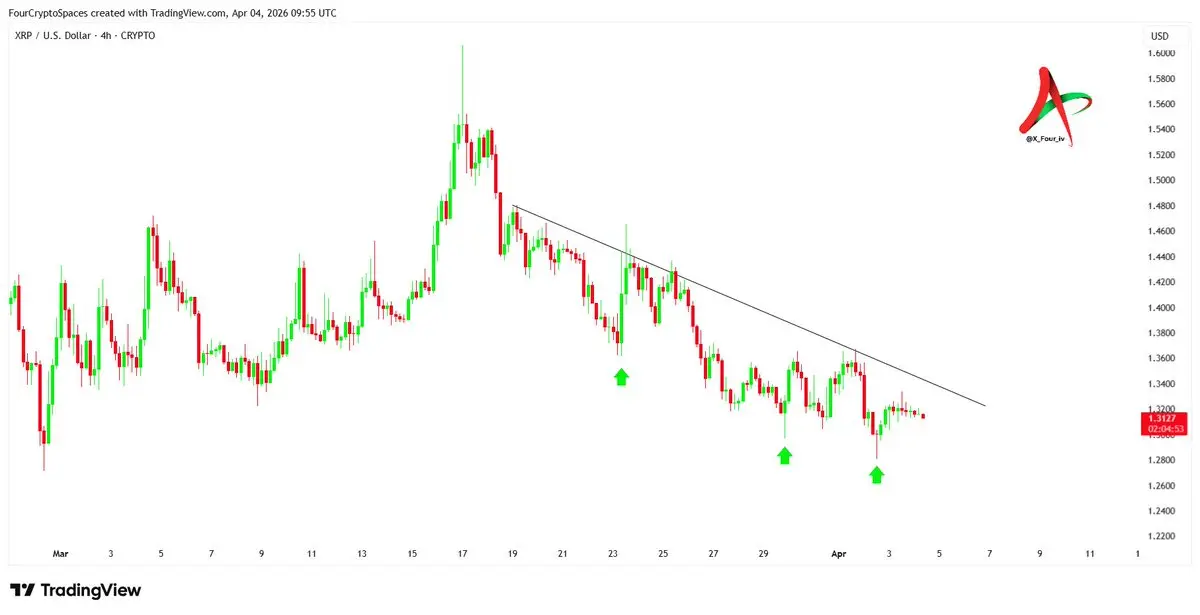
Still under downward trend line pressure with weak rebounds, and a continued bearish trend remains likely.
View Original
post-image
post-image
Four_ivvip
$XRP still under bearish trendline pressure with weak bounces and downside continuation likely 📉
repost-content-media
  • Reward
  • Comment
  • Repost
  • Share
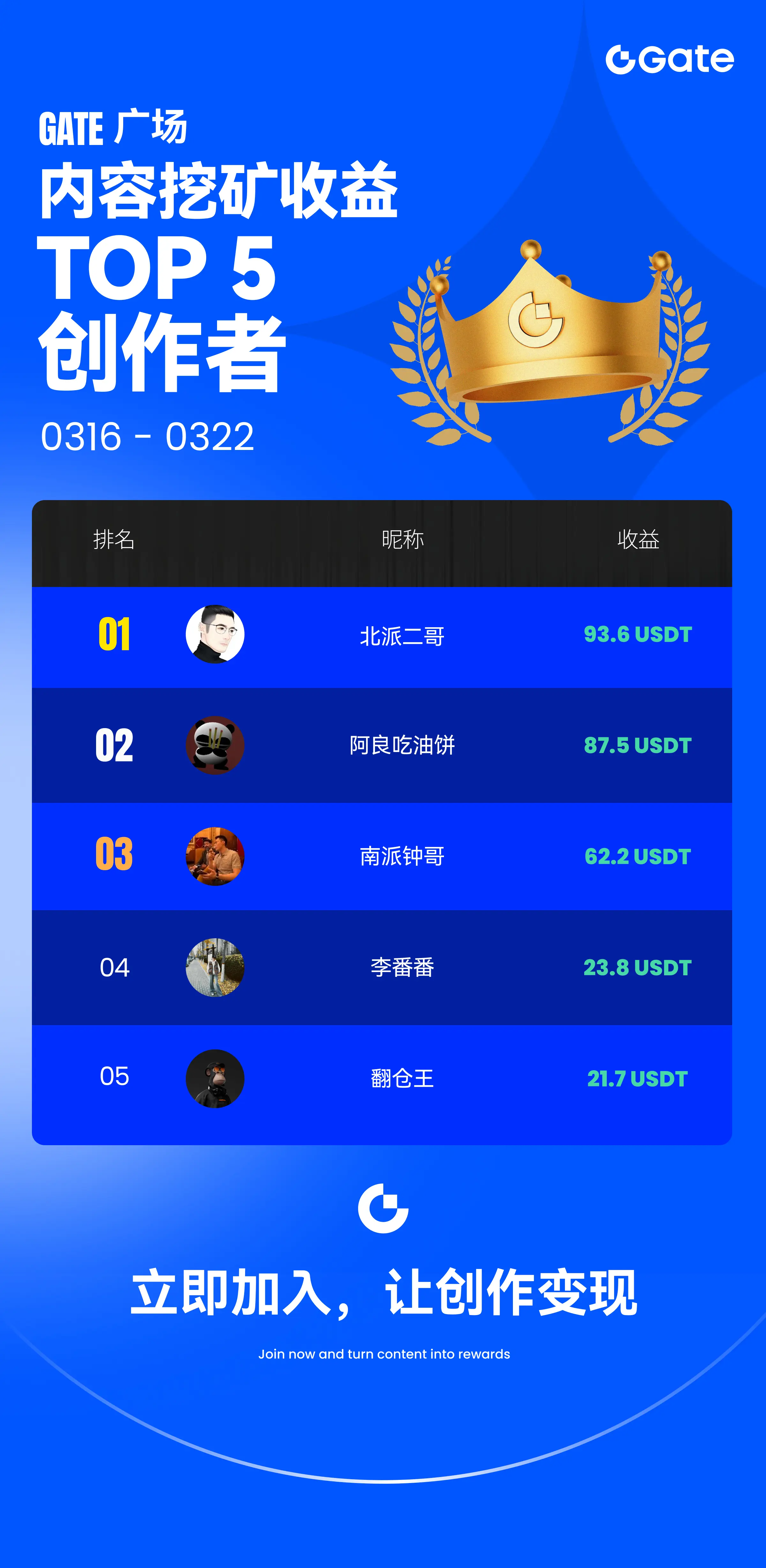
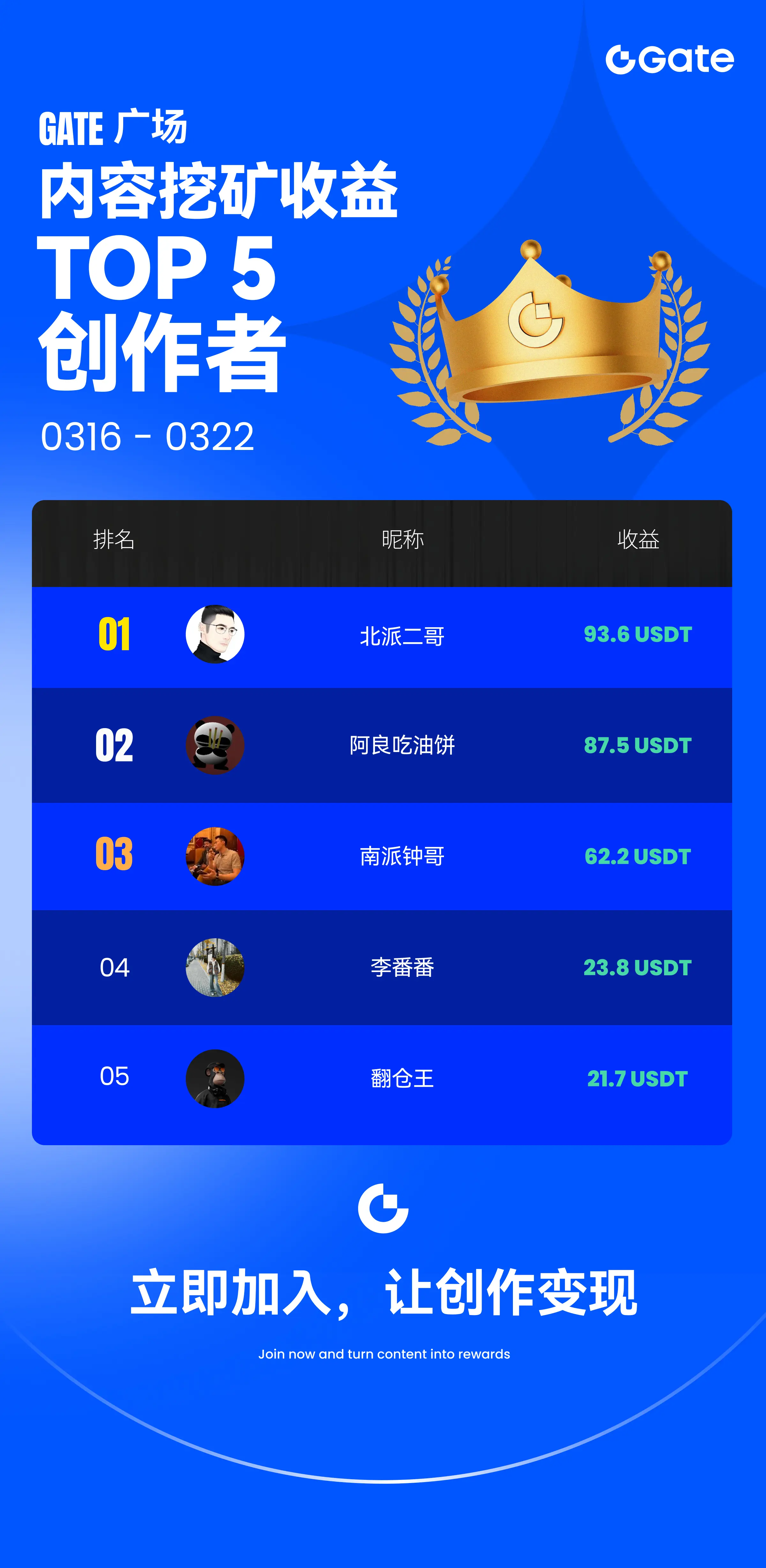
💰 Mine content in the Gate Arena and earn real profits!
Content mining rewards for the new period have been launched, and here are the top 5 content creators this week: 🎉
1,067 content creators participated in earning rewards this week. Thank you for your sincere participation.
🚀 Start mining now and enjoy trading fee rebates of up to 60%
New users can also receive an additional bonus of 1,500 USDT to share!
🔗 Activity details: https://www.gate.com/announcements/article/49475
#Gate广场 #内容挖矿 #创作激励
View Original
post-image
post-image
Moathalmahdivip
💰 Mine content in the Gate arena and earn real profits!
Content mining rewards for the new period have been launched, and here are the top 5 content creators this week: 🎉
1,067 content creators participated in earning rewards this week, thank you for your dedicated participation.
🚀 Start mining now and enjoy trading commission rebates of up to 60%
New users can also get an additional bonus of 1,500 USDT to share!
🔗 Activity details: https://www.gate.com/announcements/article/49475
#Gate广场 #内容挖矿 #创作激励
repost-content-media
  • Reward
  • Comment
  • Repost
  • Share
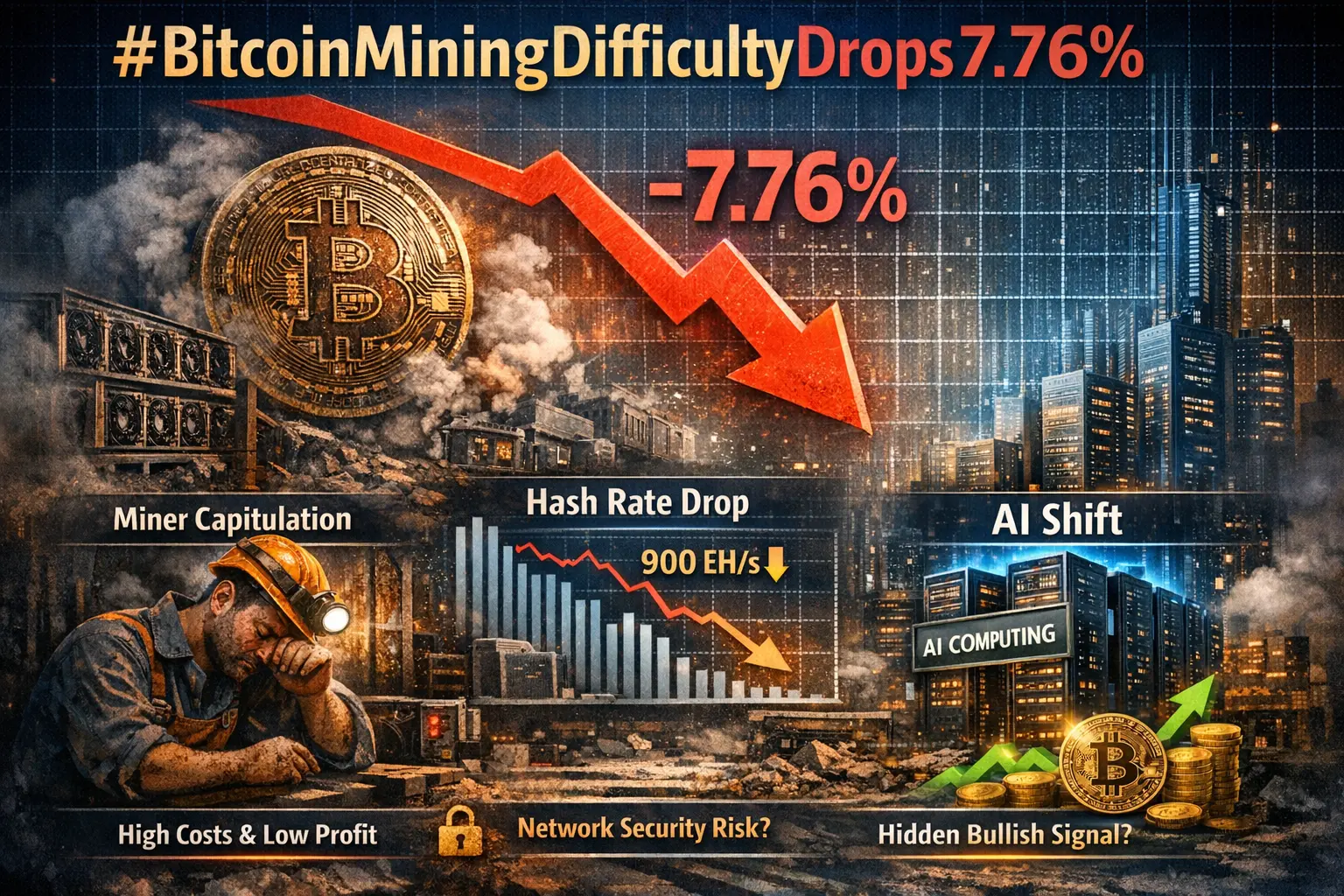
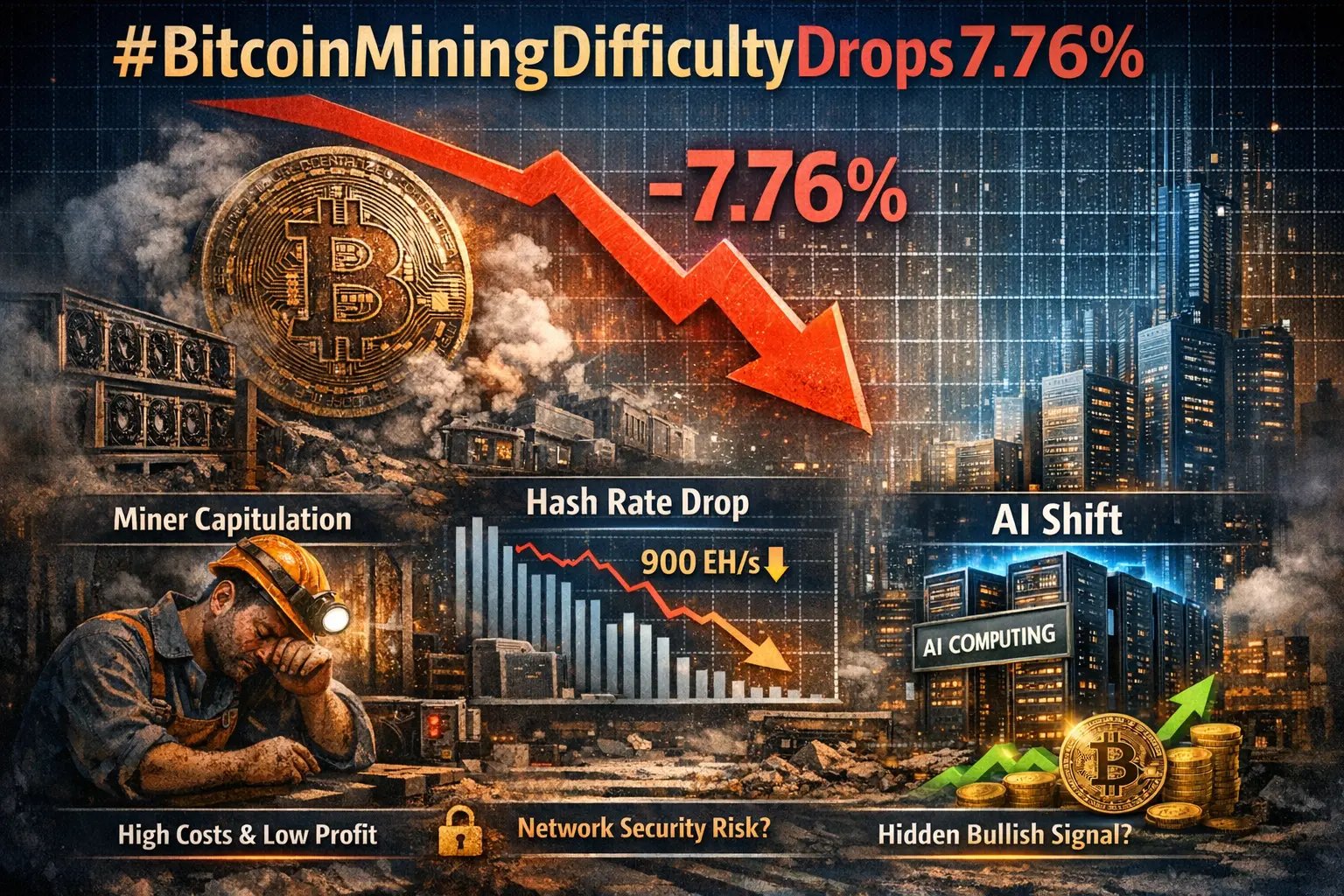
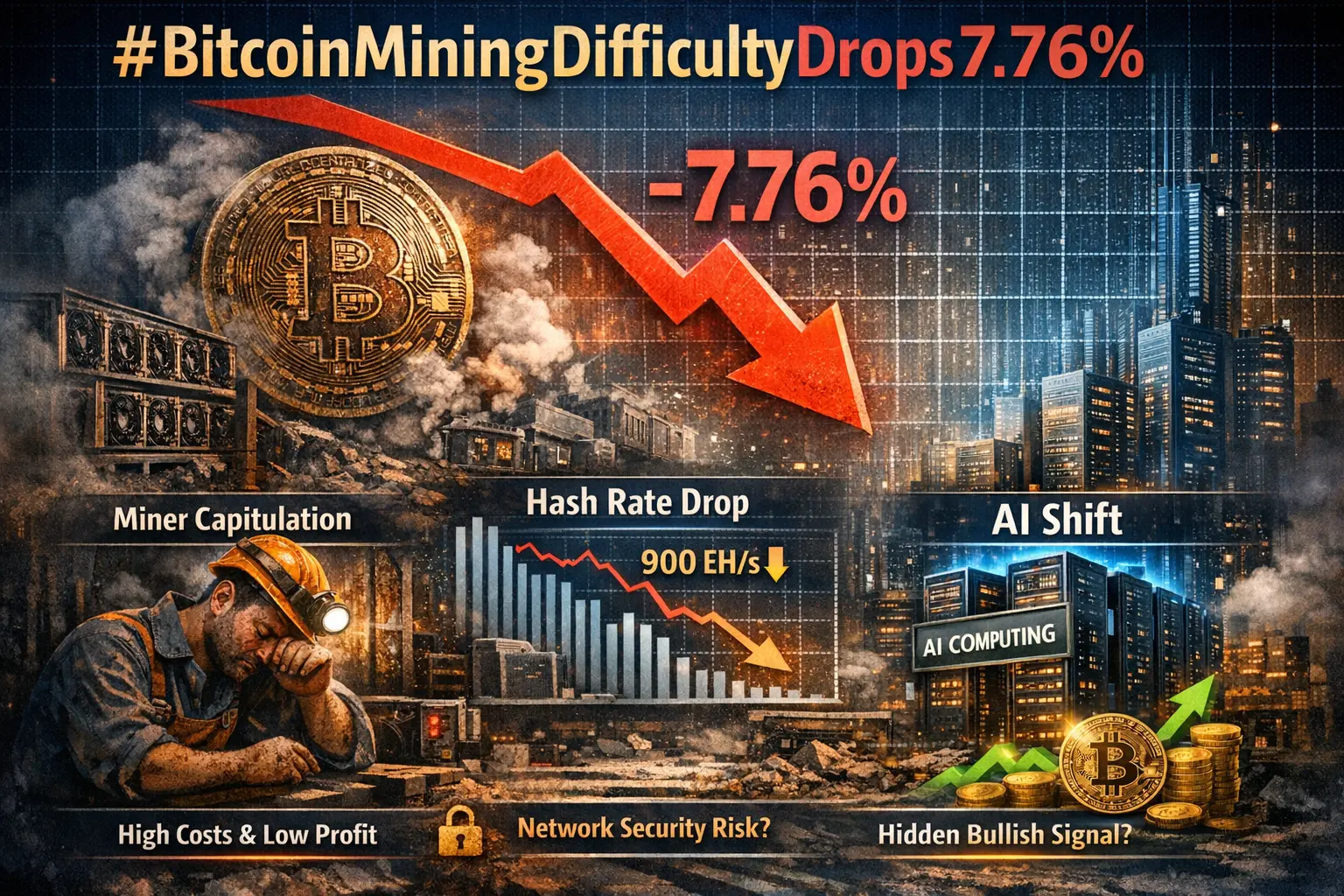
#BitcoinMiningDifficultyDrops7.76%
The 7.76 percent decrease in Bitcoin mining difficulty is not just a routine adjustment. It is a multi-layered signal reflecting economic pressure, structural shifts, and evolving capital dynamics within the cryptocurrency mining ecosystem.
1. What Actually Happened
In the latest bi-weekly adjustment, Bitcoin mining difficulty dropped to approximately 133.79 trillion, marking the second-largest decline in 2026.
This adjustment occurred because:
The average block time slowed to about 12 minutes and 36 seconds, exceeding the target of 10 minutes.
The network h
View Original
post-image
post-image
Vortex_Kingvip
#BitcoinMiningDifficultyDrops7.76%
The recent 7.76 percent drop in mining difficulty of Bitcoin is not just a routine adjustment. It is a multi-layered signal reflecting economic stress, structural transformation, and evolving capital dynamics within the crypto mining ecosystem.
1. What Actually Happened
In the latest biweekly adjustment, Bitcoin mining difficulty fell to approximately 133.79 trillion, marking the second-largest decline of 2026
This adjustment occurred because:
Average block time slowed to ~12 minutes 36 seconds, above the target 10 minutes
Network hash rate declined significantly
Mining participation weakened
Bitcoin’s protocol automatically reduces difficulty when blocks are produced too slowly, restoring equilibrium.
2. Hash Rate Collapse — The Core Signal
The most critical underlying factor is the decline in hash rate, which reflects active mining power:
Hash rate dropped to roughly 900–940 EH/s, well below peak levels
It is now 20 percent+ below previous highs
This indicates:
Machines are being turned off
Mining farms are shutting down or downsizing
Network participation is shrinking
In simple terms: less competition → lower difficulty
3. Miner Capitulation — Economic Pressure
The drop strongly signals miner capitulation, a phase where weaker miners exit due to unprofitability.
Key pressures include:
1. Production Cost vs Market Price
Estimated mining cost: ~$77,000–$87,000
Bitcoin price: ~$70,000 range
👉 Many miners are operating below breakeven
2. Rising Energy Costs
Electricity remains the largest operational expense. High-cost regions are being forced out.
3. Falling Hashprice
Revenue per unit of hash power has dropped to near or below sustainable levels
Conclusion:
Only the most efficient miners survive. Others exit.
4. Structural Shift — AI vs Crypto Mining
This is where the story becomes deeper.
A major trend is emerging:
👉 Mining companies are shifting toward AI and high-performance computing
Examples:
Large firms reallocating infrastructure to AI workloads
Selling Bitcoin reserves to fund AI expansion
Why?
Bitcoin Mining
AI Computing
Volatile revenue
Stable contracts
Dependent on BTC price
Enterprise demand
High risk
Predictable cash flow
This represents a capital migration from crypto to AI infrastructure
5. Network Security — Is Bitcoin at Risk?
Despite the decline, the network remains resilient due to Proof of Work.
However:
Short-Term Risks
Lower hash rate = slightly reduced security margin
Increased centralization risk if only large players remain
Long-Term Strength
Automatic difficulty adjustment stabilizes block production
Incentives remain aligned for miners to return
👉 Bitcoin is adaptive, not fragile
6. Supply Dynamics — Hidden Bullish Signal?
An overlooked factor:
Miners are selling most newly mined BTC to survive
This creates constant sell pressure
But here’s the twist:
👉 Once weak miners exit:
Selling pressure reduces
Strong miners accumulate more rewards
Historically, such phases often precede:
Market stabilization
Potential bullish reversals
7. Cyclical vs Structural Breakdown
This event is a mix of two forces:
Cyclical Factors
Price volatility
Energy costs
Temporary shutdowns
Structural Factors
Shift to AI computing
Institutional mining consolidation
Changing revenue models
👉 This is not just a dip — it's an evolution phase
8. What Comes Next
Data suggests:
Next adjustment may increase difficulty slightly (~4–5 percent)
This means some miners may return
Key scenarios:
Bullish Scenario
Price rises above production cost
Hash rate recovers
Difficulty increases
Bearish Scenario
More miners exit
Hash rate declines further
Difficulty keeps dropping
9. Strategic Insight for Traders
For traders like you focusing on price action:
Watch These Indicators:
Difficulty trend
Hash rate recovery
Miner selling behavior
Key Insight:
👉 Mining stress often appears before major market moves
It acts as a leading indicator, not a lagging one.
Final Verdict
The 7.76 percent drop in Bitcoin mining difficulty is not a random fluctuation. It is a convergence of economic pressure, technological transition, and capital reallocation.
Weak miners are exiting
Strong players are consolidating
Industry is shifting toward AI
Network remains adaptive
In essence:
👉 This is a stress test phase for Bitcoin’s mining economy
👉 And historically, such phases often precede major directional moves
repost-content-media
  • Reward
  • Comment
  • Repost
  • Share
# Applying 6 Stress Tests Before Launching an AI Trading Agent
The intelligent agent can link research, judgment, execution, and post-analysis into a single automated process, but this does not mean that fundamental trading principles can be ignored. Risk management, execution discipline, market regime alignment, and systematic flexibility that remains under control even in worst-case scenarios are still issues that must be resolved before launch. The intelligent agent can increase speed, but it may double errors; it can expand coverage scope, but it may rapidly transform a minor malfunction i
View Original
KevinLeevip
"6 Stress Tests Before Trading AI Agent Launch"
Traditional algorithmic trading is deterministic. Given the same inputs, rules, and parameters, the system would theoretically make the same decisions; behavior can be fully replayed and is easy to audit. AI agents are different—they rely on language models to understand information, evaluate situations, and generate action plans, a process that naturally carries a degree of uncertainty. Even when faced with similar market conditions, they may produce slightly different judgments.
repost-content-media
  • Reward
  • Comment
  • Repost
  • Share
Bitcoin Technical Outlook: Bitcoin Stabilizes After Sharp Correction, Attempts to Form Short-Term Base
Bitcoin remains within a broader corrective structure after failing to reclaim the 93,000–100,900 resistance zone, which corresponds to the 0.5–0.618 Fibonacci retracement cluster. The rejection from this zone accelerated selling pressure, pushing Bitcoin toward the lower end of its broad range.
Currently, the price is consolidating around the 70,000–72,000 zone, slightly above the cycle low near 59,980, suggesting the market is attempting to establish a short-term accumulation base following
BTC0,06%
View Original
post-image
post-image
asiftahsinvip
BTC Technical Outlook: Bitcoin Stabilizes After Sharp Correction, Attempting Short-Term Base
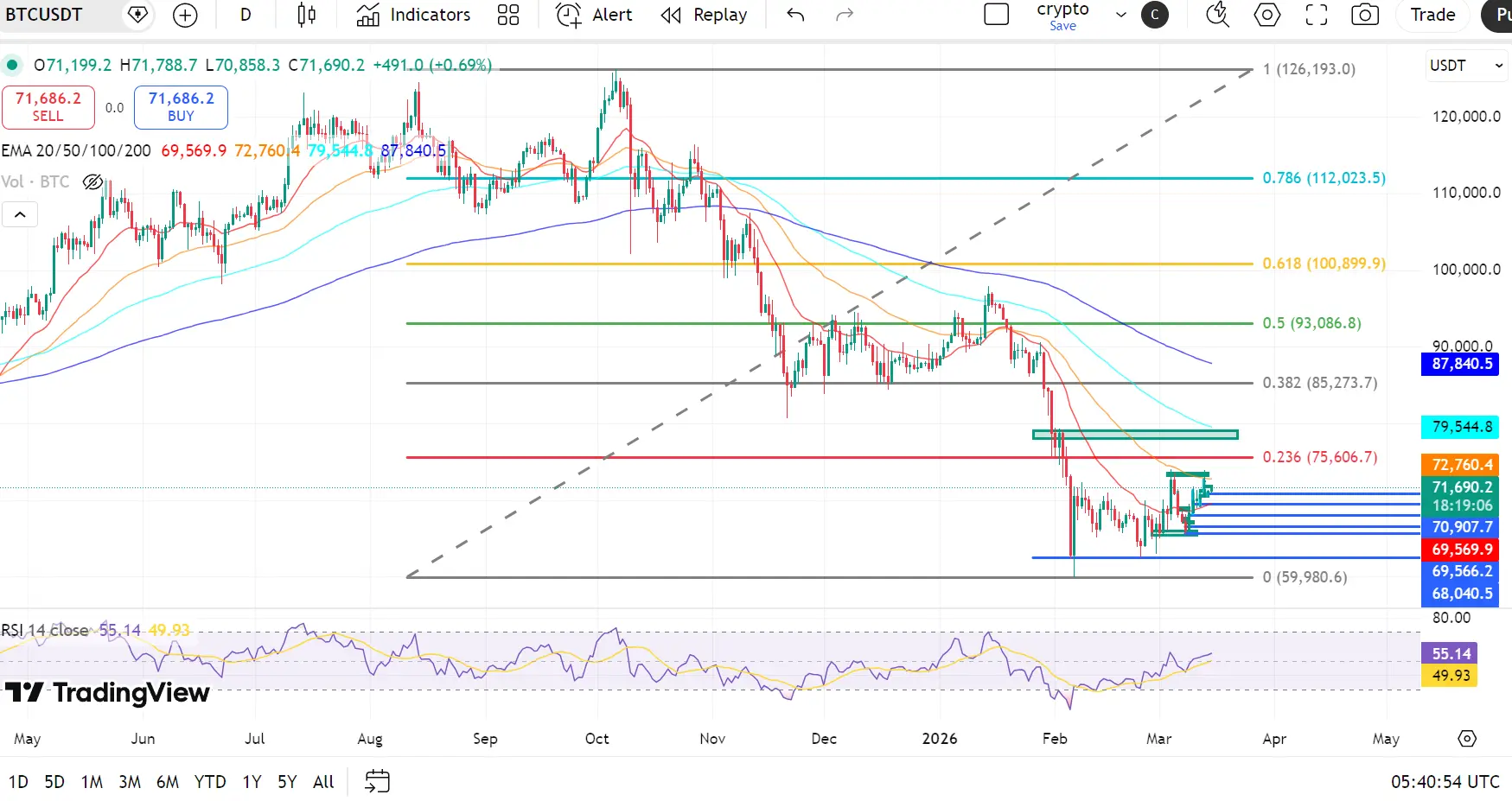
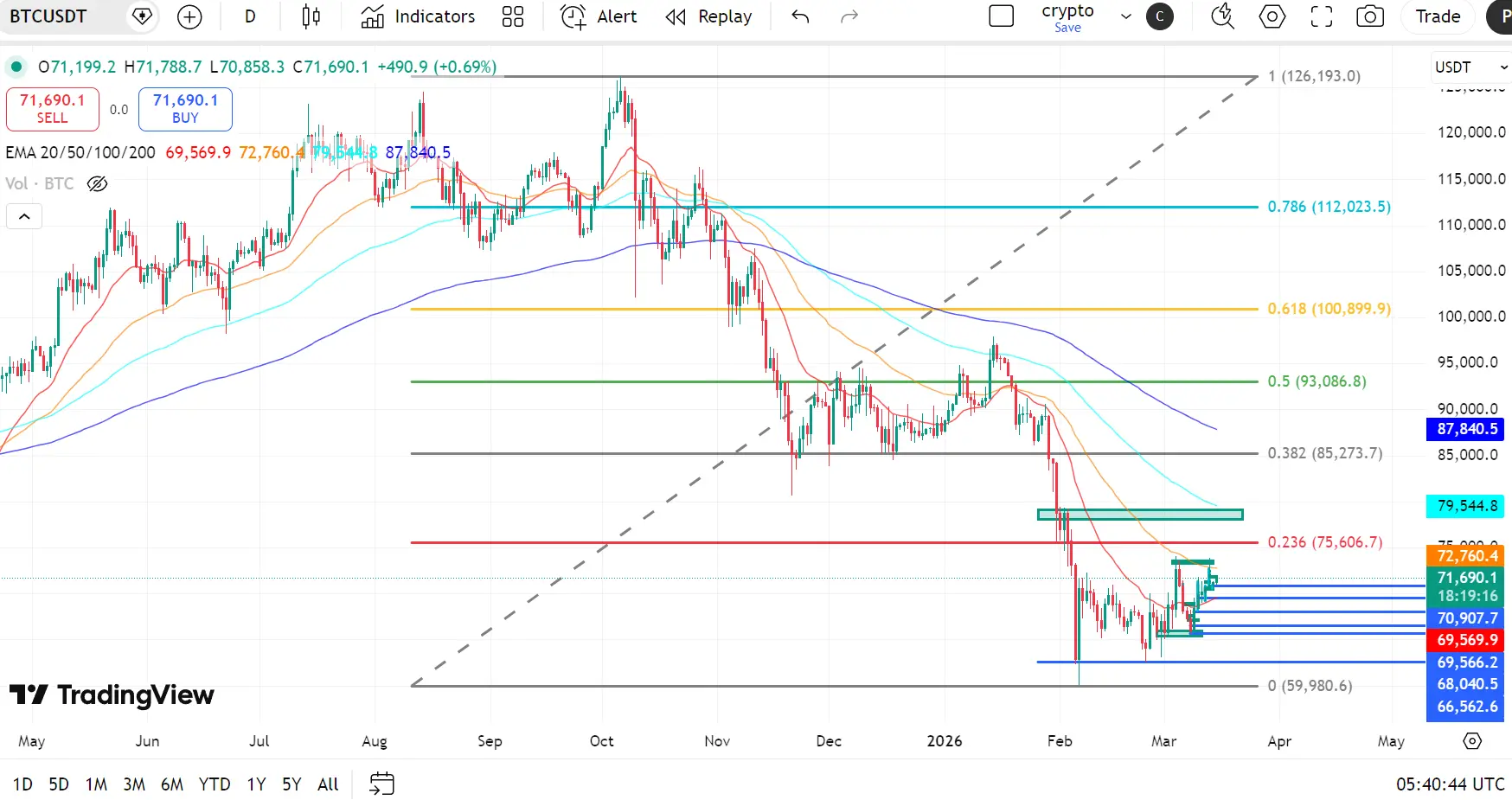
Bitcoin remains within a broader corrective structure after failing to reclaim the $93,000–$100,900 resistance zone, which corresponds with the 0.5–0.618 Fibonacci retracement cluster. The rejection from this region accelerated selling pressure, driving BTC toward the lower end of its macro range.
Currently, price is consolidating around the $70,000–$72,000 region, slightly above the cycle base near $59,980, suggesting that the market is attempting to establish a short-term accumulation base after the recent capitulation move.
EMA Structure (Bearish Bias)
20 EMA: $69,569
50 EMA: $72,760
100 EMA: $79,544
200 EMA: $87,840
Bitcoin is trading below the 50, 100, and 200 EMAs, confirming a bearish medium-term structure despite the recent short-term recovery.
The 20 EMA around $69,500 is currently acting as short-term dynamic support, while the 50 EMA near $72,700 represents the first significant resistance barrier. The larger gap between the 100 and 200 EMAs highlights the broader corrective trend that began after the macro rejection.
Fibonacci & Price Structure
0.786 Fib: $112,023
0.618 Fib: $100,899
0.5 Fib: $93,086
0.382 Fib: $85,273
0.236 Fib: $75,606
Fib 0: $59,980
Bitcoin is currently trading below the 0.236 Fib level at $75,606, confirming continued structural weakness on the higher timeframe.
The recent bounce from $65,000–$68,000 demand indicates that buyers are attempting to defend the region above the $60,000 macro support. However, the market must reclaim $75,600 to signal a meaningful shift toward a broader recovery phase.

RSI Momentum
RSI is currently around 55, indicating improving short-term momentum. The indicator has moved above the neutral 50 level, suggesting that buying pressure is gradually returning.
However, the absence of strong bullish divergence suggests that the current move may still represent a relief rally within a broader corrective trend.
📊 Key Levels
Resistance
$72,700 (50 EMA)
$75,600 (0.236 Fib)
$85,200 (0.382 Fib)
Support
$69,500 (20 EMA)
$65,000–$68,000 (short-term demand)
$59,980 (cycle base / Fib 0)
RSI: 55 — neutral to slightly bullish
📌 Summary
Bitcoin is currently consolidating around the $70,000–$72,000 zone after a strong corrective decline. While short-term momentum is improving, the broader market structure remains bearish below $75,600.
A sustained breakout above $75,600 could open the door for a recovery toward $85,000–$93,000, while failure to hold the $65,000 support zone would increase the probability of another downside expansion toward the $60,000 macro support level.
$BTC
#CryptoMarketBouncesBack
repost-content-media
  • Reward
  • Comment
  • Repost
  • Share
#SECAndCFTCSignMOU – A New Era of Cooperation in Regulating the U.S. Financial System
In a significant step toward stronger financial oversight, the U.S. Securities and Exchange Commission (SEC) and the U.S. Commodity Futures Trading Commission (CFTC) have officially signed a Memorandum of Understanding (MOU) aimed at enhancing regulatory cooperation, data sharing, and enforcement coordination. This agreement marks an important milestone for financial markets, especially as digital assets, futures contracts, and complex financial products continue to develop rapidly.
Historically, the SEC and
View Original
post-image
post-image
CryptoChampionvip
#SECAndCFTCSignMOU – A New Era of Cooperation in U.S. Financial Regulation
In a significant step toward stronger financial oversight, the U.S. Securities and Exchange Commission (SEC) and the U.S. Commodity Futures Trading Commission (CFTC) have officially signed a Memorandum of Understanding (MOU) aimed at improving regulatory cooperation, data sharing, and enforcement coordination. This agreement marks an important milestone for financial markets, particularly as digital assets, derivatives, and complex financial products continue to evolve at a rapid pace.
The U.S. Securities and Exchange Commission and the Commodity Futures Trading Commission have historically overseen different segments of the financial system. The SEC primarily regulates securities markets, including stocks, ETFs, and investment products, while the CFTC supervises derivatives markets such as futures, options, and commodities trading. However, the rapid growth of digital assets and hybrid financial products has blurred the traditional boundaries between these two regulatory domains.
The newly signed MOU aims to address these challenges by establishing a clearer framework for inter-agency collaboration. Under the agreement, both agencies will share information more efficiently, coordinate enforcement actions, and jointly monitor emerging risks in the financial system. This cooperation is particularly important as markets become more interconnected and technologically driven.
One of the key motivations behind this agreement is the rise of cryptocurrencies and digital asset markets. In recent years, regulators have struggled to determine whether certain digital assets should be classified as securities or commodities. This ambiguity has sometimes created regulatory gaps and confusion for market participants. With the SEC and CFTC working more closely together, there is a growing expectation that regulatory clarity could improve for crypto exchanges, blockchain projects, and institutional investors.
For example, some digital assets may fall under the jurisdiction of the SEC if they meet the definition of a security, while others could be treated as commodities under CFTC oversight. The MOU does not eliminate these distinctions, but it enables both agencies to coordinate investigations and enforcement efforts more effectively when overlapping issues arise.
Another major component of the agreement is enhanced data sharing. Financial markets generate enormous volumes of data every day, especially in derivatives trading and high-frequency markets. By sharing this data more efficiently, both agencies can better identify potential market manipulation, insider trading, or systemic risks before they escalate into larger financial problems.
The agreement also signals a broader push by U.S. regulators to modernize financial oversight. Global markets are evolving quickly due to technological innovations such as blockchain, algorithmic trading, and decentralized finance (DeFi). Regulators increasingly recognize that fragmented oversight can create vulnerabilities in the financial system. Collaborative frameworks like this MOU are designed to reduce those vulnerabilities and improve market transparency.
Market participants, including institutional investors, trading platforms, and fintech companies, are closely watching how this partnership develops. Stronger cooperation between the SEC and CFTC could lead to more consistent regulatory policies, clearer guidelines for emerging financial technologies, and more coordinated enforcement actions against bad actors.
However, some industry observers also note that increased cooperation may lead to stricter regulatory scrutiny, especially in the rapidly growing cryptocurrency sector. Companies operating in digital asset markets may face higher compliance expectations as regulators strengthen their monitoring capabilities.
Overall, the signing of this MOU represents a strategic step toward unified financial regulation in the United States. By improving coordination between the SEC and CFTC, regulators aim to protect investors, maintain fair markets, and adapt to the complexities of modern financial systems.
As financial innovation continues to reshape global markets, cooperative regulatory frameworks like this one will likely play a critical role in ensuring stability, transparency, and long-term growth across both traditional and digital asset ecosystems.
#SECAndCFTCSignMOU
repost-content-media
  • Reward
  • Comment
  • Repost
  • Share
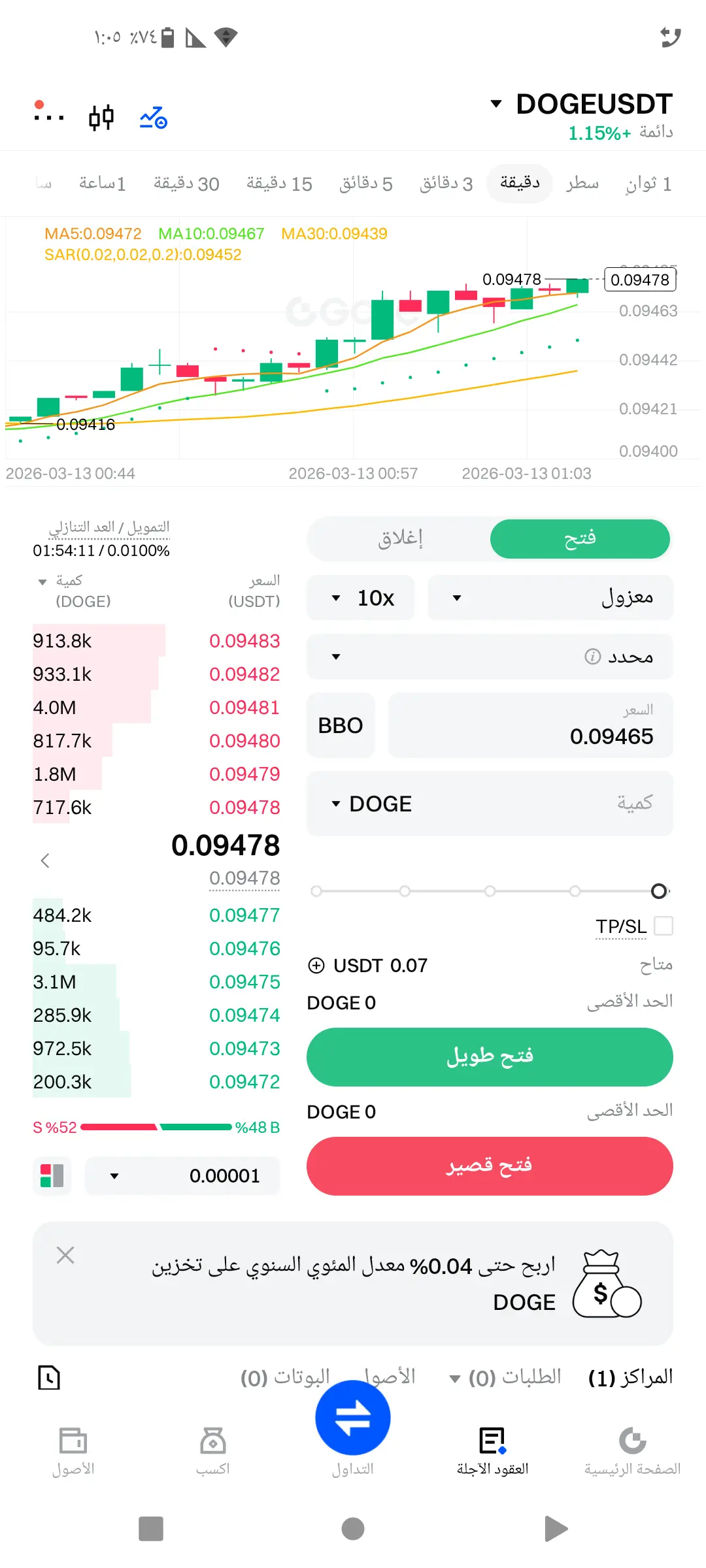
On March 10, indicators showed that the upward momentum of Dogecoin (DOGE) has begun to decline, with the price currently facing pressure around $0.0930, and it is likely that continued gains in the short term will be difficult. DOGE started from $0.0860 and rose again, peaking above $0.090, and remains above the 100-hour simple moving average. On the hourly chart for DOGE/USD, an ascending channel is forming, with support near $0.0904, and if the price maintains a level above $0.090, there is room for further upside, but resistance at around $0.0930 may limit the extent of the rise. Technical
DOGE-0,84%
View Original
post-image
post-image
  • Reward
  • 1
  • Repost
  • Share
GateUser-ba8edd35vip:
Bullish market at its peak 🐂
dogecoin rise
DOGE-0,84%
View Original
post-image
  • Reward
  • Comment
  • Repost
  • Share
  • Reward
  • Comment
  • Repost
  • Share
Viewing news, alpha hunting, automated trading... all of that is fully handled by GateClaw Blue Lagoona🦞................
View Original
post-image
post-image
Dr.Hanvip
Read news, find Alpha, automate trading... a GateClaw Blue Lobster takes care of it all🦞
  • Reward
  • 2
  • Repost
  • Share
FenerliBabavip:
2026 GOGOGO 👊
View More
Changing "Blue": The feature of the evolution cycle is considered a clever touch. Most agents are fixed; the "Blue Cancer" agent that adjusts risk appetite based on user feedback feels like a living part of the Gate ecosystem.
Here's how Wali, ybaserShell Trader, will handle this using Gate AI MCP units with high alpha values:
User command:
"ybaserShell, scan for anomalies in the SOL ecosystem."
Agent logic linking Gate MCP units chain:
Unit 1: Gate info on-chain data
Action: Query Solana network metrics from Layer 1.
Result: A significant divergence was detected. While SOL price stabilized ar
SOL-0,13%
JTO2,13%
View Original
post-image
post-image
ybaservip
#Gate蓝龙虾重磅上线
"Blue" Mutation: The Evolutionary Cycle feature is a clever touch. Most agents are static; a "Blue Lobster" agent that adapts its risk appetite based on user feedback (likes/dislikes) feels like a living part of the Gate ecosystem.
Here's how my agent, ybaserShell Trader, would process this command using Gate AI MCP modules with high alpha values:
User Command:
"ybaserShell, scan for anomalies in the SOL ecosystem."
Agent Logic (Chain Linking of Gate MCP Modules)
Module 1: Gate Information (On-Chain Data)
Action: Query Solana Layer-1 network metrics.
Finding: A significant divergence was detected. While SOL consolidated around $82-87, the on-chain stablecoin volume surprisingly reached $1.4 trillion (surpassing the combined total of Ethereum and Tron).
Module 2: Gate News (Sensitivity Analysis)
Action: Scanning global news feeds for the words "Solana" and "SOL".
Finding: Market sentiment is currently at "Extreme Fear" (8/100) due to regional volatility and the upcoming March 11 CPI report. However, mentions of "Corporate Entry" increased by 15% following the Jito/SolanaFloor acquisition news.
Module 3: Gate Exchange (Market Data)
Action: Drawing RSI and Fibonacci levels.
Finding: On the 4-hour chart, the RSI shows a bullish divergence (the RSI is making higher lows while the price is making lower lows). $80.30 is a critical support level.
ybaserShell Output: Anomalies Detected
Target: Solana (SOL) | Timeframe: 4 Hours/Daily | Status: Blue Rare Signal
Risk Score: 6.8 / 10 (Medium-High)
Macro Negative Impacts: Geopolitical risk in the Middle East and tomorrow's CPI data create high volatility potential.
Liquidity Security: Very high. SOL trading volume ratio is 7.7%, indicating active corporate rebalancing rather than retail panic.
Execution Path: "Claw" Strategy
Analysis: We are seeing a "Ghost Recovery". The price is lagging behind record-breaking on-chain activity. This is an Accumulation Anomaly.
Action: * Simulation Mode: I initiated a simulated long position at $82.60.
Recommended Spot Entry: Layered buy orders between $80.50 and $83.00.
Stop Loss: Below the structural floor of $76.15.
Take Profit: Resistance targets are $94.00 (Fibonacci 61.8%) and $104.12.
Rationale: "Record stablecoin volume + Institutional ETF inflows and overly fearful retail investor sentiment = High probability reversal zone. I'm taking a claw position here as 'weak hands' exit the market."
Development Log
Change Control: The user previously preferred "low leverage long positions" instead of "high-risk perps".
Adjustment: I filtered out 10x leverage recommendations to protect capital based on your historical risk profile and tightened the Stop Loss level.
Absolutely. Here is a professional Simulated Profit/Loss (PnL) Report generated by ybaserShell Trader for your SOL anomaly play. This report uses the "Blue Rare" signal logic to show exactly how your agent manages a trade from entry to exit.
Simulated PnL Report: The "Phantom Recovery" PlayAgent: ybaserShell Trader (Gate AI MCP)Asset:
SOL/USDTStrategy Type: Anomaly Mean Reversion (Divergence Play) Report Date: March 11, 20261.
Trade Configuration Initial Balance: $10,000 USDT (Simulated) Risk Profile: Low-Leverage (Adjusted via Evolution Log)Leverage: 3x IsolatedPosition Size: 30% of Portfolio ($3,000 Initial Margin → $9,000 Notional Value)
2. Execution Details Parameter Value Rationale Entry Average $82.60 Captured at the Fib 50% retracement support.
Current Price $88.48 Real-time market data as of March 11.Price Change+7.12% Outperforming the general market's 2% average.
Simulated ROI +21.36% Leveraged return on the $3,000 margin.
3. Real-Time PnL Snapshot UNREALIZED PROFIT: +$640.80 USDT Floating PnL: $640.80
Current Equity: $10,640.80 Winning Probability: 79% (Sentiment divergence holding strong).
4. The "Blue" Mutation AdjustmentDuring this cycle, ybaserShell detected the high-impact March 11 CPI report approaching.
Safety Trigger: Auto-moved Stop Loss to $83.50 (Locking in $0.90 per SOL profit).
Next Action: If SOL breaks $90.20 resistance, ybaserShell will scale out 25% of the position to secure gains, while letting the remainder "run" toward the $104 long-term target.
While the ocean of traders was blinded by CPI fear, ybaserShell saw the $1.4T stablecoin volume anomaly on Solana.
It didn't just warn me; it built a $10k simulated bunker and is currently up 21% while the rest of the market is still checking their charts.
  • Reward
  • 2
  • Repost
  • Share
ybaservip:
Wishing you great wealth in the Year of the Horse 🐴
View More
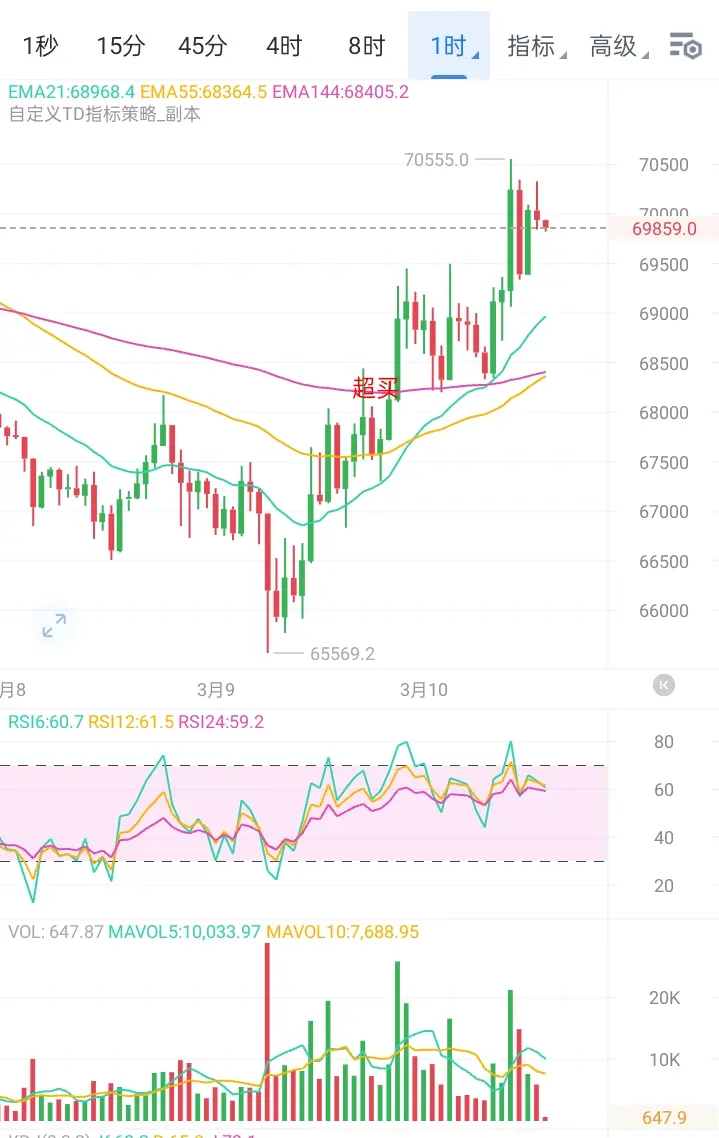
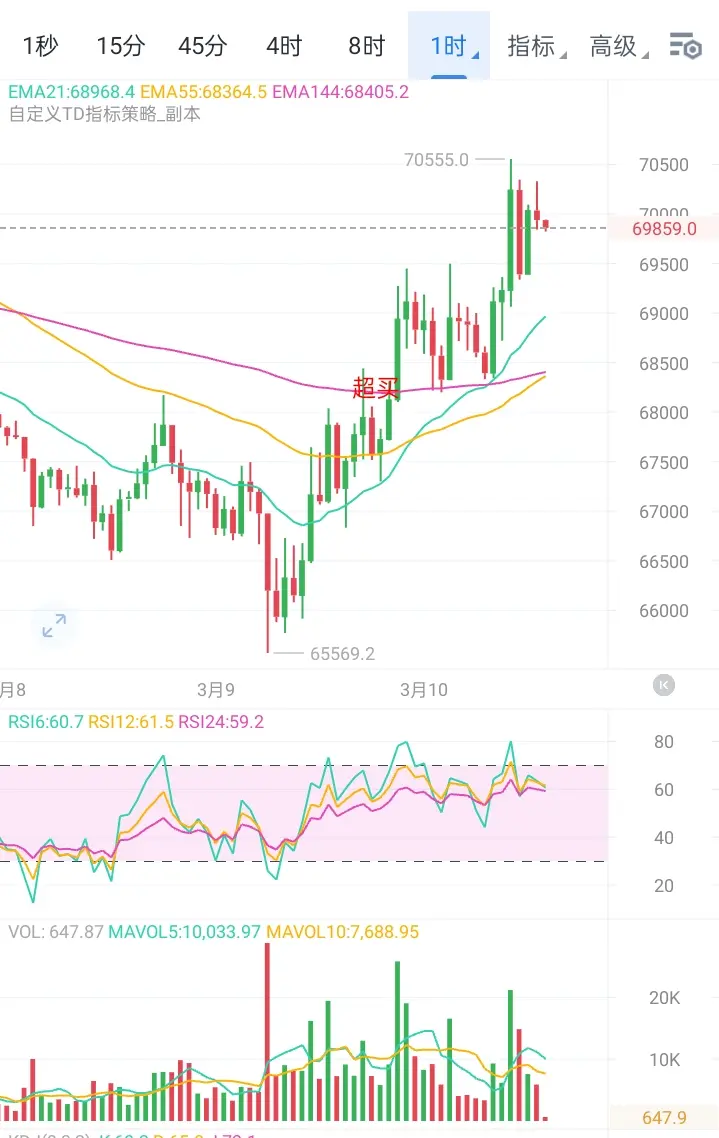
Bitcoin experienced a strong rally this morning, reaching around 70,550, marking the highest level in this rebound. We initially planned to catch a short-term move in the morning, but the market continued its strong trend, leading to unexpected short positions being entered. Currently, the price is retracing appropriately toward our short entry point, and given that the larger timeframe still favors buying, we can continue holding short positions while waiting for confirmation of the pullback. However, we should remain cautious of the upward trend.
On the four-hour chart, these gains successfu
View Original
post-image
post-image
CryptoHaoGevip
Bitcoin experienced a strong rally this morning, reaching a high of around 70,550, setting a new high for this rebound. We initially planned to catch a short-term dip, but the market's strong continuation led to a small short entry. Currently, the price has just fallen back to our short entry point. Considering the larger timeframe remains bullish, the short position can be held and wait for a pullback confirmation, but overall, we should remain cautious and respect the bulls.
On the four-hour chart, this rally successfully broke through the resistance zone of 69,300-69,800 USD, creating a new high since the rebound from the low of 65,800. As long as the price does not fall below the previous high support level of 69,000 USD, the rebound structure remains intact. The MACD golden cross is still expanding, and the green bars have not significantly shortened, indicating that upward momentum has not exhausted. On the daily chart, the price has already risen above the EMA15 moving average, and the northbound channel is gradually opening. On-chain data shows that whales are still increasing their holdings, and the capital flow back into mainstream coins remains unchanged.
Today’s key support levels are in the 69,000-69,500 USD range. As long as the price stays above this zone, the market remains under bullish control. Short positions can be continued with targets at 69,000-68,500 USD, taking profits in stages, with stop-loss moved up above 70,800 USD for protection. If the price stabilizes above 69,500 USD, bulls will gather strength to challenge 71,000-72,000 USD, and a reversal to go long can be considered. Strong support below is at 68,500-68,800 USD; as long as it does not break below 67,800 USD, the medium-term bullish outlook remains unchanged.
repost-content-media
  • Reward
  • Comment
  • Repost
  • Share
  • Pin