





#Clarity法案最新草案 Wall Street's Guillotine: When the "Yield-Generating Frenzy" of USD Stablecoins Gets Zeroed Out by Politicians with One Click!
On March 24, 2026, on Wall Street, the air was thick with the stench of blood. Just yesterday, those Web3 elites still clinking wine glasses in Manhattan penthouse apartments, celebrating the compliance breakthrough of cryptocurrency, were kicked off the balcony by a draft bill flying in from Washington.
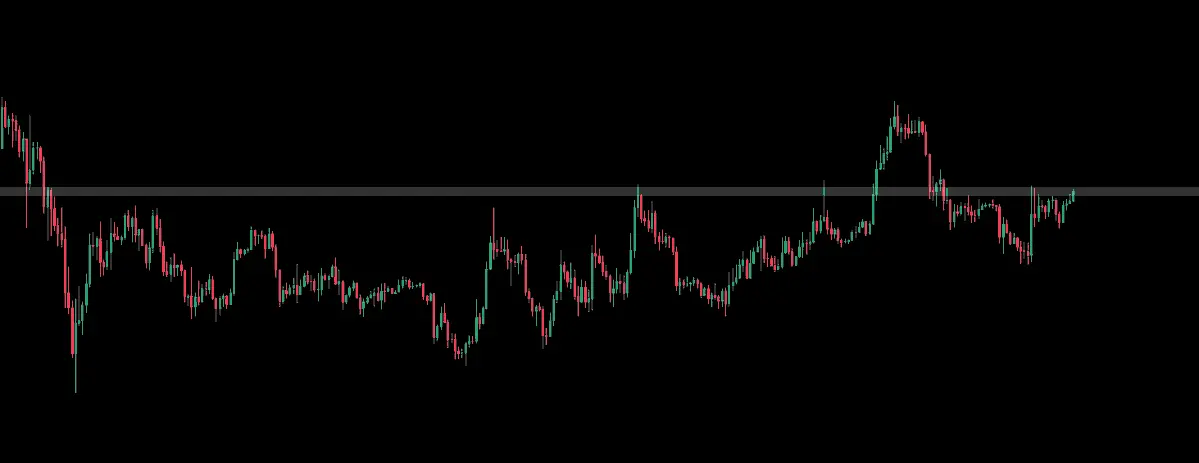
Circle (ticker: CRCL), the issuer of USD stablecoins branded as "absolutely compliant," experienced an epic collapse in trading right after the opening bell on the US stock market. Its stock price plummeted 19% like a kite with a severed string, not only ruthlessly piercing through the support level of the 21-day moving average but also marking the most devastating single-day decline in the company's history.
In the face of this avalanche, no one could escape unscathed. Coinbase (ticker: COIN), crypto's first public company and Circle's closest ally and primary distribution channel, saw its stock price also plunge approximately 9%, instantly breaking through the 50-day lifeline. The culprit behind all this wasn't a hacker attack, nor a code vulnerability, but a newly revised draft of legislation called the "Digital Asset Market Clarity Act" (Clarity Act).
This text, finalized by Senators Thom Tillis and Angela Alsobrooks in a closed-door meeting, used just one seemingly understated sentence to precisely sever the main artery of the entire centralized stablecoin industry: a comprehensive ban on all "passive yield generation" targeting stablecoin holders, and the elimination of any revenue structures "economically equivalent to interest." In this magical capital market, you thought you were conducting a decentralization revolution, but politicians could see clearly that you were just conducting unlicensed deposit-taking traditional banking operations under the guise of blockchain. When the regulatory scythe truly swung down, those financial arbitrage games packaged in geek jargon instantly reveal their true form.
Unplugging that "Toll Fee" Money-Printing Machine
To understand the underlying logic of this crash, you first need to strip away the gleaming "tech company" veneer from stablecoin issuers and see how they really make money. This isn't some unfathomable cyberpunk black technology at all; it's an absurdly simple money-making scheme.
Take Circle as an example. The total market cap of USDC currently stands at $78.6 billion. What does this mean? It means $78.6 billion in real money has been handed over to Circle for free. In the traditional financial world, when you deposit money in a bank, the bank has to grudgingly pay you interest. But in this crypto game called the "Toll Fee Model," Circle takes these tens of billions of dollars to purchase absolutely safe short-term US Treasury bonds, earning risk-free hefty returns, while early USDC holders don't see a dime.
To make this flywheel spin faster and get more people willing to exchange their money for USDC, Circle and Coinbase constructed what could be called a brilliant "interest redistribution pipeline." Although the previously passed GENIUS Act explicitly prohibited stablecoin issuers from directly paying interest to users, capital is always smarter than laws.
Circle divides a large chunk of the massive returns generated by Treasury reserves to Coinbase, which then uses the "rewards program" on its platform to return these funds to USDC holders in various guises. In analysts' eyes, USDC's yield business contributed nearly 20% of Coinbase's total revenue. This formed a perfect closed loop: users got deposit-like returns, platforms obtained enormous liquidity, and issuers expanded market share.
But the latest draft of the "Clarity Act" is like a bad-tempered perfectionist who kicked over this carefully designed profit-sharing table. The draft text explicitly states that not only can you not directly pay interest, but any "channel model economically equivalent to interest" must also be completely eliminated. It's like you're collecting tolls at a roadside checkpoint—before, police wouldn't let you collect cash directly, so you let drivers scan codes to buy your overpriced bottled water. Now police tell you that as long as you make drivers pay money, no matter what form it takes, it's all classified as robbery.
Amir Hajian, a digital asset research analyst at Keyrock, hit the nail on the head: this directly drained the most core driving force behind stablecoin adoption. When this money-printing machine's plug was ruthlessly pulled by politicians, Circle's stock price, which had skyrocketed 170% since February, naturally could only undergo its most devastating value correction downward.
The Fear of Old Money and the Community Banks' Defensive Battle
You might ask why Washington politicians suddenly took such a hard stance against stablecoin yield mechanisms. Is it really to protect those retail investors who lost their minds in crypto casinos?
Don't be naive. In this world, the only force that can make politicians achieve such efficient cross-party consensus is one thing: the extreme fear of traditional financial old money. The essence of this legislation is not some normative guidance for technological innovation at all, but a naked battle to protect traditional bank deposits. Over the past two years, the traditional banking industry has struggled, especially those community banks scattered across American states that rely on attracting local resident deposits to issue loans to small and medium enterprises. When the Federal Reserve maintains a high interest rate environment, traditional banks give depositors stingy interest rates on savings to control funding costs. Meanwhile, USDC in crypto exchanges can easily provide highly attractive "current account rewards" through the transmission of reserve returns.
The lobbying group of the American Bankers Association is famous for its iron fist on Capitol Hill. In their view, if stablecoins are allowed to continue generating yield indirectly, it's no longer the self-entertainment of crypto circles but a blatant siphoning of deposits from the traditional banking system. Capital is extremely intelligent; once the public realizes they only need to download a Coinbase app to get passive returns much higher than their local community bank, a massive deposit run will be inevitable. This would be a devastating blow to the traditional financial system's credit capacity and survival foundation. Therefore, this draft's compromise is extremely precise and ruthless.
Legislators made a clear cut: allow stablecoin rewards based on "transaction activity," but absolutely prohibit "balance-based" passive yield generation. In other words, you can encourage users to spend stablecoins, transfer them, and generate transaction flows like credit card points, but you absolutely cannot let users earn money just by keeping money in their accounts. Politicians used the boundaries of law to forcefully push stablecoins back to their original purpose—a pure payment tool, not a high-yield deposit account dressed in digital clothing.
This is not only a dimensional reduction attack on Circle's core business model but also a successful ambush of old-guard Wall Street capital against Silicon Valley's financial upstarts.
Tether's Dark Humor: The "Reverse Compliance" Backstab of an Offshore Pirate
If Circle's stock crash was a tragedy, then another incident that happened in the crypto market that day turned this play into an absurd dark comedy. Just as the obedient Circle, which accepts comprehensive Deloitte audits every year and desperately courts American regulators, was being ground into the dirt by its own government's bill, its greatest enemy, the offshore behemoth Tether, which has long walked in regulatory gray areas, dropped a bombshell that same day. USDT, with a market cap of $184 billion, firmly occupying the stablecoin throne, announced that they had hired one of the global "Big Four" accounting firms to conduct their first comprehensive formal audit of their reserves. This news was nothing short of a psychological knockout blow to Circle.
Since its birth in 2014, Tether has been questioned by countless short-sellers and regulators about the transparency of its reserves. Previously, they only provided vague quarterly "proofs," and refused to even provide proper audit reports. Through this savage growth, USDT consumed the vast majority of global liquidity. Now the plot has reversed. When Circle suffers because its revenue model is being strangled by American domestic law due to being overly compliant, Tether, having already made a fortune in outlaw mode, suddenly used its massive profits to buy credibility backing from a top-tier audit firm.
This is an extremely arrogant dimensional attack: the compliance barriers Circle meticulously built up, I Tether can buy with money; and the domestic regulatory meat grinder you now face, I, as an offshore issuer, don't need to care about at all. In the eyes of Wall Street institutions, this contrast is extremely fatal. If Tether truly passes a comprehensive Big Four audit and washes away its longtime transparency label, its risk rating in institutional investors' eyes will drop significantly. On one side is USDC bound by the "Clarity Act," facing legal prosecution just for giving users some interest; on the other side is USDT about to receive top-tier backing and completely unrestricted by America's harsh local laws. Capital doesn't need a second thought to decide.
Tether's announcement of the audit at this juncture is absolutely a carefully calculated PR offensive, not merely sticking a knife in Circle's back but flipping the bird to Washington's entire regulatory system with a golden glow.
The Cruel Realization of "Yield Assets" Degrading into "Digital Tokens"
The panic triggered by the draft is still spreading, while its deep restructuring of the entire crypto financial landscape is just beginning. Stablecoins losing their passive yield capability are facing a cruel genetic downgrade: they will be forced to degenerate from a "yield-bearing asset" with compound interest capability into a purely meaningless medium with no time value—to put it bluntly, just a pile of cyber amusement tokens that can only be used for transaction settlement. This degradation deals a structural blow to the decentralized finance (DeFi) ecosystem. In the past, large amounts of conservative capital were willing to stay on-chain because the underlying stablecoin itself came with risk-free returns, providing a solid foundation for the entire DeFi Lego tower. Once the "Clarity Act" completely closes off the interest redistribution channels for centralized issuers, those users accustomed to passive income will be forced to face two choices: either undertake extreme smart contract risks and cascading liquidation risks by throwing stablecoins into decentralized lending protocols that could collapse at any moment to seek meager returns; or simply withdraw their money back into the traditional banking system. Either way will lead to irreversible shrinkage of overall liquidity in the crypto market.
But capital will never sit idle. As Ryan Rasmussen, research director at Bitwise, predicted, this market will definitely spawn new workaround monetization schemes. Since you can't directly call it "interest" or have an economic structure "equivalent to interest," platforms will definitely force their financial engineers to become literary masters and game designers. We can foresee that the crypto market will be flooded with extremely complex "loyalty programs," "activity mining," or "ecosystem contribution rewards." Users may no longer earn returns simply because they have money in their accounts but must instead complete meaningless clicks, transfers, or interactions on the platform daily to receive their share of dividends. This is undoubtedly a massive step backward and tragedy.
To appease rigid regulatory statutes, the entire industry is forced to complicate, distort, and even gamify what was originally an efficient and transparent revenue distribution mechanism. Clear Street analysts tried to soothe the market, suggesting that current selling is an "shoot first, ask questions later" overreaction, after all, Circle still holds 30% of this market destined to inflate tenfold. But this cannot hide a cold fact: in the face of absolute regulatory supremacy, crypto's financial innovation remains devastatingly fragile. The moment politicians reached a compromise at the oak table on Capitol Hill, the golden age when stablecoins could make easy money lying down was completely nailed shut in the coffin of history.
On March 24, 2026, on Wall Street, the air was thick with the stench of blood. Just yesterday, those Web3 elites still clinking wine glasses in Manhattan penthouse apartments, celebrating the compliance breakthrough of cryptocurrency, were kicked off the balcony by a draft bill flying in from Washington.
Circle (ticker: CRCL), the issuer of USD stablecoins branded as "absolutely compliant," experienced an epic collapse in trading right after the opening bell on the US stock market. Its stock price plummeted 19% like a kite with a severed string, not only ruthlessly piercing through the support level of the 21-day moving average but also marking the most devastating single-day decline in the company's history.
In the face of this avalanche, no one could escape unscathed. Coinbase (ticker: COIN), crypto's first public company and Circle's closest ally and primary distribution channel, saw its stock price also plunge approximately 9%, instantly breaking through the 50-day lifeline. The culprit behind all this wasn't a hacker attack, nor a code vulnerability, but a newly revised draft of legislation called the "Digital Asset Market Clarity Act" (Clarity Act).
This text, finalized by Senators Thom Tillis and Angela Alsobrooks in a closed-door meeting, used just one seemingly understated sentence to precisely sever the main artery of the entire centralized stablecoin industry: a comprehensive ban on all "passive yield generation" targeting stablecoin holders, and the elimination of any revenue structures "economically equivalent to interest." In this magical capital market, you thought you were conducting a decentralization revolution, but politicians could see clearly that you were just conducting unlicensed deposit-taking traditional banking operations under the guise of blockchain. When the regulatory scythe truly swung down, those financial arbitrage games packaged in geek jargon instantly reveal their true form.
Unplugging that "Toll Fee" Money-Printing Machine
To understand the underlying logic of this crash, you first need to strip away the gleaming "tech company" veneer from stablecoin issuers and see how they really make money. This isn't some unfathomable cyberpunk black technology at all; it's an absurdly simple money-making scheme.
Take Circle as an example. The total market cap of USDC currently stands at $78.6 billion. What does this mean? It means $78.6 billion in real money has been handed over to Circle for free. In the traditional financial world, when you deposit money in a bank, the bank has to grudgingly pay you interest. But in this crypto game called the "Toll Fee Model," Circle takes these tens of billions of dollars to purchase absolutely safe short-term US Treasury bonds, earning risk-free hefty returns, while early USDC holders don't see a dime.
To make this flywheel spin faster and get more people willing to exchange their money for USDC, Circle and Coinbase constructed what could be called a brilliant "interest redistribution pipeline." Although the previously passed GENIUS Act explicitly prohibited stablecoin issuers from directly paying interest to users, capital is always smarter than laws.
Circle divides a large chunk of the massive returns generated by Treasury reserves to Coinbase, which then uses the "rewards program" on its platform to return these funds to USDC holders in various guises. In analysts' eyes, USDC's yield business contributed nearly 20% of Coinbase's total revenue. This formed a perfect closed loop: users got deposit-like returns, platforms obtained enormous liquidity, and issuers expanded market share.
But the latest draft of the "Clarity Act" is like a bad-tempered perfectionist who kicked over this carefully designed profit-sharing table. The draft text explicitly states that not only can you not directly pay interest, but any "channel model economically equivalent to interest" must also be completely eliminated. It's like you're collecting tolls at a roadside checkpoint—before, police wouldn't let you collect cash directly, so you let drivers scan codes to buy your overpriced bottled water. Now police tell you that as long as you make drivers pay money, no matter what form it takes, it's all classified as robbery.
Amir Hajian, a digital asset research analyst at Keyrock, hit the nail on the head: this directly drained the most core driving force behind stablecoin adoption. When this money-printing machine's plug was ruthlessly pulled by politicians, Circle's stock price, which had skyrocketed 170% since February, naturally could only undergo its most devastating value correction downward.
The Fear of Old Money and the Community Banks' Defensive Battle
You might ask why Washington politicians suddenly took such a hard stance against stablecoin yield mechanisms. Is it really to protect those retail investors who lost their minds in crypto casinos?
Don't be naive. In this world, the only force that can make politicians achieve such efficient cross-party consensus is one thing: the extreme fear of traditional financial old money. The essence of this legislation is not some normative guidance for technological innovation at all, but a naked battle to protect traditional bank deposits. Over the past two years, the traditional banking industry has struggled, especially those community banks scattered across American states that rely on attracting local resident deposits to issue loans to small and medium enterprises. When the Federal Reserve maintains a high interest rate environment, traditional banks give depositors stingy interest rates on savings to control funding costs. Meanwhile, USDC in crypto exchanges can easily provide highly attractive "current account rewards" through the transmission of reserve returns.
The lobbying group of the American Bankers Association is famous for its iron fist on Capitol Hill. In their view, if stablecoins are allowed to continue generating yield indirectly, it's no longer the self-entertainment of crypto circles but a blatant siphoning of deposits from the traditional banking system. Capital is extremely intelligent; once the public realizes they only need to download a Coinbase app to get passive returns much higher than their local community bank, a massive deposit run will be inevitable. This would be a devastating blow to the traditional financial system's credit capacity and survival foundation. Therefore, this draft's compromise is extremely precise and ruthless.
Legislators made a clear cut: allow stablecoin rewards based on "transaction activity," but absolutely prohibit "balance-based" passive yield generation. In other words, you can encourage users to spend stablecoins, transfer them, and generate transaction flows like credit card points, but you absolutely cannot let users earn money just by keeping money in their accounts. Politicians used the boundaries of law to forcefully push stablecoins back to their original purpose—a pure payment tool, not a high-yield deposit account dressed in digital clothing.
This is not only a dimensional reduction attack on Circle's core business model but also a successful ambush of old-guard Wall Street capital against Silicon Valley's financial upstarts.
Tether's Dark Humor: The "Reverse Compliance" Backstab of an Offshore Pirate
If Circle's stock crash was a tragedy, then another incident that happened in the crypto market that day turned this play into an absurd dark comedy. Just as the obedient Circle, which accepts comprehensive Deloitte audits every year and desperately courts American regulators, was being ground into the dirt by its own government's bill, its greatest enemy, the offshore behemoth Tether, which has long walked in regulatory gray areas, dropped a bombshell that same day. USDT, with a market cap of $184 billion, firmly occupying the stablecoin throne, announced that they had hired one of the global "Big Four" accounting firms to conduct their first comprehensive formal audit of their reserves. This news was nothing short of a psychological knockout blow to Circle.
Since its birth in 2014, Tether has been questioned by countless short-sellers and regulators about the transparency of its reserves. Previously, they only provided vague quarterly "proofs," and refused to even provide proper audit reports. Through this savage growth, USDT consumed the vast majority of global liquidity. Now the plot has reversed. When Circle suffers because its revenue model is being strangled by American domestic law due to being overly compliant, Tether, having already made a fortune in outlaw mode, suddenly used its massive profits to buy credibility backing from a top-tier audit firm.
This is an extremely arrogant dimensional attack: the compliance barriers Circle meticulously built up, I Tether can buy with money; and the domestic regulatory meat grinder you now face, I, as an offshore issuer, don't need to care about at all. In the eyes of Wall Street institutions, this contrast is extremely fatal. If Tether truly passes a comprehensive Big Four audit and washes away its longtime transparency label, its risk rating in institutional investors' eyes will drop significantly. On one side is USDC bound by the "Clarity Act," facing legal prosecution just for giving users some interest; on the other side is USDT about to receive top-tier backing and completely unrestricted by America's harsh local laws. Capital doesn't need a second thought to decide.
Tether's announcement of the audit at this juncture is absolutely a carefully calculated PR offensive, not merely sticking a knife in Circle's back but flipping the bird to Washington's entire regulatory system with a golden glow.
The Cruel Realization of "Yield Assets" Degrading into "Digital Tokens"
The panic triggered by the draft is still spreading, while its deep restructuring of the entire crypto financial landscape is just beginning. Stablecoins losing their passive yield capability are facing a cruel genetic downgrade: they will be forced to degenerate from a "yield-bearing asset" with compound interest capability into a purely meaningless medium with no time value—to put it bluntly, just a pile of cyber amusement tokens that can only be used for transaction settlement. This degradation deals a structural blow to the decentralized finance (DeFi) ecosystem. In the past, large amounts of conservative capital were willing to stay on-chain because the underlying stablecoin itself came with risk-free returns, providing a solid foundation for the entire DeFi Lego tower. Once the "Clarity Act" completely closes off the interest redistribution channels for centralized issuers, those users accustomed to passive income will be forced to face two choices: either undertake extreme smart contract risks and cascading liquidation risks by throwing stablecoins into decentralized lending protocols that could collapse at any moment to seek meager returns; or simply withdraw their money back into the traditional banking system. Either way will lead to irreversible shrinkage of overall liquidity in the crypto market.
But capital will never sit idle. As Ryan Rasmussen, research director at Bitwise, predicted, this market will definitely spawn new workaround monetization schemes. Since you can't directly call it "interest" or have an economic structure "equivalent to interest," platforms will definitely force their financial engineers to become literary masters and game designers. We can foresee that the crypto market will be flooded with extremely complex "loyalty programs," "activity mining," or "ecosystem contribution rewards." Users may no longer earn returns simply because they have money in their accounts but must instead complete meaningless clicks, transfers, or interactions on the platform daily to receive their share of dividends. This is undoubtedly a massive step backward and tragedy.
To appease rigid regulatory statutes, the entire industry is forced to complicate, distort, and even gamify what was originally an efficient and transparent revenue distribution mechanism. Clear Street analysts tried to soothe the market, suggesting that current selling is an "shoot first, ask questions later" overreaction, after all, Circle still holds 30% of this market destined to inflate tenfold. But this cannot hide a cold fact: in the face of absolute regulatory supremacy, crypto's financial innovation remains devastatingly fragile. The moment politicians reached a compromise at the oak table on Capitol Hill, the golden age when stablecoins could make easy money lying down was completely nailed shut in the coffin of history.