# InstitutionalHoldingsDebate

11.73K
nstitutions show divergent BTC strategies: some continue accumulation while others face pressure from market declines. Are institutions sticking to long-term strategy or adjusting tactics now?
#InstitutionalHoldingsDebate Institutional Holdings Debate: The Growing Influence of Big Players in Crypto #InstitutionalHoldingsDebate
The cryptocurrency market is witnessing a profound shift as institutional participation continues to grow. The debate over institutional holdings and their impact on market stability, volatility, and adoption has become a central topic for investors, analysts, and regulators alike.
Institutional investors, including hedge funds, family offices, and publicly traded companies, are increasingly allocating capital to Bitcoin, Ethereum, and other digital assets. Th
BTC-11,52%
ETH-11,39%
post-image
post-image
  • Reward
  • 2
  • Repost
  • Share
PrincessOfBitcoinvip:
Buy To Earn 💎
View More
#InstitutionalHoldingsDebate 🌟Institutional Holdings Debate: The Growing Influence of Big Players in Crypto🌟 #InstitutionalHoldingsDebate
The cryptocurrency market is witnessing a profound shift as institutional participation continues to grow. The debate over institutional holdings and their impact on market stability, volatility, and adoption has become a central topic for investors, analysts, and regulators alike.
Institutional investors, including hedge funds, family offices, and publicly traded companies, are increasingly allocating capital to Bitcoin, Ethereum, and other digital assets
BTC-11,52%
ETH-11,39%
post-image
  • Reward
  • 4
  • Repost
  • Share
ShainingMoonvip:
2026 GOGOGO 👊
View More
#InstitutionalHoldingsDebate Institutional Bitcoin Holdings in 2026: Navigating Volatility and Strategic Accumulation
Institutional demand for Bitcoin continues to shape the 2026 market cycle, even amid heightened price swings. Recent surveys of corporate treasurers and professional allocators indicate record-high expectations for public-company accumulation. Industry polling suggests that corporate entities could collectively acquire up to 700,000 BTC this year—a volume surpassing all prior waves of corporate buying. Supporting this outlook, a Coinbase Institutional report finds that 67% of i
BTC-11,52%
post-image
  • Reward
  • 2
  • Repost
  • Share
Discoveryvip:
Happy New Year! 🤑
View More
#InstitutionalHoldingsDebate
Institutional Power Synergy or Loss of Control?
​By 2026, the most debated topic in the crypto world is no longer "What will the price be?" but rather "Who holds the keys to the wallets?" This massive debate, gathered under the #InstitutionalHoldingsDebate hashtag, brings face-to-face two opposite poles that are altering the very DNA of the market.
​Here are the current developments fueling this debate as of February 2026 and the new vision of the ecosystem:
​ The Dominance of Wall Street: A New "Reserve Asset" Era
​According to data shared at the beginning of
BTC-11,52%
post-image
post-image
  • Reward
  • 25
  • Repost
  • Share
CryptoSelfvip:
Buy To Earn 💎
View More
#InstitutionalHoldingsDebate
Institutional Accumulation in 2026: Conviction Tested by Volatility
Institutional appetite for Bitcoin remains one of the defining forces of the 2026 market cycle, even as price action has turned volatile. Surveys of treasury managers and professional allocators suggest that expectations for corporate accumulation have never been higher. More than 30 percent of market participants in recent industry polling anticipate that public companies could collectively acquire up to 700,000 BTC this year, a figure that would eclipse all previous corporate buying waves. Senti
BTC-11,52%
post-image
post-image
  • Reward
  • 5
  • Repost
  • Share
repanzalvip:
Watching Closely 🔍️
View More
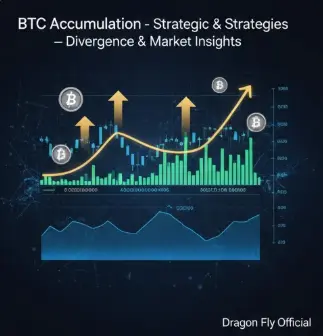
📊 Institutional BTC Strategies Diverge
Dragon Fly Official Market View
Institutions are taking different approaches in Bitcoin — some are accumulating for the long term, while others adjust tactically amid recent market declines.
🔍 Key Points:
• Accumulation vs Distribution: Watch who’s buying and who’s selling
• Market Pressure: Volatility drives short-term tactical moves
• Long-Term Focus: Structural growth often outweighs daily fluctuations
💡 Dragon Fly Insight:
“Institutional positioning reveals market confidence and potential trend stability.”
📈 Trading Outlook:
• Track support/resist
BTC-11,52%
DragonFlyOfficialvip
📊 Institutional BTC Strategies Diverge — What It Means for the Market
Dragon Fly Official Market View
Institutions are showing divergent strategies in Bitcoin. Some continue to accumulate, reinforcing long-term conviction, while others face pressure from recent market declines, prompting tactical adjustments.
🔍 Key Market Considerations
• Accumulation vs. distribution: Observe which institutions are increasing holdings and which are offloading
• Market pressure: Volatility and short-term drawdowns influence tactical decisions
• Long-term vision: Institutional strategy often prioritizes structural growth over daily fluctuations
Dragon Fly Official view:
“Watching institutional positioning gives insight into market confidence and potential trend stability.”
📈 Outlook for Traders
Short-term: Identify support and resistance levels where institutions are active
Medium-term: Follow accumulation patterns for trend confirmation
Risk management: Recognize that divergent strategies can increase short-term volatility
Dragon Fly Official insight:
“Market moves are a conversation between strong hands and weak hands. Positioning clarity is more valuable than chasing news.”
🧭 Key Takeaway
Institutional BTC strategies reveal both confidence and caution. Traders who understand accumulation patterns versus tactical adjustments can align positions with market structure and capital flow.
#InstitutionalHoldingsDebate
repost-content-media
  • Reward
  • 2
  • Repost
  • Share
MrFlower_vip:
2026 GOGOGO 👊
View More
#InstitutionalHoldingsDebate: Are Big Players Helping or Hurting Crypto?
The debate around institutional holdings in the cryptocurrency market has intensified as more banks, hedge funds, asset managers, and publicly listed companies increase their exposure to digital assets.
Once viewed as a retail-driven and decentralized ecosystem, crypto is now seeing heavy participation from institutional investors. While this shift signals growing maturity and mainstream adoption, it has also raised important questions about market control, volatility, and the original vision of decentralization.
On one
BTC-11,52%
ETH-11,39%
post-image
  • Reward
  • 9
  • Repost
  • Share
MissCryptovip:
2026 GOGOGO 👊
View More
#InstitutionalHoldingsDebate
The role and impact of institutional investors in the cryptocurrency market remains one of the hottest and most divisive debates in crypto as of early 2026. With spot Bitcoin and Ethereum ETFs now managing hundreds of billions in AUM, corporate treasuries like MicroStrategy (now Strategy) holding massive BTC positions, and major players like BlackRock, Fidelity, and even sovereign funds piling in, institutions have fundamentally reshaped the space.
This isn't the wild, retail-driven market of 2017 or 2021 anymore. 2026 is widely called the "dawn of the institution
BTC-11,52%
ETH-11,39%
HighAmbitionvip
#InstitutionalHoldingsDebate
The role and impact of institutional investors in the cryptocurrency market remains one of the hottest and most divisive debates in crypto as of early 2026. With spot Bitcoin and Ethereum ETFs now managing hundreds of billions in AUM, corporate treasuries like MicroStrategy (now Strategy) holding massive BTC positions, and major players like BlackRock, Fidelity, and even sovereign funds piling in, institutions have fundamentally reshaped the space.
This isn't the wild, retail-driven market of 2017 or 2021 anymore. 2026 is widely called the "dawn of the institutional era" by firms like Grayscale, with structural shifts driven by regulatory clarity (e.g., GENIUS Act on stablecoins, expected bipartisan market structure laws), macro demand for alternative stores of value amid fiat concerns, and tokenized real-world assets bridging TradFi and blockchain.
Here's a fully extended, detailed breakdown of all major points in the ongoing debate — pros, cons, realities, and nuances — based on current data, surveys, and community discussions.
Positive Impacts (Pros): Why Many See Institutional Involvement as a Net Win
Massive Legitimacy and Mainstream Integration
Institutions like BlackRock (IBIT holding ~777k–805k BTC), Fidelity, and sovereign funds (e.g., Mubadala, Abu Dhabi) entering validates crypto as a serious asset class. Surveys show 86% of institutions have exposure or plan allocations in 2025–2026, with 68% eyeing BTC ETPs. Larry Fink now calls tokenization "the future of finance," and JPMorgan explores institutional crypto trading. This shifts perception from "speculative casino" to "portfolio staple," attracting advised wealth, pensions, and 401(k)s. Even skeptics like Jamie Dimon have softened, comparing BTC ownership to personal choice.
Improved Liquidity, Stability, and Reduced Extreme Volatility
Institutional capital brings deep, consistent flows. US spot Bitcoin ETFs alone have seen cumulative inflows topping $100–180B+ since 2024, with AUM near $135–191B in some reports. This creates mechanical buying pressure (ETFs bought more BTC than new supply in recent periods) and dampens retail-driven flash crashes. Volatility has normalized compared to prior cycles, thanks to longer holding horizons and better infrastructure (regulated custody, in-kind redemptions). Institutions act as "patient capital," absorbing shocks better than panic-selling retail.
Infrastructure Maturity and Innovation Acceleration
Demand has forced better tools: qualified custodians (e.g., Coinbase Custody, bank launches like BNY Mellon/State Street), compliant products (ETFs, tokenized Treasuries), and bridges to TradFi (e.g., JPMorgan's tokenized deposits, Citi's services). Tokenization of real-world assets (RWAs) is going mainstream, enabling efficient settlement and yield. Regulatory progress (e.g., clearer US/EU rules) reduces uncertainty, fostering sustainable growth over hype.
Enormous Capital Inflows and Price Support
Global institutional AUM is trillions; even 1–5% allocations could drive $90–450B+ inflows. ETFs and corporate treasuries hold ~5–11.5%+ of BTC supply (e.g., ~2.29M BTC combined in some 2025 estimates, now higher). This outpaces mining supply shocks, supporting resilience and potential for $150k–$200k BTC targets in bull scenarios. Institutions treat BTC as "digital gold" for diversification against inflation/debasement.
Broader Ecosystem Benefits
Institutions push for (and benefit from) clearer rules, protecting consumers while enabling growth. Retail gets easier, regulated access via ETFs/ETPs. Convergence of TradFi/DeFi creates crossover products, stablecoin infrastructure, and VC for institutional-grade tools.
Negative Impacts (Cons): Why Crypto Natives Often See It as a Threat
Centralization of Power and Loss of Decentralization Ethos
Crypto was built on "be your own bank" and resisting centralized control. Now, a few players (BlackRock ~3.9% of BTC supply, Fidelity, Grayscale) dominate via ETFs/custody. Critics argue this concentrates influence — coordinated selling or decisions could harm smaller holders. The "soul" of crypto (grassroots, anti-establishment) risks being lost as Wall Street invades.
Higher Risk of Manipulation and Controlled Markets
Deep-pocketed institutions enable large trades, basis trades, volatility selling, and lobbying. Some point to past examples (e.g., funds dumping on retail post-hype, insider advantages). ETFs create "paper BTC" suppressing natural discovery, while market makers control liquidity. Community voices warn of "institutional cycles" where accumulation is slow/sideways, frustrating retail until positions build — then potential violent unwinds if risk rules trigger forced sales.
Increased Correlation with Traditional Markets and Loss of Independence
As crypto integrates into portfolios, it tracks equities/risk sentiment more (correlation surged to 0.75+). No longer a true uncorrelated hedge — it amplifies losses in crashes. Institutions derisk into cash during downturns, not diamond-hand like early holders.
Retail Marginalization and "Frustrating" Price Action
This cycle feels "designed for institutions to take over" — suppressed prices, controlled pumps/dumps, sideways action while they accumulate. Retail often quits or loses, as gains accrue to big players. If wealth concentrates, public sentiment turns fragile; politicians could scapegoat crypto without broad voter support. Retail brings legitimacy/movements; institutions bring liquidity but not votes.
Potential for Future Downturns or Traps
Some forecasts see 2026 cooling (neutral/bearish sentiment post-2025 rally fade, macro tailwinds waning). Basis trade unwinds or custody concentrations (e.g., high reliance on few providers) create hidden risks. Institutions aren't permanent floors — they sell on rules, potentially causing bigger bears.
The Balanced Reality in Early 2026
Adoption is still early: Institutional allocations remain modest (e.g., <0.5–5% of advised wealth/portfolios), though growing fast. Retail still dominates some activity, but institutions drive marginal price action via ETFs.
Hybrid future: Most agree institutions are inevitable and bring maturity, but the debate is about preserving core principles (decentralization, open access) while scaling. Optimists see structural bull (institutional demand > supply, tokenization boom); skeptics fear "Wall Street takeover" diluting crypto's revolutionary edge.
Current trend: 2026 focuses on deeper integration (more ETPs, bank custody, 401(k) access, sovereign adoption), with volatility from macro/tactical flows but overall constructive infrastructure.
repost-content-media
  • Reward
  • 1
  • Repost
  • Share
ybaservip:
2026 GOGOGO 👊 Hold on tight, we're about to take off 🛫
#InstitutionalHoldingsDebate Institutional participation in crypto has reached a stage where it no longer asks for permission—it defines the environment. By February 2026, institutions are not just holders of Bitcoin and Ethereum; they are structural actors shaping liquidity conditions, volatility patterns, and long-term market behavior. The conversation has moved beyond “if institutions matter” to “how their behavior rewires the market itself.”
One of the most important shifts is the scale of custody concentration. With millions of BTC and tens of millions of ETH under institutional managemen
BTC-11,52%
ETH-11,39%
post-image
post-image
  • Reward
  • 13
  • Repost
  • Share
Crypto_Buzz_with_Alexvip:
Happy New Year! 🤑
View More
#InstitutionalHoldingsDebate Institutional participation in crypto has reached a stage where it no longer asks for permission—it defines the environment. By February 2026, institutions are not just holders of Bitcoin and Ethereum; they are structural actors shaping liquidity conditions, volatility patterns, and long-term market behavior. The conversation has moved beyond “if institutions matter” to “how their behavior rewires the market itself.”
One of the most important shifts is the scale of custody concentration. With millions of BTC and tens of millions of ETH under institutional managemen
BTC-11,52%
ETH-11,39%
post-image
post-image
  • Reward
  • 8
  • Repost
  • Share
CryptoChampionvip:
2026 GOGOGO 👊
View More
Load More
Trade Crypto Anywhere Anytime
qrCode
Scan to download Gate App
Community
  • 简体中文
  • English
  • Tiếng Việt
  • 繁體中文
  • Español
  • Русский
  • Français (Afrique)
  • Português (Portugal)
  • Bahasa Indonesia
  • 日本語
  • بالعربية
  • Українська
  • Português (Brasil)